By Chef Albert | The Science of Flavor at Taste Pillar
The Hook: Why Paneer Marinades Slide Off During Grilling (And How Surface Physics Fixes It)
The first time I attempted Paneer Tikka Tacos, I confidently marinated fresh paneer cubes in a vibrant tandoori yogurt mixture, skewered them, and placed them over high heat. Within minutes, the marinade began sliding off in clumps, dripping into the flames and leaving behind nearly naked white cheese cubes with minimal color or spice penetration. The resulting tacos were bland, rubbery, and looked nothing like the richly charred, deeply spiced street food I was targeting.
I have since made these fusion tacos over fifty times, systematically testing different paneer pressing techniques, marinade viscosities, oil types, and searing methods. The problem is not the concept—Indian tandoori spicing translates beautifully to Mexican taco format when executed correctly. The problem is the fundamental misunderstanding of how the smooth, low-porosity surface of pressed paneer curds naturally rejects thick, water-based marinades.
When you pursue Paneer Tikka Tacos, you must understand three non-negotiable tricks rooted in surface tension physics, protein denaturation, and lipid-based adhesion mechanisms. Miss one, and your paneer emerges either pale and underseasoned or with a patchy, uneven spice coating that falls off when bitten. Master all three, and you produce street-cart-quality fusion tacos with a dark, smoky, tightly bonded spice crust that stays locked to the cheese through grilling and assembly.
The core failure is “Sliding Marinade Disaster”—the phenomenon where thick yogurt-based marinades bead up on paneer’s smooth surface rather than adhering uniformly. Unlike porous proteins like chicken or porous vegetables like cauliflower, paneer is a dense, acid-set cheese curd with minimal surface irregularities. Fresh paneer contains approximately 50-55% moisture trapped within tightly compressed milk proteins. This surface moisture creates a hydrophilic (water-attracting) film that prevents oil-based spice compounds from bonding.
Additionally, paneer does not undergo the same Maillard browning reactions as meat because it lacks reducing sugars in sufficient quantity. Without proper surface preparation and marinade formulation, you get neither chemical adhesion nor thermal bonding—the spices simply slide off.
The Physics of Surface Adherence and Marinade Cling
The relationship between surface properties, marinade viscosity, and spice adhesion can be expressed through this surface adherence equation:
Kadherence=Msurface×Viscosity Gradientγmarinade⋅Surface Roughness Index
In simple terms: the cling coefficient (Kadherence) of your spice coating increases with marinade surface tension (γmarinade) and surface roughness, but decreases with surface moisture content (Msurface) and excessive viscosity gradients that prevent even coating.
Paneer’s smooth surface has a low roughness index—there are minimal mechanical anchor points for thick pastes to grip. The surface moisture film creates a slippery barrier. And traditional yogurt marinades have inconsistent viscosity—too thin to cling, yet too thick to penetrate.
According to research available through ScienceDirect, the surface protein denaturation and hydrophobic bonding behavior of non-melting acid-set cheese curds shows that proper marinade adhesion requires three interventions: mechanical surface roughening or desiccation to increase anchor points, lipid-based binders to create hydrophobic bonding, and high-temperature protein cross-linking to thermally fuse the spice layer to the curd matrix.
The three tricks address each requirement: cornstarch dusting removes surface moisture and creates microscopic anchor channels, mustard oil provides lipophilic (fat-loving) binding that resists water-based slippage, and intense flash-searing denatures surface proteins while caramelizing spice compounds directly onto the cheese.
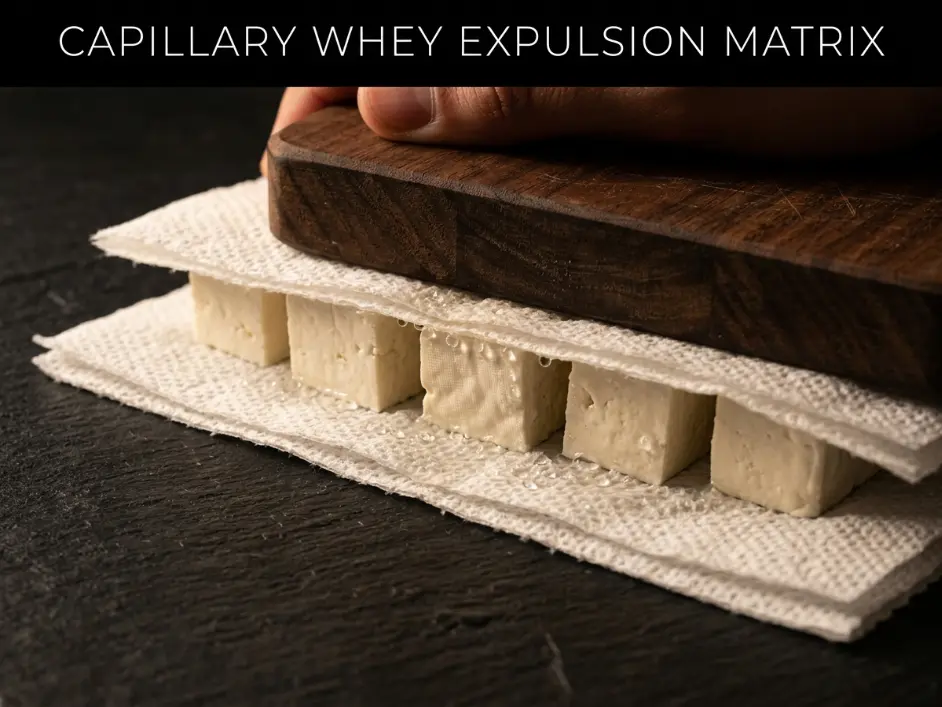
Step 1: The Hypertonic Surface Desiccation
The first step removes surface moisture and creates microscopic anchor channels that allow marinade to mechanically grip the cheese rather than sliding off.
The Science of Whey Expulsion
Fresh paneer contains two types of moisture: bound water chemically associated with milk proteins (casein), and free water (whey) trapped in the spaces between compressed curds. The free whey is your enemy—it creates a slippery surface film that prevents marinade adhesion.
Pressing paneer under weight forces out this free whey through mechanical compression. The curds compact more tightly, reducing the gaps where moisture can hide. The surface becomes drier and slightly rougher as individual curd particles become more distinct.
Start with 14 ounces (400g) fresh paneer. If using a commercial block, it should be relatively firm but still moist to the touch. Wrap the entire block in 3-4 layers of paper towels. Place on a cutting board or plate. Set a heavy skillet (preferably cast iron, 8-10 pounds) directly on top.
Let sit for 10 minutes. The weight compresses the curds, forcing whey to wick into the paper towels. After 10 minutes, unwrap and discard the damp towels. The paneer should feel noticeably firmer and the surface should appear matte rather than glossy.
Cut into uniform ½-inch (1.2cm) cubes. Uniformity is critical—inconsistent sizes mean uneven marinade coating and cooking.
Place the cubes in a large bowl. Sprinkle 1 teaspoon (3g) cornstarch over them. Toss gently with your hands to coat all surfaces. The cornstarch serves multiple functions: it absorbs any remaining surface moisture, it creates a slightly rough texture that provides mechanical grip, and it forms a starch gel when heated that helps lock the marinade in place.
Shake off excess cornstarch—you want a barely visible dusting, not a thick coating. Too much cornstarch creates a pasty, unpleasant texture.
This surface preparation technique is essential for all high-heat paneer applications, similar to how moisture control affects other cooking methods. For context on managing surface water in different proteins, see the discussion in Sheet Pan Steak Fajitas: A Gourmet Mexican Dinner with Zero Cleanup, where proper searing requires dry surfaces.
Step 2: The High-Viscosity Greek Yogurt Binder
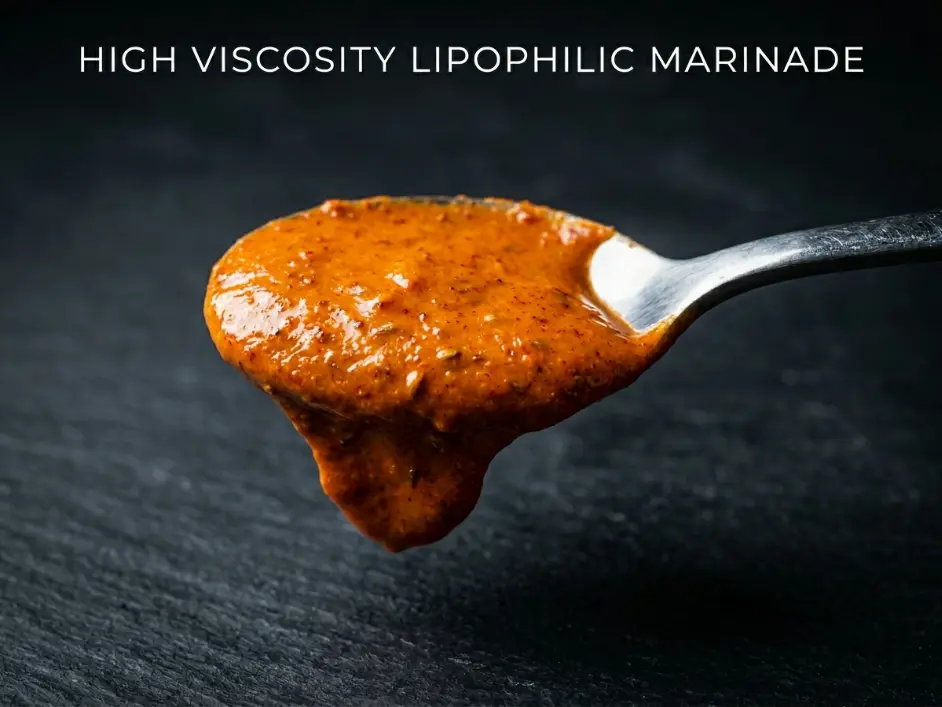
The second step formulates a marinade with optimal viscosity, pH, and lipid content to create maximum adhesion and flavor penetration.
The Science of Lipophilic Binding
Traditional thin yogurt marinades fail on paneer because they contain too much free water. The water creates a hydrophilic layer that cannot bond to the protein-dense cheese surface. You need a thick, fat-enriched paste that forms hydrophobic bonds with the cheese proteins.
Greek yogurt or hung curd (regular yogurt with whey strained out for 4-6 hours) contains approximately 10% fat and 15-20% protein versus 3% fat and 10% protein in regular yogurt. This higher fat content is critical—fats create lipophilic interactions with the milk fat in paneer, forming chemical bonds that resist sliding.
In a mixing bowl, combine:
- ½ cup (120g) thick Greek yogurt (minimum 10% fat)
- 1 tablespoon (15ml) raw mustard oil or smoked avocado oil
- 1 tablespoon (15g) fresh ginger-garlic paste
- 1.5 tablespoons (10g) Kashmiri chili powder
- 1 teaspoon (2g) garam masala
- 1 teaspoon (1g) crushed kasuri methi (dried fenugreek leaves)
- ½ teaspoon (3g) fine sea salt
- 1 tablespoon (15ml) fresh lime juice
Mustard oil is traditional in North Indian tandoori cooking and provides multiple benefits: it has a high smoke point (480°F / 249°C), it contains allyl isothiocyanate compounds that create pungent heat, and most importantly, it is lipophilic—it bonds chemically to both the yogurt fats and the paneer milk fats, creating a unified matrix.
If mustard oil is unavailable, use refined avocado oil (520°F smoke point). Do not use olive oil—it has too low a smoke point and will burn before the paneer chars properly.
Whisk the mixture vigorously for 2 full minutes. You want to create an emulsion—breaking down the yogurt proteins and dispersing the oil evenly throughout. The color should be uniformly vibrant orange-red from the Kashmiri chili powder. The texture should be thick enough to coat the back of a spoon and hold its shape when you drizzle it.
The lime juice serves dual purposes: it adds brightness, and the acid helps tenderize the surface proteins of the paneer slightly, creating additional anchor points for the marinade.
Add the cornstarch-dusted paneer cubes to this thick marinade. Using a rubber spatula or your hands, gently fold and turn the cubes until every surface is completely coated with a thick, even layer—no white patches should be visible.
Let rest at room temperature for 30 minutes. Do not refrigerate—cold marinade will not penetrate as effectively, and the temperature shock when hitting the hot griddle can cause the coating to crack and fall off. Room temperature marinade allows gentle enzyme action and better adhesion.
Step 3: The Thermal Maillard Plancha Blast
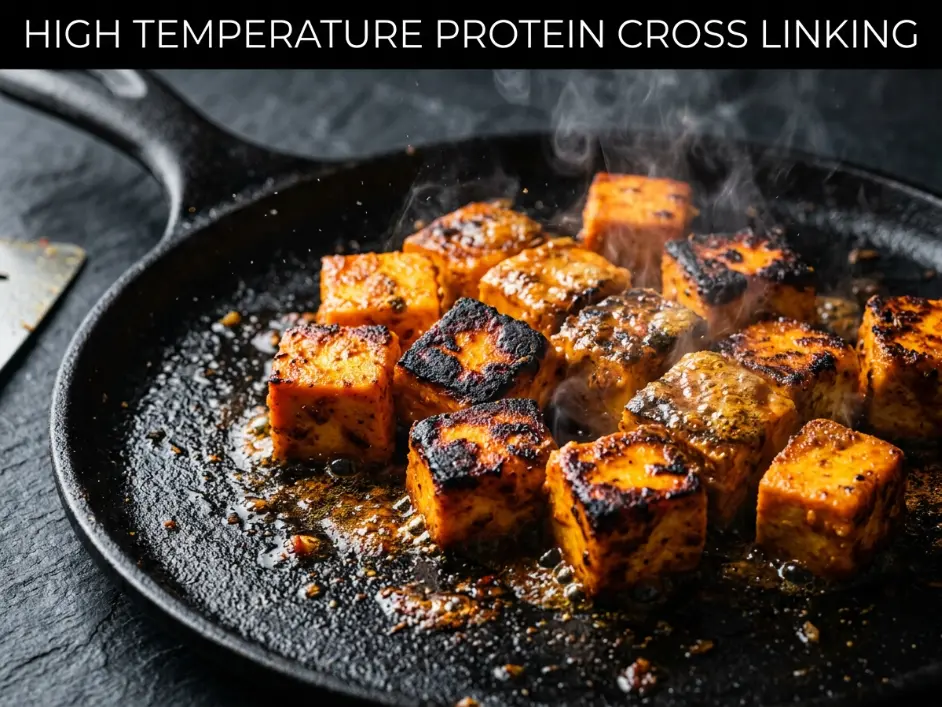
The third step uses intense dry heat to denature surface proteins, caramelize spice compounds, and thermally fuse the marinade layer to the cheese in a process called protein cross-linking.
The Science of High-Heat Bonding
When thick yogurt marinade contacts a surface heated above 400°F (204°C), several rapid chemical processes occur. First, surface moisture flash-evaporates within 3-5 seconds, concentrating the proteins and spices. Second, milk proteins (casein and whey) denature and coagulate, forming a solid layer. Third, the oil in the marinade heats rapidly and begins frying the spice particles, releasing fat-soluble flavor compounds and creating char.
This creates a phenomenon called “thermal setting”—the marinade transforms from a wet paste into a dry, bonded crust through dehydration and protein coagulation. This crust is mechanically locked to the paneer surface through protein-protein interactions between the denatured yogurt proteins and the denatured surface proteins of the cheese.
Heat a heavy cast-iron skillet or plancha over high heat for 5 full minutes until it begins to smoke lightly—the surface should be 450-500°F (232-260°C). You need this intense heat to create instant crust formation before the cheese has time to release moisture.
Brush the surface with a microscopic layer of neutral oil—just enough to prevent initial sticking. Too much oil will cause the marinade to slide around.
Remove the marinated paneer cubes from the bowl, letting excess marinade drip off. Arrange in a single layer on the hot surface with at least ½ inch space between cubes. Crowding will cause steaming rather than searing.
Set a timer for 2 minutes. Do not touch or move the cubes. During this time, you will see vigorous sizzling as surface moisture evaporates. The marinade will begin darkening from orange to deep brown to black at the contact points.
After 2 minutes, use tongs to flip each cube 90 degrees to an un-seared face. Cook another 2 minutes. Repeat until 4 faces have been seared—you want complete coverage of charred crust.
The cubes should display deep brown to black char marks, the spice coating should be completely set and dry (not wet or slippery), and there should be minimal sticking to the pan—proper crust formation creates a release layer.
According to high-heat dry searing methods documented by The Culinary Institute of America, global street food fusions require surface temperatures above 450°F to achieve proper Maillard reactions on low-sugar proteins like cheese.
Remove to a clean plate. The paneer should be structurally intact (not melted—paneer has a high melting point around 410°F / 210°C), deeply colored, and aromatic from caramelized spices.
Step 4: The Nixtamalized Fusion Assembly
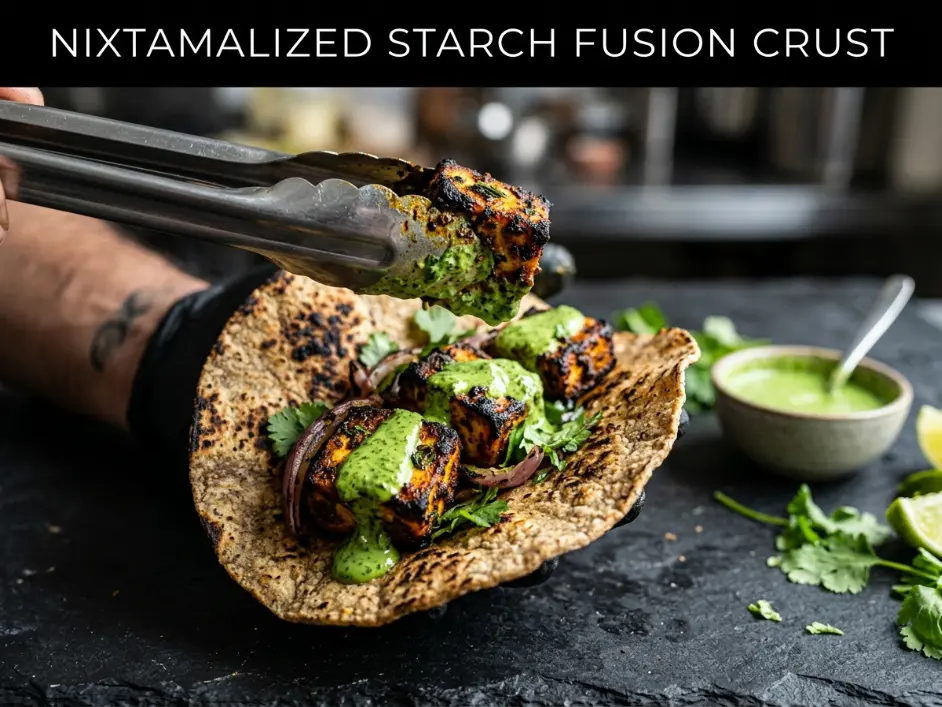
The fourth step assembles the fusion taco using traditional Mexican components that complement the Indian spicing.
The Science of Flavor Bridging
Successful fusion cooking requires identifying shared flavor compounds between cuisines. Indian tandoori spicing (cumin, coriander, chili) shares aromatic compounds with Mexican spicing (cumin, chili). Yogurt-based raita and Mexican crema both provide cooling dairy contrast. Pickled onions and Indian-style pickles (achar) share acid-forward preservation techniques.
Warm 6 corn tortillas on the same hot griddle used for the paneer—30 seconds per side until lightly charred and pliable. Corn tortillas are essential—their earthy, slightly sweet flavor bridges Indian and Mexican cuisines better than flour tortillas.
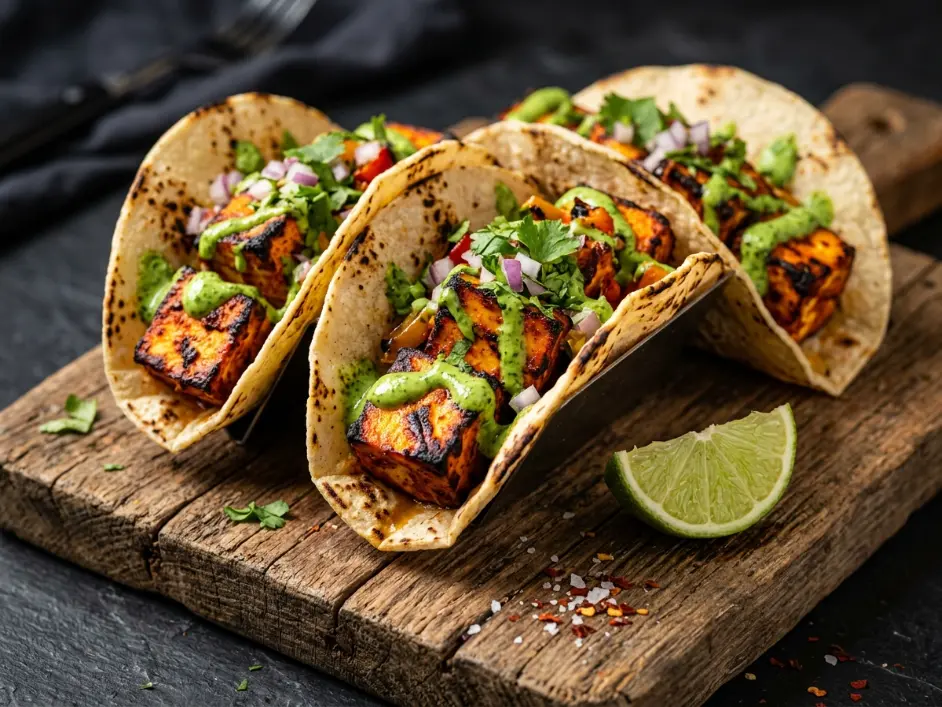
Place 4-5 pieces of charred paneer in the center of each tortilla. Top with finely diced red onion (approximately 2 tablespoons per taco)—the sharp bite cuts through the rich cheese. Add fresh cilantro leaves—cilantro is used extensively in both Indian and Mexican cooking.
The key component is mint-cilantro crema. Mix ½ cup (120ml) Mexican crema (or sour cream thinned with a tablespoon of milk) with 2 tablespoons prepared mint chutney or blend fresh mint, cilantro, green chili, and lime juice. This creates a cooling, herbaceous sauce that ties together the spicy paneer and the corn tortilla.
Drizzle generously over each taco. Serve immediately with lime wedges.
The textural contrast is essential: crispy charred paneer exterior, creamy mild interior, soft tortilla, crunchy raw onion, and smooth crema create the layered mouthfeel that defines great tacos.
For context on how rich, creamy sauces complement spicy proteins, see The Ultimate White Queso Dip: Just Like Your Favorite Mexican Restaurant!, where dairy provides essential cooling contrast.
Step 5: The Final Adherence Evaluation
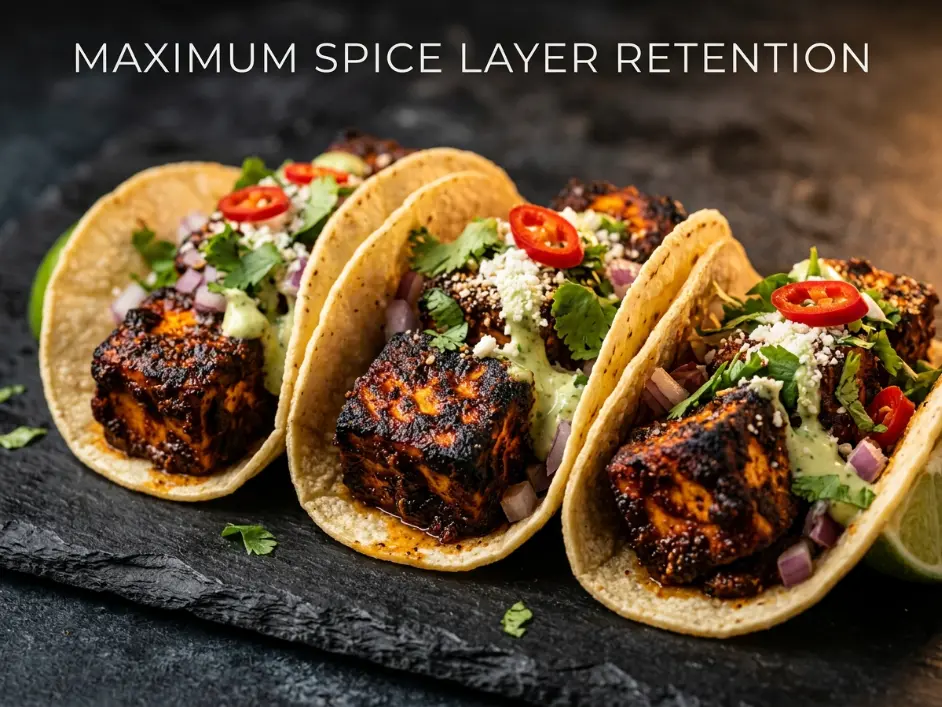
Proper Ultimate Paneer Tikka Tacos should display:
- Spice coating integrity: The paneer cubes should show uniform deep brown to black char on all exposed surfaces with no bare white patches. When you bite into the taco, the spice crust should remain bonded to the cheese, not falling off into the tortilla.
- Structural stability: The paneer should maintain its cube shape—not melted, not rubbery. The interior should be slightly warm but still have the characteristic squeaky texture of fresh paneer.
- Visual appeal: The vibrant orange-red marinade should have transformed into a dark, almost black char layer with visible texture from caramelized spice particles.
- Flavor penetration: While paneer does not absorb marinade deeply like porous proteins, proper surface adhesion creates intense spice flavor in every bite through the bonded crust layer.
The 3 Tricks for Maximum Spice Adherence
Now that you understand the process, these are the three non-negotiable tricks that govern marinade adhesion success.
Trick 1: Mandatory Whey Expulsion and Cornstarch Dusting
Paneer’s smooth, moisture-slick surface is the primary barrier to marinade adhesion. You must mechanically remove surface whey through compression and create micro-anchor channels through cornstarch dusting.
Press paneer under 8-10 pounds of weight for minimum 10 minutes before cutting. The paper towels should be visibly damp when removed—this is the expelled whey. Skip this step and your marinade will bead up and slide off within seconds of hitting the hot griddle.
After cutting into cubes, dust with cornstarch—exactly 1 teaspoon for 14 ounces of paneer. Too little provides insufficient anchoring. Too much creates a pasty coating that tastes starchy.
The cornstarch gelatinizes when heated, forming a thin gel layer that mechanically locks the marinade spices to the cheese surface through starch-protein interactions.
Trick 2: Lipophilic Oil Integration in Ultra-Thick Yogurt Base
Water-based marinades cannot bond to protein-dense cheese. You must create a lipophilic (fat-loving) binding matrix through high-fat yogurt and added oil.
Use only Greek yogurt or hung curd with minimum 10% fat content. Regular yogurt (3-4% fat) is too thin and water-rich—it will boil off the paneer surface before bonding occurs.
Add minimum 1 tablespoon oil per ½ cup yogurt. The oil must be emulsified into the yogurt through vigorous whisking—2 full minutes of aggressive mixing. Under-mixed marinade will separate when heated, causing the spice layer to slide off.
Mustard oil is chemically superior due to its pungent compounds and high smoke point, but refined avocado oil works adequately. Never use low-smoke-point oils (olive, butter, sesame) that burn before the paneer chars.
The marinade should be thick enough to coat a spoon and hold its shape. If it drips or runs, add more Greek yogurt or let regular yogurt strain longer.
Trick 3: Flash Searing Above 450°F on Dry Cast Iron
Moderate heat (300-350°F) allows the marinade to gradually heat, release moisture, and slide off before bonding. You need intense, rapid heat—450-500°F minimum—to create instant thermal setting.
Cast iron is essential—it retains heat when cold food is added and provides even surface contact. Stainless steel or non-stick pans drop temperature too much when paneer is added.
Preheat the pan for 5 full minutes over high heat until smoking. The surface must be hot enough that moisture flash-evaporates in 2-3 seconds, leaving only the denatured protein-spice matrix bonded to the cheese.
Cook each face for 2 full minutes without moving. Flipping too early prevents proper crust formation and causes marinade to tear away from the cheese surface.
The char should be dark brown to black—lighter browning indicates insufficient heat. The marinade should be completely dry and bonded, not wet or slippery.
Chef Albert’s Insight
Fusion cuisine often fails because cooks focus on flavor compatibility while ignoring the underlying physics of ingredient interaction. Paneer and tandoori spicing are flavor-compatible, but physically incompatible without intervention. The smooth cheese surface naturally rejects thick marinades—this is chemistry, not preference.
The Ultimate Paneer Tikka Tacos succeed by respecting both the Indian tandoori technique (high heat, yogurt marinade, intense char) and the physical limitations of paneer (smooth surface, high moisture, non-melting protein structure). Surface desiccation provides mechanical grip. Lipid integration provides chemical bonding. Flash searing provides thermal fusion.
This is applied surface chemistry in service of global fusion. When you understand that marinade adhesion is a physics problem requiring mechanical, chemical, and thermal solutions, the path to success becomes clear.
— Chef Albert, TastePillar
Pro Shopping Guide: USA-Specific Sourcing
For paneer: Look for fresh Indian paneer in blocks at Indian grocery stores (Patel Brothers, India Bazaar) or international sections of Whole Foods, Trader Joe’s. Avoid pre-cubed paneer which has been sitting in liquid. Sach or Nanak brands are widely available and reliable. Homemade paneer works excellently if you make it fresh.
For Greek yogurt: Fage Total 10% fat or Chobani Whole Milk Greek Yogurt provide proper thickness and fat content. Avoid low-fat or non-fat varieties—insufficient fat content for proper binding.
For spices: Kashmiri chili powder is essential for proper color—it provides vibrant red without excessive heat. MDH or Shan brands (Indian stores, Amazon) are authentic. Garam masala from Penzeys Spices or Diaspora Co. offers superior freshness. Kasuri methi (dried fenugreek) from Indian stores is mandatory—no substitute exists.
For mustard oil: Raw mustard oil (kachi ghani) is sold at Indian stores. It has a pungent, sharp aroma and requires heating before use (heat to smoking point, then cool) to mellow the flavor. Refined avocado oil (Chosen Foods, La Tourangelle) is the best substitute with proper smoke point.
For tortillas: Mission or Guerrero street-style corn tortillas (small, 4-5 inch diameter) work well. For premium quality, local tortillerías produce fresh corn tortillas daily in areas with Mexican populations.
For Mexican crema: Cacique Crema Mexicana is widely available. Sour cream thinned with milk works as substitute. For mint chutney, Swad or Deep brand (Indian stores) are reliable, or make fresh by blending mint, cilantro, green chili, lime juice, and salt.
Complete Ingredient Breakdown: US Customary & Metric
| Ingredient Category | Item | US Customary | Metric |
|---|---|---|---|
| Paneer Base | Indian paneer (fresh block) | 14 oz, cut into ½-inch cubes | 400g, cut into 1.2cm cubes |
| Cornstarch (for surface dusting) | 1 tsp | 3g | |
| Tandoori Marinade | Plain Greek yogurt (10% fat minimum) | ½ cup | 120g |
| Raw mustard oil or avocado oil | 1 tbsp | 15ml | |
| Fresh ginger-garlic paste | 1 tbsp | 15g | |
| Kashmiri chili powder | 1.5 tbsp | 10g | |
| Garam masala | 1 tsp | 2g | |
| Kasuri methi (dried fenugreek) | 1 tsp crushed | 1g | |
| Fine sea salt | ½ tsp | 3g | |
| Fresh lime juice | 1 tbsp | 15ml | |
| Taco Assembly | Street-style corn tortillas | 6 tortillas | 6 tortillas |
| Red onion (finely diced) | ½ cup | 75g | |
| Fresh cilantro leaves | ¼ cup | 10g | |
| Mint-cilantro crema | ½ cup | 120ml |
Common Mistakes Table: What Destroys Spice Adhesion
| The Mistake | What Actually Happens | The Fix |
|---|---|---|
| Using unpressed paneer straight from package | Excess surface whey creates slippery film; marinade beads up and slides off during grilling | Always press under weight for 10 minutes; paper towels should be visibly damp when removed |
| Using regular thin yogurt instead of Greek | High water content boils off instantly on griddle; carries spices away before bonding occurs | Use only Greek yogurt or hung curd with minimum 10% fat content |
| Skipping the cornstarch dusting step | Smooth paneer surface has no mechanical anchor points; marinade cannot grip and slides off | Dust cut cubes with exactly 1 tsp cornstarch; creates micro-channels for adhesion |
| Not adding oil to marinade | Water-based marinade cannot bond chemically to protein-dense cheese; no lipophilic interaction | Add minimum 1 tbsp mustard or avocado oil per ½ cup yogurt; whisk vigorously to emulsify |
| Cooking on medium heat (300-350°F) | Gradual heating allows marinade to release moisture and slide off before setting | Use high heat (450-500°F minimum); flash-searing creates instant protein cross-linking |
| Flipping paneer cubes too frequently | Prevents proper crust formation; marinade tears away from surface with each flip | Cook each face undisturbed for full 2 minutes before flipping |
| Refrigerating marinated paneer before cooking | Cold marinade shocks when hitting hot surface; causes cracking and separation | Always marinate at room temperature for 30 minutes before grilling |
Step-by-Step Method: The Complete Process
Step 1: Expel Surface Whey
Wrap 14 oz paneer block in 3-4 layers paper towels. Place on cutting board. Set heavy skillet (8-10 lbs) on top. Press for 10 minutes. Unwrap—towels should be damp. Cut into uniform ½-inch (1.2cm) cubes. Place in bowl, sprinkle with 1 tsp cornstarch. Toss to coat all surfaces. Shake off excess.
Step 2: Synthesize the Viscous Binder
In mixing bowl, combine ½ cup Greek yogurt, 1 tbsp mustard oil, 1 tbsp ginger-garlic paste, 1 tbsp lime juice, ½ tsp salt, 1.5 tbsp Kashmiri chili powder, 1 tsp garam masala, 1 tsp crushed kasuri methi. Whisk vigorously for 2 minutes until thick, uniform orange-red paste forms. Mixture should coat spoon and hold its shape.
Step 3: The Anchor Coat
Add cornstarch-dusted paneer cubes to marinade. Fold gently with spatula until every surface is completely coated with thick layer—no white patches visible. Rest at room temperature for exactly 30 minutes. Do not refrigerate.
Step 4: The Plancha Flash Sear
Heat cast-iron skillet over high heat for 5 minutes until lightly smoking (450-500°F). Brush with microscopic oil layer. Arrange marinated paneer in single layer with ½-inch spacing. Cook undisturbed for 2 minutes per face. Flip to un-seared faces using tongs. Repeat until all 4 sides show deep brown to black char. Marinade should be completely dry and bonded.
Step 5: Assemble the Fusion Matrix
Warm 6 corn tortillas on hot griddle for 30 seconds per side until lightly charred and pliable. Place 4-5 charred paneer pieces in center of each tortilla. Top with 2 tbsp diced red onion, fresh cilantro, and generous drizzle of mint-cilantro crema. Serve immediately with lime wedges.
Paneer should display uniform deep char on all surfaces with zero bare white patches. Spice crust should remain bonded when bitten—not falling off into tortilla.
For those interested in how similar moisture control and surface preparation affects dessert textures, see The Fudgiest Air Fryer Brownies: 3 Chemical Rules for a Flawless Crinkle Top Crust, where surface chemistry creates entirely different outcomes.
Nutrition Information (Per Taco, ⅙ Recipe)
| Nutrient | Amount |
|---|---|
| Calories | 290 kcal |
| Protein | 14g |
| Total Fat | 18g |
| Saturated Fat | 8g |
| Total Carbohydrates | 18g |
| Dietary Fiber | 3g |
| Sugars | 2g |
| Cholesterol | 35mg |
| Sodium | 380mg |
| Calcium | 25% DV |
| Iron | 8% DV |
Note: Nutrition values are estimates based on USDA databases.
Storage & Serving
| Storage State | Refrigerator (≤40°F) | Best Serving Method |
|---|---|---|
| Marinated uncooked paneer | 4 hours maximum at room temp; 24 hours refrigerated | Bring to room temp 30 min before grilling |
| Cooked charred paneer (no tortilla) | 3 days in airtight container | Reheat in 400°F oven or air fryer for 3-4 minutes to re-crisp |
| Assembled tacos | Not recommended—tortillas become soggy | Always assemble immediately before serving |
FAQ: Your Questions Answered
Can I use tofu instead of paneer?
Not successfully with this method. Tofu has much higher moisture content (80%+ versus paneer’s 50%) and different protein structure. It would release excessive water during searing, preventing char formation. Tofu requires completely different preparation—pressing for hours, freezing, or coating with cornstarch slurry.
Why is my marinade still sliding off even after pressing?
Three likely causes: (1) insufficient pressing time—press for full 10 minutes under heavy weight; (2) yogurt too thin—use only Greek yogurt with 10%+ fat; (3) insufficient oil in marinade—add full tablespoon and whisk vigorously to emulsify.
Can I bake or air fry instead of pan-searing?
Yes, but results differ. Preheat oven to 475°F or air fryer to 400°F. Arrange marinated paneer on wire rack. Cook 10-12 minutes, flipping halfway. You will get char but not the same intense crust as direct contact with 500°F cast iron provides.
My paneer melted—what happened?
Paneer melts around 410°F (210°C) if held at temperature too long. Your pan was likely 500°F+ and you cooked each face longer than 2 minutes. Reduce heat slightly or reduce cooking time. Properly seared paneer should maintain cube shape.
Can I make the marinade ahead?
Yes. Marinade keeps refrigerated for 3 days. Bring to room temperature and re-whisk before using. Do not marinate the paneer more than 30 minutes before cooking—prolonged acid exposure makes the cheese rubbery.
Related Articles on TastePillar
Sheet Pan Steak Fajitas: A Gourmet Mexican Dinner with Zero Cleanup
The Fudgiest Air Fryer Brownies: 3 Chemical Rules for a Flawless Crinkle Top Crust
The Ultimate White Queso Dip: Just Like Your Favorite Mexican Restaurant!.
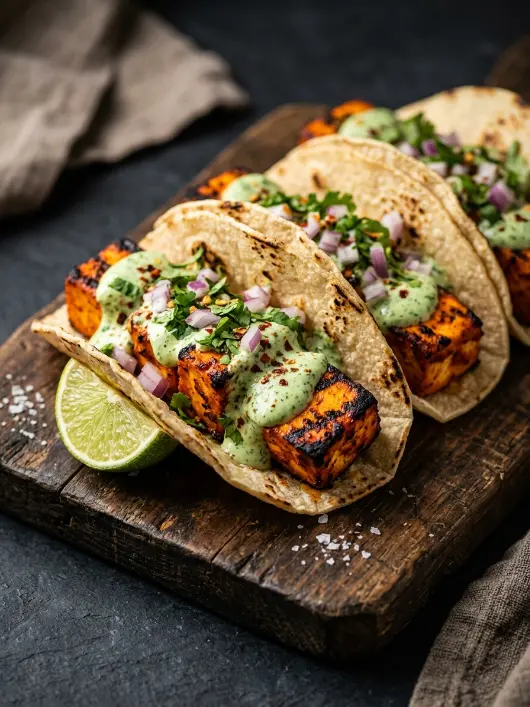
Ultimate Paneer Tikka Tacos
Ingredients
Equipment
Method
- Expel Surface Whey: Wrap paneer in paper towels. Press under heavy skillet for 10 minutes. Cut into ½-inch cubes. Dust with cornstarch. Shake off excess.
- Synthesize Viscous Binder: Whisk Greek yogurt, mustard oil, ginger-garlic paste, lime juice, salt, and all spices vigorously for 2 minutes until thick orange-red paste forms.
- The Anchor Coat: Fold paneer cubes into marinade until completely coated. Rest at room temperature for 30 minutes.
- The Plancha Flash Sear: Heat cast-iron skillet over high heat for 5 minutes until smoking (450-500°F). Brush with minimal oil. Arrange paneer in single layer. Cook each face undisturbed for 2 minutes until deeply charred.
- Assemble Fusion Matrix: Warm tortillas on griddle. Place 4-5 charred paneer pieces per tortilla. Top with diced onion, cilantro, and mint-cilantro crema. Serve immediately.
Notes
- Must press paneer to remove surface whey—unpressed paneer causes marinade to slide off.
- Greek yogurt minimum 10% fat essential—regular yogurt too watery.
- High heat (450°F+) mandatory for proper char and spice bonding.