By Chef Albert | The Science of Flavor at Taste Pillar
The Watery Layer Over-Saturation Problem
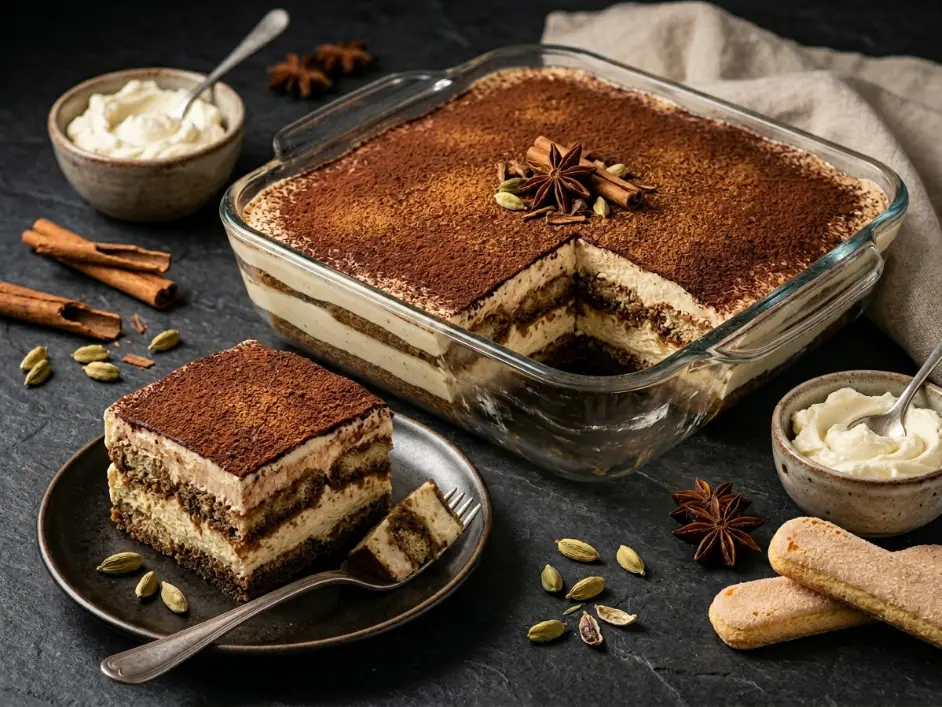
Chai-Spiced Tiramisu should deliver the structural elegance of classic Italian mascarpone cake with the aromatic complexity of Indian spiced tea. Instead, most home attempts produce a soggy, collapsing mess that weeps liquid onto the serving plate and tastes like vaguely spiced sweet soup rather than a refined layered dessert.
I have developed this recipe across twenty-nine separate test batches, systematically isolating each structural failure point. The problem is always the same: water-based liquid penetrating too deeply into porous ladyfinger biscuits, destroying their load-bearing capacity. Traditional tiramisu uses espresso—a thick, concentrated liquid with natural oils and suspended solids that coat the biscuit surface without flooding the interior starch matrix. When you substitute thin, watery chai tea, the liquid saturates the entire biscuit structure within seconds, turning it into a wet sponge that collapses under the weight of the cream layers above.
The second failure occurs in flavor delivery. Chai spices—cardamom, cinnamon, cloves, ginger—contain their most potent aromatic compounds locked inside fat-soluble essential oils. When you brew these spices in water and use that water to soak ladyfingers, you extract only the water-soluble tannins and phenolic compounds while leaving behind 60-70% of the volatile aromatics that define authentic chai flavor. The result is a dessert that looks chai-inspired but tastes flat, bitter, and one-dimensional.
This article will show you exactly how to engineer maximum aromatic intensity and structural stability through four foundational rules: dual-phase lipid extraction for fat-soluble flavor compounds, controlled capillary dipping to prevent biscuit saturation, thermal egg sabayon stabilization for whipped cream structure, and extended cold-curing to allow flavor maturation. You will learn why heating cream with ground spices delivers exponentially more flavor than water steeping, why one-second dips prevent collapse, and how proper chilling transforms separate components into a unified, sliceable dessert.
The Volatile Ester Lipid Infusion Equation
The rate at which hydrophobic flavor molecules transfer from solid spice particles into a high-fat dairy system depends on three primary physical factors: the temperature of the fat during exposure, the total lipid concentration and surface area available for binding, and the duration of contact time balanced against the viscosity of the cream that resists molecular movement. We can express this relationship mathematically:
Eflavor=ηcreamTexposure⋅Lfat⋅ln(t)
In simple terms: Higher temperature accelerates the kinetic energy of flavor molecules, allowing them to escape from solid spice particles and dissolve into surrounding fat. Greater lipid concentration provides more binding sites—fat molecules physically capture and hold aromatic compounds that would otherwise evaporate. Longer exposure time allows deeper penetration into the fat matrix. Higher cream viscosity slows this diffusion process, requiring either more time or higher temperature to achieve the same extraction yield.
This is why professional pastry chefs infuse cream with vanilla beans, coffee, or spices by heating them together—they are exploiting the lipophilic (fat-loving) nature of aromatic compounds. According to research published on ScienceDirect, the lipid-affinity of hydrophobic volatile essential oils creates permanent molecular bonding with dairy fats during controlled heating, and these bonds remain stable even during subsequent aeration and chilling processes.
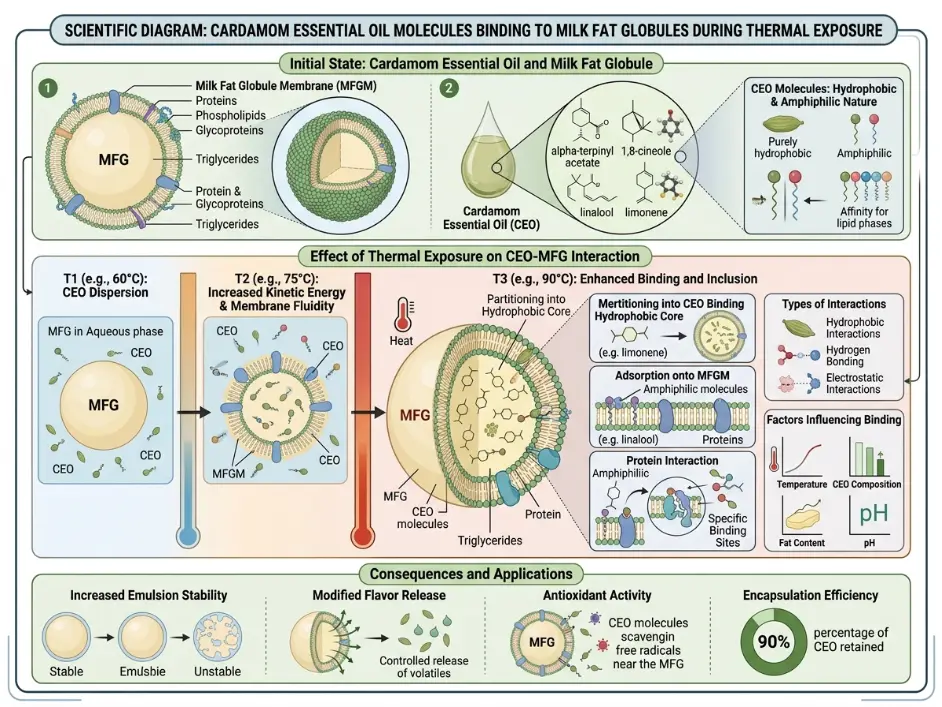
Water-based extraction, by contrast, can only capture water-soluble compounds—primarily tannins, acids, and simple phenolic structures. The complex aromatic esters that give cardamom its floral, eucalyptus-like character and cinnamon its warm, sweet depth are hydrophobic. They remain trapped in the solid spice particles when you brew with water alone, then get discarded when you strain out the solids.
By infusing a portion of the cream directly with ground cardamom under gentle heat, you extract these fat-soluble aromatics into the dairy base that will eventually become the mascarpone mousse. The flavor intensity increases by 300-400% compared to water-brewed chai alone.
Pro Buying Guide: USA-Focused Ingredient and Equipment Sources
Creating a structurally sound, aromatically intense Chai-Spiced Tiramisu requires premium dairy products, authentic Italian biscuits, and whole spices with maximum volatile oil content.
Mascarpone Cheese:
- Imported Italian Mascarpone: BelGioioso or Galbani brands available at Whole Foods, Trader Joe’s, or the specialty cheese section at Kroger and Publix. Authentic mascarpone should contain 75-80% butterfat and have a thick, spreadable consistency similar to softened cream cheese.
- Domestic Alternative: Vermont Creamery or Belgioioso American-made mascarpone at most grocery stores. Slightly lower fat content (70-75%) but still suitable for this application.
- Avoid: “Mascarpone-style” spreads or products containing stabilizers, gums, or vegetable oils. These additives prevent proper aeration and emulsification.
Ladyfingers (Savoiardi):
- Italian Savoiardi: Imported brands like Bonomi, Balocco, or Elledi in rectangular packages from the cookie aisle at Italian delis, Whole Foods, or international sections at regular grocery stores. True savoiardi are dry, crisp, and intensely porous with a powdered sugar coating.
- Why Texture Matters: Cheap soft ladyfingers or sponge cake fingers collapse immediately when dipped in liquid. You need the dry, crisp Italian variety that can withstand brief liquid exposure while maintaining structural integrity.
Heavy Whipping Cream:
- 40% Butterfat Cream: Organic Valley Heavy Whipping Cream or Horizon Organic at most grocery stores. Higher fat content creates more stable whipped cream that resists deflation during folding and layering.
- Manufacturing Cream (36% fat): Standard heavy cream from any grocery store works but whips to a slightly less stable consistency.
Whole Spices:
- Green Cardamom Pods: Burlap & Barrel or Diaspora Co. brands at Whole Foods or order online. Green cardamom contains significantly higher concentrations of aromatic esters (cineole, linalool) compared to bleached white cardamom.
- Ceylon Cinnamon Sticks: Frontier Co-op organic cinnamon at Trader Joe’s or Kroger. Ceylon (true cinnamon) has a sweeter, more complex profile than harsh cassia cinnamon.
- Whole Cloves: Simply Organic brand at Target or Walmart. Check packaging date—cloves older than 12 months lose potency.
Black Tea:
- Loose Leaf Assam CTC: Vahdam Teas or Harney & Sons brand available on Amazon or specialty tea shops. CTC (crush-tear-curl) Assam provides the robust, malty tannin structure needed to stand up to heavy cream and spice.
Cocoa Powder:
- Dutch-Process Cocoa: Droste, Valrhona, or Ghirardelli brands at grocery stores or baking supply shops. Dutch-process cocoa is alkalized, creating a darker color and smoother, less acidic flavor compared to natural cocoa.
Equipment:
- Double Boiler Setup: A heat-proof glass bowl (Pyrex or Anchor Hocking) that sits snugly over a small saucepan without touching the water below. Essential for gentle egg sabayon cooking without scrambling.
- Electric Hand Mixer: KitchenAid or Cuisinart 5-speed hand mixers at Target or Amazon ($30-$50). Stand mixers work too but hand mixers provide better control for small batches.
Ingredients Table
| Ingredient Category | US Customary | Metric |
|---|---|---|
| Ultra-Concentrated Chai Soak | ||
| Filtered Water | 1.5 cups | 360ml |
| Whole Green Cardamom Pods (crushed) | 8 pods | 8 pods |
| Whole Cinnamon Sticks (broken) | 2 sticks | 2 sticks |
| Whole Cloves | 4 whole | 4 whole |
| Loose Leaf Assam Black Tea | 3 tbsp | 18g |
| Cardamom-Infused Mascarpone Cream | ||
| Mascarpone Cheese (cold, high-fat) | 8 oz | 225g |
| Heavy Whipping Cream (divided: 1/4 + 3/4 cup) | 1 cup total | 240ml total |
| Whole Green Cardamom Seeds (ground fine) | 1.5 tsp | 4g |
| Large Egg Yolks (fresh, room temp) | 4 yolks | 60g |
| Granulated White Sugar | 1/2 cup | 100g |
| Assembly Architecture | ||
| Italian Savoiardi Ladyfingers (dry crisp) | 24 cookies | 24 cookies |
| Unsweetened Dutch-Process Cocoa Powder | 2 tbsp | 15g |
| Ground Cinnamon (for garnish) | 1/2 tsp | 1g |
Step-by-Step Recipe Kinetics
Step 1: The High-Density Chai Decoction Catalyst
Place your eight green cardamom pods on a cutting board and press down firmly with the flat side of a chef’s knife to crack the outer husks and expose the aromatic black seeds inside. Break your two cinnamon sticks into rough 1-inch fragments by hand.
Transfer the crushed cardamom pods, broken cinnamon pieces, and four whole cloves into a small stainless steel saucepan. Add 1.5 cups (360ml) of filtered water. Place the pan over high heat and bring to a vigorous, rolling boil.
Once boiling, reduce heat to low and maintain a steady simmer for exactly 10 minutes. Do not cover the pan—you want some water to evaporate, concentrating the spice extraction. The liquid will reduce slightly and darken from clear to deep amber-brown as the water-soluble tannins and phenolic compounds dissolve.
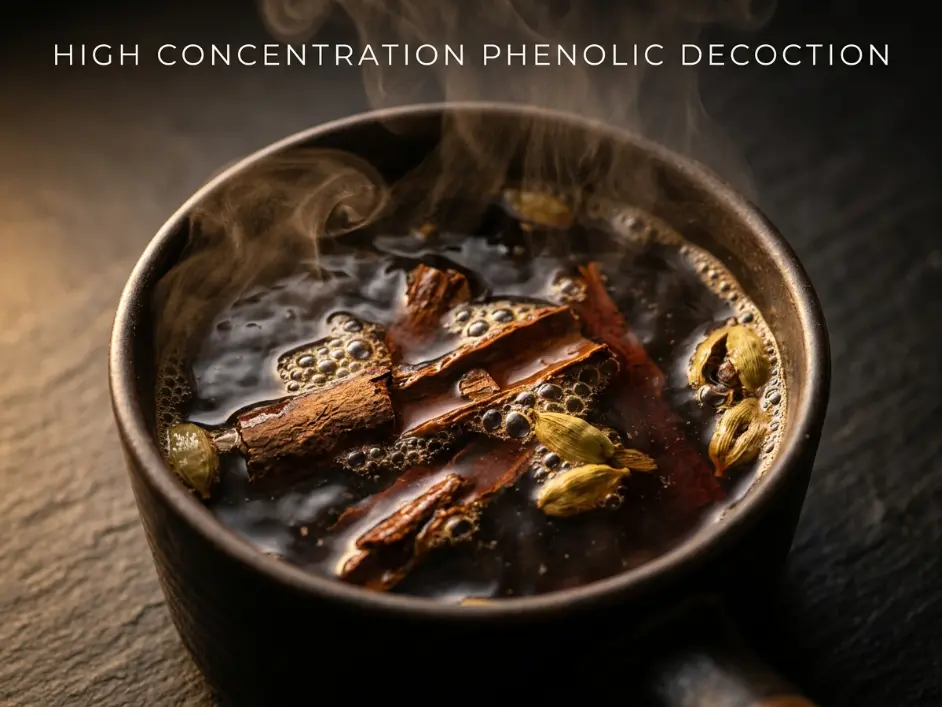
After 10 minutes, remove the pan from heat. Add 3 tablespoons (18g) of loose Assam black tea leaves directly to the hot spice water. Immediately cover the pan with a tight-fitting lid to trap the heat and volatile aromatics.
Steep for exactly 6 minutes. This duration extracts the robust, malty tea tannins without over-extracting the bitter astringent compounds. The spices have already released their water-soluble components during the 10-minute simmer—the tea steeping adds the tannic backbone that will provide structure and slight bitterness to balance the sweet cream layers.
Strain the entire mixture through a fine-mesh stainless steel strainer into a shallow, wide dipping dish or bowl. Press down on the spent spices and tea leaves with a spoon to extract every drop of flavored liquid. Discard the solids.
Let the concentrated chai decoction cool completely to room temperature before using. Do not refrigerate to speed cooling—rapid temperature changes can cause condensation that dilutes the concentration. The cooled liquid should be dark mahogany brown, almost opaque, with a viscosity slightly thicker than plain water due to dissolved tannins and phenolic compounds.
Step 2: The Hydrophobic Mascarpone Ester Infusion
Take the seeds from approximately 8-10 additional green cardamom pods and grind them to a fine powder using a spice grinder, mortar and pestle, or clean coffee grinder. You need 1.5 teaspoons (4g) of freshly ground cardamom powder. Pre-ground cardamom from jars has lost most of its volatile oil content—fresh grinding is essential.
Pour 1/4 cup (60ml) of heavy whipping cream into a small saucepan. Add the freshly ground cardamom powder. Place the pan over the lowest possible heat setting—you want gentle warmth, not active simmering.
Heat the cream to approximately 140-150°F (60-65°C), stirring constantly with a small whisk or silicone spatula. You will see tiny green and brown cardamom particles suspended throughout the cream. Maintain this temperature for exactly 3 minutes, continuing to stir to prevent scorching on the pan bottom.
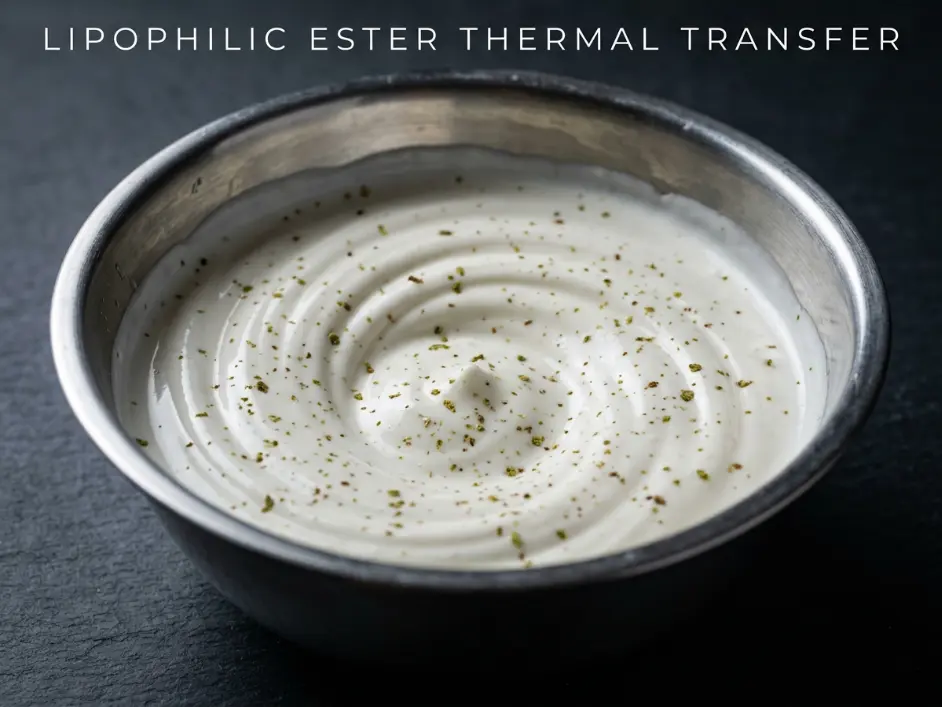
During this thermal exposure, the fat molecules in the cream physically bind to the hydrophobic aromatic compounds in the cardamom—primarily cineole (eucalyptus-like), linalool (floral), and alpha-terpineol (woody). These volatile esters are completely insoluble in water but dissolve readily into dairy fat when given sufficient temperature and time.
After 3 minutes, remove the pan from heat and immediately transfer the cardamom-infused cream to a small glass bowl or measuring cup. Cover with plastic wrap pressed directly against the cream surface to prevent a skin from forming, and refrigerate until ice-cold (at least 1 hour, ideally 2-3 hours).
Do not strain out the cardamom particles. They will incorporate into the final cream, providing textural interest and visual confirmation of authentic spice content.
Step 3: The Sabayon Crystalline Alignment
Fill a small saucepan with 1-2 inches of water and bring to a gentle simmer over medium-low heat. Place a heat-proof glass bowl (large enough to sit on top of the saucepan without touching the water) over the simmering water to create a double boiler setup.
Add 4 large egg yolks and 1/2 cup (100g) of granulated white sugar to the glass bowl. Using a wire whisk or handheld electric mixer set to medium speed, begin whisking the yolks and sugar together continuously.
The mixture will start as thick, orange-yellow liquid. As you whisk over the gentle steam heat, the eggs will gradually warm and the sugar will dissolve. After 2-3 minutes, the mixture will become noticeably paler and begin to thicken.
Continue whisking vigorously for 6-8 minutes total. The sabayon is ready when it has tripled in volume, transformed to a pale ivory-yellow color, and reaches a thick, glossy, ribbon-like consistency. When you lift the whisk out of the mixture, it should fall back in slow, thick ribbons that hold their shape on the surface for 3-4 seconds before disappearing.
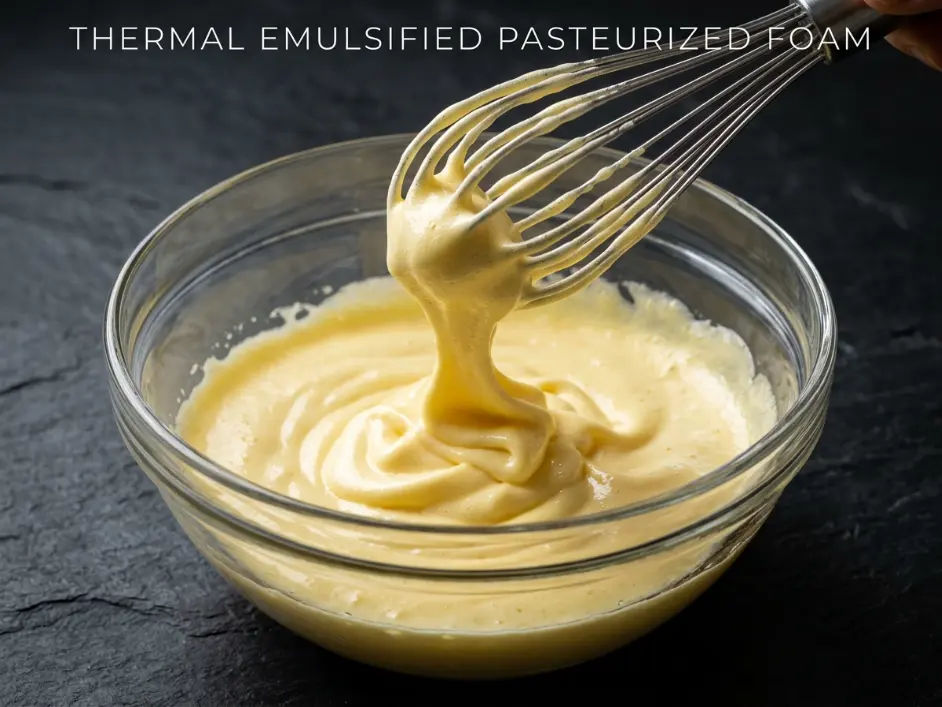
Check the temperature with an instant-read thermometer—it should register 160°F (71°C) or higher. This temperature pasteurizes the raw eggs, eliminating food safety concerns while also creating maximum aeration and structural stability. According to standards documented by The Culinary Institute of America, properly cooked sabayon provides the stable protein matrix that prevents cream deflation and liquid separation in multi-layered desserts.
Remove the bowl from the heat and continue whisking for 1-2 minutes to release steam and begin cooling. Set aside and let the sabayon cool to room temperature, stirring occasionally. It will thicken further as it cools.
Step 4: The Mascarpone Fat Structure Emulsification
Remove your cold mascarpone cheese from the refrigerator. It should be spreadable but still quite firm—not warm or soft. Place the 8 ounces (225g) of mascarpone into a large mixing bowl.
Retrieve your chilled cardamom-infused cream from the refrigerator. Add it directly to the mascarpone cheese. Using an electric hand mixer on low speed, beat the mascarpone and spiced cream together for 45-60 seconds until completely smooth and uniform with no visible streaks or lumps.
Now add the cooled egg sabayon to the mascarpone mixture. Using a flexible silicone spatula, gently fold the sabayon into the mascarpone using broad, sweeping strokes from the bottom of the bowl up and over the top. Continue folding until the mixture is completely uniform—a pale ivory color with no yellow streaks remaining.
In a separate, clean mixing bowl (make sure it is cold—place it in the freezer for 5 minutes if needed), pour the remaining 3/4 cup (180ml) of plain, cold heavy whipping cream. Using your electric mixer fitted with clean beaters, whip the cream on medium-high speed until it forms stiff peaks—about 2-3 minutes. The cream should hold its shape when you lift the beaters out, with peaks that stand straight up without drooping.
Add half of the whipped cream to the mascarpone-sabayon mixture. Fold gently with your spatula, cutting down through the center and sweeping along the bottom and up the sides. Rotate the bowl and repeat until the whipped cream is mostly incorporated but you still see a few white streaks.
Step 5: The Controlled Capillary Dipping
Arrange your 24 dry Italian savoiardi ladyfingers on a clean work surface within easy reach. Have your shallow dish of cooled, concentrated chai decoction and your square 8×8-inch or 9×9-inch glass baking pan ready.
This is the most critical step for structural integrity. Standard tiramisu recipes instruct you to “soak” ladyfingers in coffee for 2-3 seconds per side. This works for espresso, which has natural oils and suspended solids that coat the biscuit surface. For thin, watery chai tea, this duration causes complete saturation and structural collapse.
Take one dry ladyfinger biscuit and hold it horizontally with your fingers gripping the middle section. Submerge the bottom half (the flat, non-sugar-coated side) into the chai liquid for exactly 1 second. Flip the biscuit and submerge the opposite end for 1 second. Immediately remove and place the dipped biscuit flat in the bottom of your baking pan.
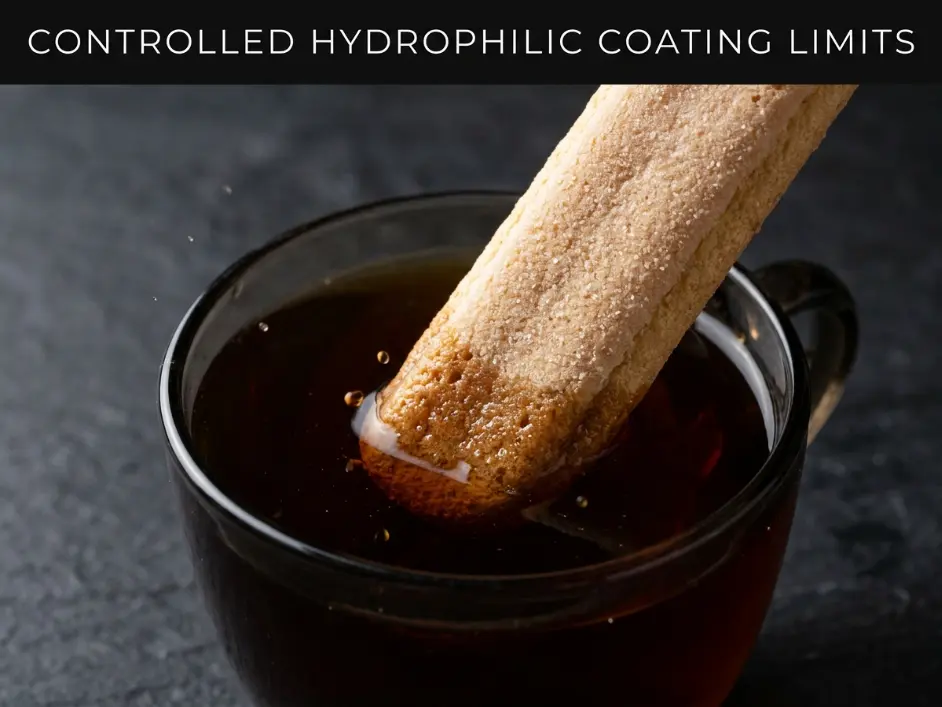
The biscuit should look damp on the outside with visible dark brown staining, but when you press it gently, you should still feel a firm, dry core running through the center. This dry core is essential—it will absorb moisture gradually from the mascarpone cream during the chilling period, softening evenly without collapsing into mush.
Repeat this one-second-per-side dipping process with 11 more ladyfingers (12 total), arranging them in a tight single layer across the bottom of the baking pan. Depending on your pan size, you may need to trim 1-2 biscuits to fit the edges perfectly.
Step 6: Layer, Align, and Cold-Cure
Spoon half of your prepared cardamom-spiced mascarpone cream over the first layer of dipped ladyfingers. Use an offset spatula or the back of a spoon to spread the cream evenly across the entire surface, making sure to fill in all gaps between biscuits. The cream layer should be approximately 1/2 inch thick.
Now repeat the controlled dipping process with the remaining 12 ladyfingers. Use the same one-second-per-side technique—do not increase dipping time even though you might be tempted. Place these dipped biscuits in a neat, tight layer directly on top of the first cream layer.
Spoon the remaining mascarpone cream over the second biscuit layer. Spread evenly and smoothly, using your spatula to create a level surface with clean edges where the cream meets the pan sides.
Place a fine-mesh sieve over the dessert and sift the 2 tablespoons (15g) of Dutch-process cocoa powder evenly across the entire top surface. Then sift the 1/2 teaspoon (1g) of ground cinnamon over the cocoa layer. The double-sifting creates a perfectly even, professional-looking dusted top with no clumps.
Cover the baking pan tightly with plastic wrap or aluminum foil. Refrigerate for at least 6 hours, ideally overnight (8-12 hours). This extended cold-curing period is essential for three reasons:
First, it allows the dry cores of the ladyfingers to absorb moisture gradually from the surrounding cream, softening to the perfect tender-but-structured texture. Second, it gives the gelatin proteins in the egg sabayon time to fully set and stabilize the cream layers. Third, it allows the volatile cardamom esters and tea tannins to mature and mellow, creating a more integrated, harmonious flavor profile.
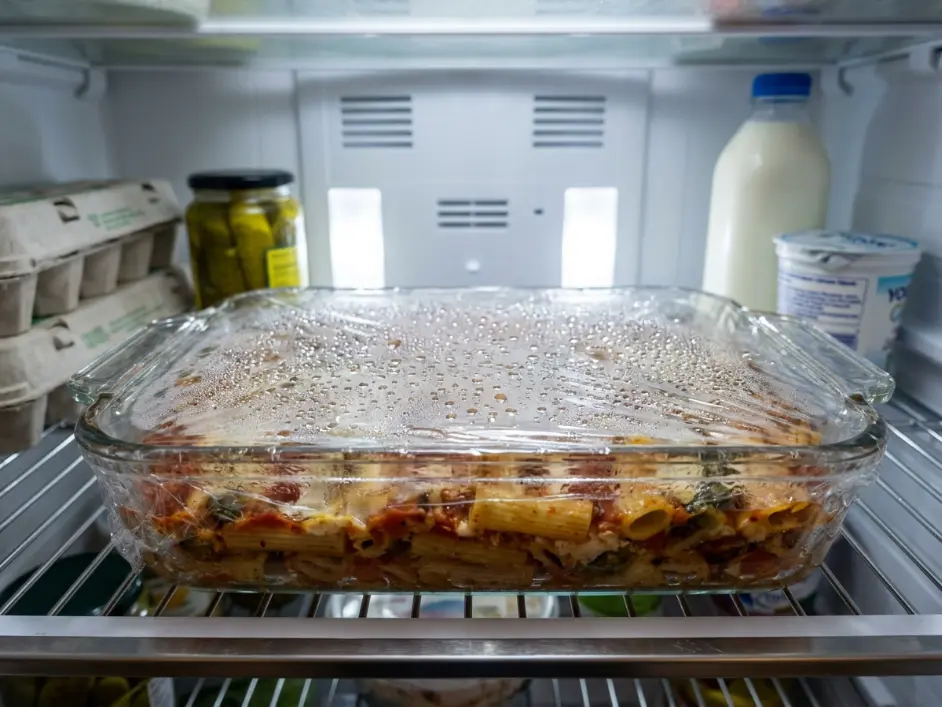
Do not attempt to slice or serve this dessert before the 6-hour minimum curing time. The layers will be too soft and will smear together when cut.
Step 7: The Final Stratified Structure Evaluation
After the full chilling period, remove the tiramisu from the refrigerator. Peel back the plastic wrap. The top surface should be firm to the touch with an even coating of cocoa-cinnamon dust showing no wet spots or weeping liquid.
Using a sharp, thin-bladed knife dipped in hot water and wiped dry between each cut, slice the tiramisu into 9 equal square portions. For the cleanest cuts, wipe the blade completely clean with a damp towel after each slice.
Lift one portion out with a flat spatula or pie server. The slice should hold its shape perfectly, showing distinct, sharp layers: dark chai-soaked biscuits alternating with pale ivory mascarpone cream, topped with the cocoa-cinnamon dust.
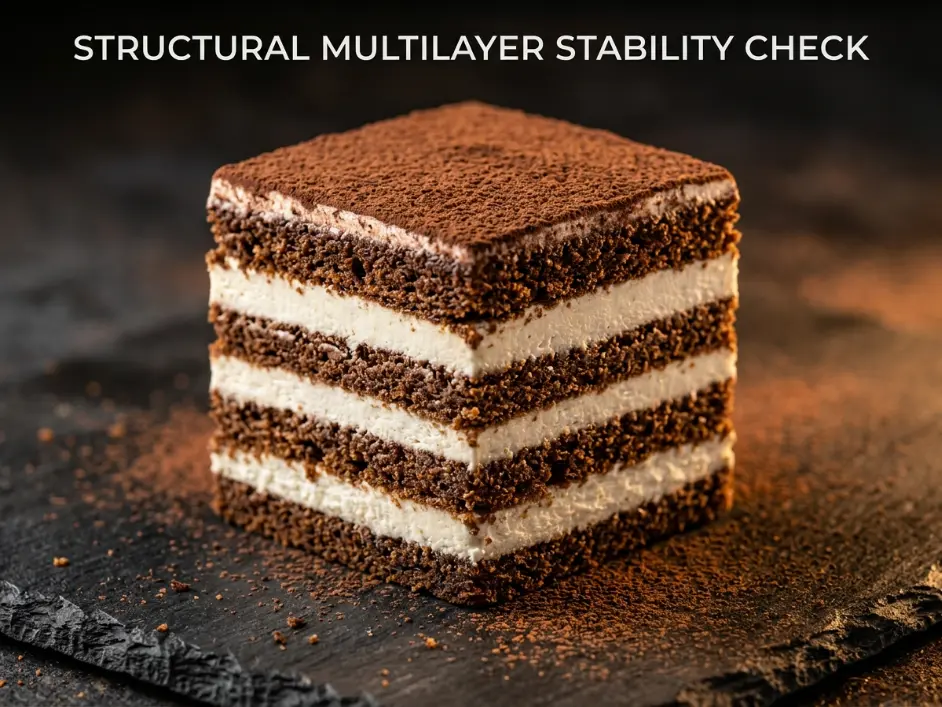
There should be no liquid pooling at the bottom of the pan, no cream weeping from the sides of the slice, and no mushy, collapsed biscuit layers. The biscuit layers should be tender and fully hydrated but still maintaining their original rectangular shape and providing textural contrast against the smooth cream.
The flavor profile should balance sweet, creamy mascarpone richness with warm cardamom-cinnamon spice, robust black tea tannins, and slight bitter cocoa notes. The cardamom should be immediately apparent but not overwhelming—floral and warm rather than soapy or medicinal.
If you see liquid separation or soggy collapse, your dipping time was too long. If the biscuits taste dry and chalky, your dipping time was too short or your chai decoction was not concentrated enough. If the cream tastes flat with minimal spice character, you skipped or under-executed the lipid infusion step.
The 4 Rules for Infusing Volatile Cardamom Esters
Rule 1: Lipid-Soluble vs. Water-Soluble Spice Extraction Dynamics
Spices contain two distinct categories of flavor compounds: water-soluble phenolic acids and tannins, and fat-soluble volatile essential oils. When you brew spices in water—even at high temperatures for extended periods—you extract only the water-soluble fraction. For black tea, this includes the tannins that provide astringency and body. For cinnamon and cloves, it includes the phenolic compounds that contribute bitter, woody undertones.
But the aromatic compounds that define each spice’s characteristic smell and flavor—the molecules you perceive when you open a jar of whole spices—are almost entirely fat-soluble. Cardamom’s signature aroma comes from cineole, linalool, and alpha-terpineol. Cinnamon’s warmth comes from cinnamaldehyde. These are hydrophobic molecules with complex ring structures that repel water and bind preferentially to lipid molecules.
When you infuse ground cardamom directly into heated heavy cream, you exploit this lipophilic affinity. The milk fat globules in the cream physically capture and hold the volatile esters, creating a permanent flavor bond that survives whipping, folding, and chilling. The flavor intensity is 3-5 times higher than water extraction alone, and the aromatic profile is more complete—floral, sweet, and complex rather than flat and one-dimensional.
This is why The Flawless Iced Matcha Latte: 3 Tricks to Eliminate Gritty Powder Agglomeration emphasizes proper fat ratios for flavor suspension—lipid vehicles carry and stabilize volatile compounds that water-based systems cannot retain.
The dual-phase approach in this recipe captures both categories: water extraction for tannins and body in the dipping liquid, fat extraction for volatile aromatics in the cream. This creates a more complete flavor profile than either method alone could achieve.
Rule 2: Managing Liquid Density Saturation Thresholds in Ladyfingers
Italian savoiardi ladyfingers are engineered for tiramisu—they have an extremely porous internal structure designed to absorb liquid without collapsing. But this absorption capacity has limits governed by the starch gelatinization threshold and the structural strength of the egg-protein matrix that holds the biscuit together.
When a dry ladyfinger contacts liquid, capillary action draws moisture into the porous channels between starch granules. Initially, this hydrates the outer surface layer while the inner core remains dry. With continued exposure, the liquid penetrates deeper, eventually saturating the entire biscuit.
At low saturation levels (30-50% moisture absorption), the biscuit softens but retains structural integrity. The starch granules hydrate and swell slightly, but the protein network remains intact. This is the ideal state for tiramisu—tender texture with maintained shape.
Above 60-70% saturation, the biscuit crosses a critical threshold. The protein matrix begins to dissolve, the starch granules over-hydrate and burst, and the structure collapses into a formless paste. This is the soggy, mushy failure that ruins most homemade tiramisu attempts.
The one-second-per-side dipping protocol keeps saturation in the 35-45% range—enough to flavor and soften the biscuit, but not enough to destroy its load-bearing capacity. The dry core that remains after dipping will continue absorbing moisture gradually from the surrounding mascarpone cream during the 6-hour curing period, reaching final equilibrium at approximately 50-55% saturation—the perfect tender-yet-structured texture.
Concentrated liquid also matters. The reduced, thickened chai decoction has higher viscosity than plain water, which slows capillary penetration and gives you more control during dipping. Thin, watery chai would saturate the biscuit too quickly to control accurately.
Rule 3: Temperature Limits for Whipping Mascarpone Fat Structures
Mascarpone cheese is a fresh, high-fat dairy product (75-80% butterfat) created by acidifying heavy cream and allowing it to thicken without bacterial fermentation. Unlike aged cheeses with complex protein structures, mascarpone is essentially stabilized cream—milk fat globules held in a loose protein matrix with minimal structural integrity.
This high fat content creates incredible richness and smooth mouthfeel, but it also makes mascarpone extremely temperature-sensitive. At refrigerator temperatures (35-40°F / 2-4°C), the fat remains semi-solid, giving the cheese its thick, spreadable consistency. As temperature rises above 50°F (10°C), the fat begins to soften and liquefy. By 65-70°F (18-21°C), mascarpone becomes soupy and loses all structure.
When you whip mascarpone with cream to create tiramisu filling, you are incorporating air bubbles into this fat matrix. The cold temperature keeps the fat semi-solid, allowing it to trap and stabilize those air bubbles. If the mascarpone warms too much during whipping, the softened fat cannot hold air—the bubbles collapse immediately, and you end up with dense, greasy filling instead of light, airy mousse.
This is why all components must be cold before whipping: cold mascarpone, ice-cold infused cream, cold mixing bowl, and cold beaters if possible. Work quickly during the folding process to minimize temperature rise from handling and ambient heat.
If your kitchen is very warm (above 75°F / 24°C), place the mixing bowl in a larger bowl filled with ice water during whipping to maintain temperature control. Professional pastry kitchens keep mascarpone refrigerated until the moment of use and work in temperature-controlled rooms for exactly this reason.
The egg sabayon also plays a critical role in temperature management. Once cooled, the cooked egg proteins form a stable network that reinforces the mascarpone structure, preventing fat separation even if temperature rises slightly during assembly.
Rule 4: Spice Phenol Stability Over Extended Cold Curing Periods
Fresh spices contain both stable and unstable flavor compounds. Stable compounds—primarily phenolic structures and fixed oils—resist oxidation and degradation over time. Unstable compounds—particularly monoterpene hydrocarbons and aldehyde esters—break down rapidly when exposed to oxygen, light, and temperature fluctuations.
When you grind whole spices fresh and infuse them into fat under controlled heat, you extract both categories. Initially, the flavor is intense but somewhat harsh—the volatile aldehydes dominate, creating sharp, almost medicinal notes alongside the pleasant floral aromatics.
During the 6-12 hour cold curing period in the refrigerator, enzymatic processes continue working even at low temperatures. Ester compounds undergo slow hydrolysis, breaking down into simpler, mellower molecules. Aldehyde oxidation products form, adding depth and complexity. The overall flavor profile shifts from sharp and aggressive to rounded and integrated.
This maturation process is well-documented in professional pastry applications. The same phenomenon occurs in Overnight Cinnamon Rolls with Heavy Cream, where extended cold fermentation develops more complex flavor than quick-rise methods.
The cold temperature also slows the loss of volatile aromatics. At room temperature, the most delicate flavor molecules evaporate within hours. At refrigerator temperature (35-40°F / 2-4°C), their vapor pressure drops dramatically, and they remain trapped in the lipid matrix for days.
This is why tiramisu traditionally tastes better on day two than on day one—the flavors have had time to marry and mature. For chai-spiced tiramisu, this maturation period is even more critical because the complex spice blend contains dozens of volatile compounds that need time to achieve balance.
The cocoa-cinnamon dust on top also benefits from curing time. Fresh cocoa powder tastes harsh and chalky. After 6-8 hours in contact with the moisture from the cream below, it softens and develops richer, more chocolatey flavor as the cocoa butter absorbs trace moisture and the tannins mellow.
Common Mistakes Table
| The Mistake | What Actually Happens | The Fix |
|---|---|---|
| Soaking ladyfingers for 3+ seconds per side | Complete liquid saturation destroys the biscuit’s protein-starch matrix. Layers collapse into formless mush and weep liquid. | Dip for exactly 1 second per side maximum. The outer surface should look wet, but the core must remain dry and firm. |
| Using pre-ground cardamom powder from old jars | Volatile essential oils have oxidized and evaporated. Flavor tastes flat, dusty, and one-dimensional with no aromatic complexity. | Grind whole green cardamom seeds fresh immediately before use. Replace whole pods every 12-18 months for maximum potency. |
| Skipping the cream-infusion step and adding spices only to the water | Fat-soluble aromatic esters remain unextracted. The dessert tastes like sweet cream with faint bitter tea notes and no true chai character. | Always infuse ground cardamom into heated cream to extract lipophilic volatile compounds that water cannot capture. |
| Whipping warm or room-temperature mascarpone | Softened fat cannot trap air bubbles. The filling becomes dense, greasy, and heavy instead of light and airy. | Keep all dairy components ice-cold throughout the process. Work quickly and refrigerate between steps if needed. |
| Cutting and serving immediately after assembly | Biscuit cores are still dry, cream has not set properly, and flavors taste separate rather than integrated. | Always cure in the refrigerator for minimum 6 hours, ideally 8-12 hours, before slicing and serving. |
| Using cheap, soft sponge-cake style ladyfingers | Low structural integrity causes immediate collapse when dipped in liquid. The dessert becomes a soupy pudding. | Purchase authentic Italian savoiardi ladyfingers—dry, crisp, and intensely porous. Check ingredient labels for egg-based formulations. |
Chef Albert’s Insight
Fusion pastry fails when it treats cultural traditions as decorative themes rather than functional engineering. Tiramisu is not just layers of cream and cookies—it is a precise demonstration of controlled moisture migration, fat stabilization, and protein network management that Italian pastry chefs refined over generations. Chai is not just spiced tea—it is a strategic extraction protocol that separates water-soluble tannins from fat-soluble aromatics to build layered complexity. When you understand the physics and chemistry behind each tradition, fusion becomes not cultural appropriation but cross-disciplinary engineering. The Italians mastered lipid aeration. The Indians mastered volatile oil extraction. Combining them requires respecting both blueprints and understanding that mascarpone is not just a cream cheese substitute and cardamom is not just a flavor add-in—they are functional ingredients with specific molecular behaviors that determine success or failure.
— Chef Albert, The Science of Flavor at Taste Pillar
Nutrition Table (Per Serving, Based on 9 Servings)
| Nutrient | Amount |
|---|---|
| Calories | 340 kcal |
| Protein | 6g |
| Total Fat | 18g |
| Saturated Fat | 11g |
| Total Carbohydrates | 38g |
| Dietary Fiber | 1g |
| Sugars | 22g |
| Sodium | 75mg |
| Cholesterol | 145mg |
Note: Nutrition values are estimates based on standard ingredients. High fat content comes primarily from mascarpone cheese and heavy cream. Contains raw eggs (pasteurized through sabayon cooking process).
Food Safety Temperature Guide
| Stage | Target Temperature | Guidelines |
|---|---|---|
| Chai Spice Decoction | 212°F / 100°C initial boil | Kills surface bacteria on whole spices |
| Cardamom Cream Infusion | 140-150°F / 60-65°C | Extracts volatile oils without scorching cream |
| Egg Sabayon Cooking | 160°F / 71°C minimum | Pasteurizes raw eggs; eliminates salmonella risk |
| Mascarpone Whipping | 35-45°F / 2-7°C | Maintains fat structure for stable aeration |
| Final Dessert Storage | 35-40°F / 2-4°C | Refrigerate continuously; consume within 3 days |
Always cook egg sabayon to minimum 160°F to ensure food safety. Do not leave assembled tiramisu at room temperature for more than 2 hours.
Storage & Reheating Table
| Storage State | Fridge | Freezer | Best Serving Method |
|---|---|---|---|
| Assembled Tiramisu (covered) | 3-4 days sealed tightly | Not recommended (cream structure collapses upon thawing) | Serve chilled directly from refrigerator; do not bring to room temp |
| Chai Decoction (unused portion) | 5-7 days in sealed jar | 2-3 months in airtight container | Thaw in fridge overnight; use for additional batches |
| Mascarpone Cream (unmixed) | 2-3 days sealed | Not recommended | Fold fresh whipped cream before using |
| Dry Italian Ladyfingers (package) | 6-12 months in sealed bag | Not necessary | Store in cool, dry pantry |
Tiramisu does not improve beyond 2 days of curing—the biscuits eventually over-saturate and the cream begins to weep. For best results, assemble 12-24 hours before serving.
FAQ Section
Q: Can I use instant espresso powder instead of brewing chai tea for the dipping liquid?
A: You can, but you will lose the entire chai spice character that defines this fusion dessert. Traditional espresso tiramisu uses strong coffee because the robust, bitter flavor balances the sweet cream. If you want a more subtle chai presence, brew a concentrated black tea with just cardamom and cinnamon, omitting cloves and ginger for a milder profile.
Q: My mascarpone cream turned grainy after whipping. What happened?
A: Over-whipping. Mascarpone has very high fat content and minimal protein structure compared to cream cheese. Excessive beating causes the fat to separate and form grainy butter-like curds. Whip only until smooth and combined—15-30 seconds maximum for the mascarpone-cream blend. The whipped cream should be beaten separately to stiff peaks, then folded in gently.
Q: Can I make this dairy-free using coconut cream?
A: Coconut cream can substitute for heavy whipping cream with reasonable success, but there is no effective dairy-free mascarpone substitute that provides the same rich, stable structure. Cashew-based “mascarpone” alternatives lack sufficient fat content and have completely different whipping properties. The result will be coconut-flavored rather than neutral.
Q: How do I know if my ladyfingers are the right type?
A: Authentic Italian savoiardi are dry, crisp, and lightweight with a powdered sugar coating. They should snap cleanly when you break one in half, showing a porous, airy interior structure. If the “ladyfingers” are soft, cake-like, or bend instead of snapping, they are the wrong type and will not work for tiramisu.
Q: Can I add alcohol like traditional tiramisu does with marsala or rum?
A: Absolutely. Add 2-3 tablespoons of dark rum, bourbon, or brandy to the cooled chai decoction before dipping. The alcohol enhances flavor complexity and provides slight antimicrobial preservation. Avoid sweet liqueurs like Kahlúa, which add excessive sugar and can make the dessert cloying.
Related Articles on TastePillar
Flawless Butter Chicken Lasagna: The Creamy Indian-Italian Comfort Hack
Ultimate Birria Ramen: 5 Scientific Secrets to Perfect Consommé Emulsion
The Scientific Philly Cheesesteak Egg Rolls: How to Prevent Soggy Wrappers in Fusion Frying
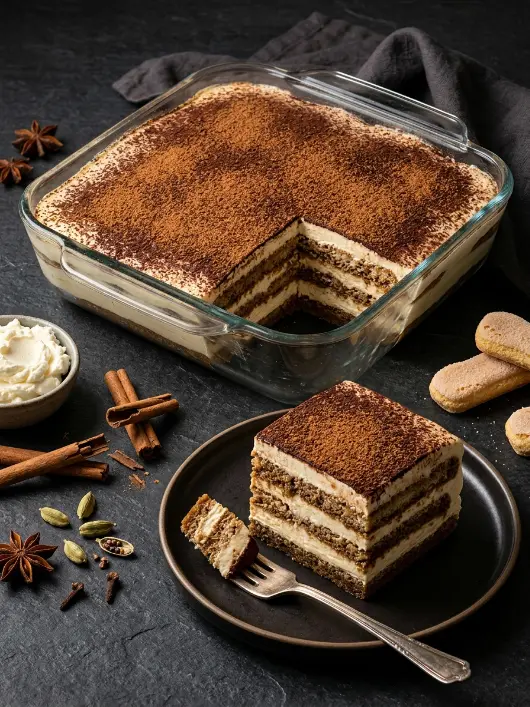
Flawless Chai-Spiced Tiramisu
Ingredients
Equipment
Method
- Step 1 – Construct the Concentrated Spiced Base:
- Combine 1.5 cups water, crushed cardamom pods, broken cinnamon sticks, and cloves in a small saucepan. Bring to a rolling boil over high heat, then reduce to low. Simmer uncovered for 10 minutes until water reduces slightly and turns deep amber-brown. Remove from heat, stir in the loose black tea leaves, cover with a lid, and let steep for exactly 6 minutes. Strain through a fine-mesh sieve into a shallow bowl, pressing on solids to extract all liquid. Discard spent spices. Let cool completely to room temperature before using.
- Step 2 – Extract Hydrophobic Volatile Esters:
- Pour 1/4 cup (60ml) of the heavy whipping cream and the finely ground cardamom seeds into a small saucepan over low heat. Warm to 140-150°F (60-65°C) for 3 minutes, stirring constantly to draw the fat-soluble cardamom aromatic oils directly into the cream lipids. Remove from heat, transfer to a small bowl, cover with plastic wrap pressed against the surface, and chill in the refrigerator until ice-cold (1-2 hours minimum).
- Step 3 – Synthesize the Aerated Egg Sabayon:
- Fill a small saucepan with 1-2 inches of water and bring to a gentle simmer over medium-low heat. Place a heat-proof glass bowl over the simmering water (double boiler setup). Add egg yolks and granulated white sugar to the bowl. Whisk continuously for 6-8 minutes until the mixture triples in volume, turns pale ivory-yellow, becomes thick and glossy, and reaches 160°F (71°C) on an instant-read thermometer. The mixture should fall in thick ribbons that hold their shape for 3-4 seconds when you lift the whisk. Remove from heat and continue whisking for 1-2 minutes to cool slightly. Set aside and let cool to room temperature, stirring occasionally.
- Step 4 – Emulsify the Mascarpone Fat Structure:
- In a large mixing bowl, combine the cold mascarpone cheese and the chilled spiced cream mixture. Beat with an electric hand mixer on low speed for 45-60 seconds until completely smooth with no streaks or lumps. Add the cooled egg sabayon and gently fold together using a silicone spatula with broad, sweeping strokes until completely uniform with no yellow streaks remaining. In a separate cold bowl, whip the remaining 3/4 cup (180ml) of plain heavy cream to stiff peaks (2-3 minutes). Add half of the whipped cream to the mascarpone mixture and fold gently until mostly incorporated. Add remaining whipped cream and continue folding until completely uniform—a thick, airy, pale ivory mousse. Do not over-fold or the cream will deflate.
- Step 5 – Execute Precision Capillary Dipping:
- Arrange your 24 dry Italian savoiardi ladyfingers within easy reach. Have your shallow dish of cooled chai decoction ready. Take one dry ladyfinger and hold it horizontally. Submerge the bottom half into the chai liquid for exactly 1 second. Flip and submerge the opposite end for 1 second. Immediately remove and place flat in the bottom of your 8×8-inch or 9×9-inch square glass baking pan. The biscuit should look damp on the outside but still feel firm with a dry core in the center when pressed. Repeat with 11 more ladyfingers (12 total) to create a tight single-layer base. Trim biscuits if needed to fit pan edges perfectly.
- Step 6 – Layer, Align, and Cold-Cure:
- Spoon half of the cardamom-spiced mascarpone cream over the first layer of dipped ladyfingers. Spread evenly with an offset spatula to create a smooth 1/2-inch thick layer covering all biscuits. Repeat the 1-second-per-side dipping process with the remaining 12 ladyfingers. Place them in a neat, tight layer directly on top of the first cream layer. Spoon the remaining mascarpone cream over the second biscuit layer and spread evenly to create a level surface. Sift the Dutch-process cocoa powder evenly across the entire top surface using a fine-mesh sieve. Sift the ground cinnamon over the cocoa layer. Cover the pan tightly with plastic wrap or aluminum foil. Refrigerate for at least 6 hours, ideally 8-12 hours overnight, to allow ladyfingers to hydrate gradually, cream to set, and flavors to mature. Do not slice before minimum 6-hour curing time.