By Chef Albert | The Science of Flavor at Taste Pillar
The Hook: Why Loaded Fries Turn Into Mush (And How Barrier Physics Fixes It)
The first time I attempted Carne Asada Fries, I followed intuition—crispy fries fresh from the fryer, topped immediately with hot grilled steak, melted cheese, sour cream, and guacamole. Within three minutes of plating, the bottom layer of fries had transformed from crispy golden sticks into a soggy, waterlogged mass. The structural integrity collapsed entirely. What should have been a crunchy, layered experience became an unappetizing pile of mushy potatoes drowning in released meat juices.
I have since made this loaded fry dish over sixty times, systematically testing different frying methods, steak cuts, cheese types, assembly sequences, and moisture barriers. The problem is not the concept—this Southern California fusion classic combines perfect flavors and textures when executed correctly. The problem is the fundamental misunderstanding of how moisture migration destroys starch structure when hot, wet components contact crispy surfaces.
When you pursue Ultimate Carne Asada Fries, you must understand four non-negotiable rules rooted in starch retrogradation physics, protein moisture retention, and hydrophobic barrier formation. Miss one, and your fries become soggy within minutes. Master all four, and you produce restaurant-quality loaded fries that maintain structural integrity for 15-20 minutes—long enough for realistic consumption without the bottom layer turning to mush.
The core failure is “Soggy Starch Collapse”—the phenomenon where hot, juicy grilled steak releases water-based fluids that penetrate the porous fried potato surface, re-hydrating the gelatinized starch and destroying the crispy texture created during frying. Fresh-cut fries contain approximately 80% water by weight. Frying drives off this water and creates a crispy exterior through starch gelatinization and moisture evaporation. But this process is reversible—when fried potatoes re-absorb moisture, the dried starch granules re-hydrate and the crispy texture vanishes.
Additionally, the weight of toppings compresses the fries, squeezing out structural air pockets and creating a dense, compacted mass that cannot maintain crispness even without moisture issues.
The Physics of Starch Degradation and Moisture Migration
The relationship between starch breakdown rate, fluid release, and temperature gradients can be expressed through this thermodynamic equation:
Sdecay=Viscosity Barrier (μ)×Rcrust2Vjuice⋅ΔT
In simple terms: the rate of starch degradation (Sdecay) increases with the volume of released juices (Vjuice) and temperature differential (ΔT) between hot steak and fries, but decreases with viscosity barriers (like melted cheese) and crust resistance (Rcrust).
Hot steak at 135°F (57°C) placed on fries at 200°F (93°C) creates temperature gradients that drive moisture migration through convection and capillary action. The steak’s internal juices—acidic, water-based fluids containing dissolved proteins and salts—flow toward cooler regions and penetrate the porous fry surface.
According to research available through ScienceDirect, the dual-starch retrogradation process and moisture absorption boundaries of frozen potato cell walls show that fried potato products can absorb up to 15-20% of their weight in water within 5 minutes when exposed to aqueous liquids at elevated temperatures. This absorption reverses the dehydration achieved during frying, causing catastrophic texture loss.
The four rules address each failure point: maximizing initial fry crispness through air frying, minimizing steak moisture release through proper resting, creating hydrophobic cheese barriers that repel water-based fluids, and controlling topping placement to isolate wet components from direct fry contact.
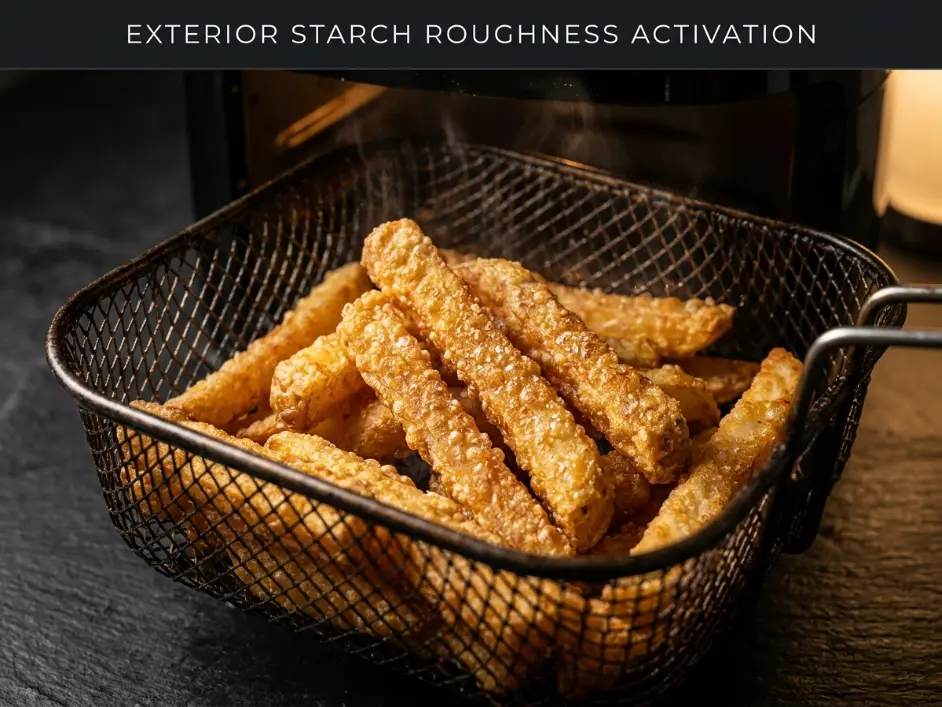
Step 1: The High-Heat Air Fryer Double Crunch
The first step creates maximum initial crispness through forced convection frying at high velocity and temperature.
The Science of Starch Gelatinization and Crust Formation
Frozen French fries are par-cooked—partially fried at the factory, then frozen. This creates a pre-gelatinized starch layer. When you finish-fry them, you are completing the dehydration process and creating additional crust through Maillard reactions and further starch crystallization.
Air fryers use rapid convection (hot air moving at 30-40 feet per second) to create efficient heat transfer and moisture removal. This produces crispier results than conventional oven baking because the moving air continuously removes water vapor from the surface, preventing it from condensing back onto the fries.
Start with 24 ounces (680g) frozen extra-crispy French fries. Choose thick-cut or beer-battered varieties—these have more substantial structure and thicker crust formation. Avoid shoestring or thin-cut fries which become too brittle and break under the weight of toppings.
Toss the frozen fries with 1 tablespoon (15ml) avocado oil in a large bowl. This additional oil serves two purposes: it improves heat transfer through better surface contact, and it contributes to Maillard browning and flavor development.
Spread the fries in a single layer in your air fryer basket—do not overcrowd. Overcrowding traps steam and prevents proper crisping. If necessary, work in two batches.
Set air fryer to 400°F (204°C) and cook for 20-22 minutes, shaking the basket vigorously every 5 minutes to ensure even cooking and prevent sticking. The fries should emerge uniformly golden-brown with a rigid, glass-like texture. When you tap them together, they should produce a hard, clicking sound—not a soft thud.
The target is maximum moisture removal and starch crystallization. Under-cooked fries (pale, soft) will absorb moisture immediately when topped. Properly cooked fries resist moisture penetration for several minutes even without additional barriers.
For context on how thermal dynamics affect other high-heat cooking methods, see the discussion in Sheet Pan Steak Fajitas: A Gourmet Mexican Dinner with Zero Cleanup, where similar principles of moisture control create optimal browning.
Step 2: The Flash-Char Citrus Marinade Sear
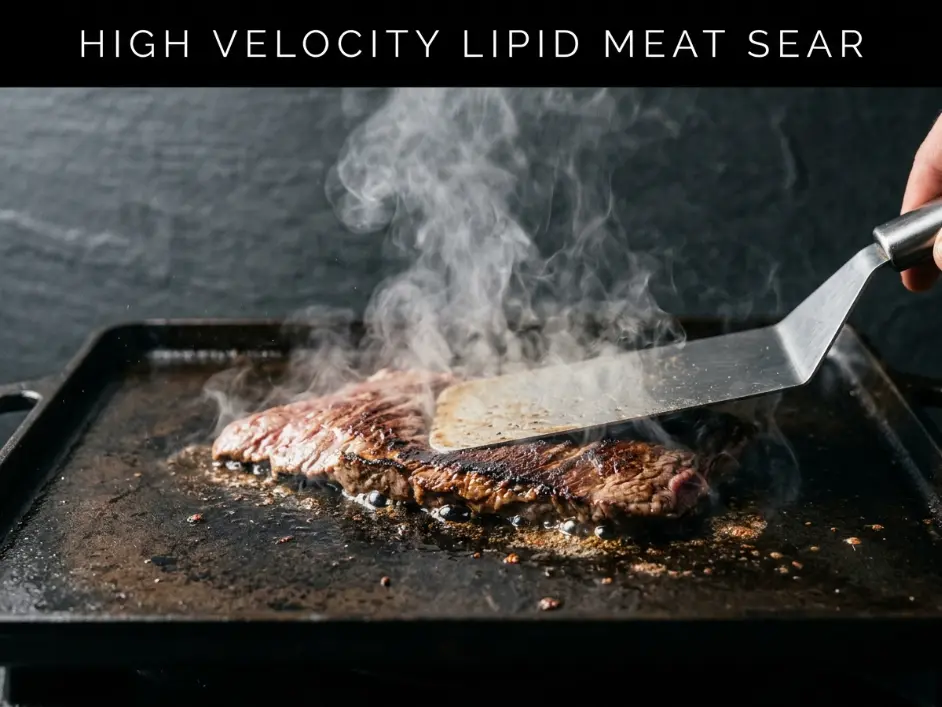
The second step prepares the steak to minimize moisture release while maximizing flavor through proper marination and searing.
The Science of Protein Denaturation and Moisture Retention
Flank and skirt steak are thin cuts (typically ½-¾ inch thick) with long muscle fibers and moderate marbling. They are ideal for carne asada because they cook quickly at high heat and develop excellent char without overcooking the interior.
The citrus marinade serves multiple functions. The acid (citric acid from orange and lime juice) partially denatures surface proteins, tenderizing the meat. The salt creates osmotic pressure that draws moisture out initially, then allows it to be reabsorbed along with flavorings—similar to dry brining. The oil provides fat-soluble flavor carrier compounds and assists in heat transfer during searing.
In a shallow dish, whisk together:
- 2 tablespoons (30ml) fresh orange juice
- 1 tablespoon (15ml) fresh lime juice
- 2 cloves minced garlic (6g)
- 1 teaspoon (2g) ground cumin
- 1 teaspoon (2g) smoked paprika
- 1 teaspoon (6g) kosher salt
Place 1 pound (450g) flank or skirt steak in the marinade. Turn to coat all surfaces. Cover and refrigerate for 1 hour—no longer. Extended marination (over 2 hours) in acidic marinades can make the meat mushy by over-denaturing proteins.
After marinating, remove the steak and pat completely dry with paper towels. This is critical—surface moisture creates steam during searing, which prevents proper crust formation and Maillard reactions.
Heat a heavy 12-inch cast iron skillet over high heat for 4 full minutes until it begins smoking lightly—the surface should reach 500-550°F (260-288°C).
Add 1 tablespoon (15ml) avocado oil to the screaming hot pan and immediately place the dried steak flat in the center. Press down gently with a spatula to ensure full contact. Set a timer for 3-4 minutes—do not move the steak.
During this time, the surface undergoes rapid Maillard browning and moisture evaporation. The proteins denature and contract, forming a crust that seals in internal juices.
After 3-4 minutes, flip and cook the second side for another 3 minutes. Insert an instant-read thermometer into the thickest part—you want 130°F (54°C) for medium-rare. The steak will continue cooking during rest (carryover cooking), reaching approximately 135-140°F (57-60°C).
According to high-heat lipid searing and meat-resting dynamics documented by The Culinary Institute of America, optimal moisture retention in whole-muscle beef requires both proper searing to create a moisture barrier and adequate resting to allow juices to redistribute into muscle fibers.
Step 3: The Hydrophobic Cheese Wall Lamination
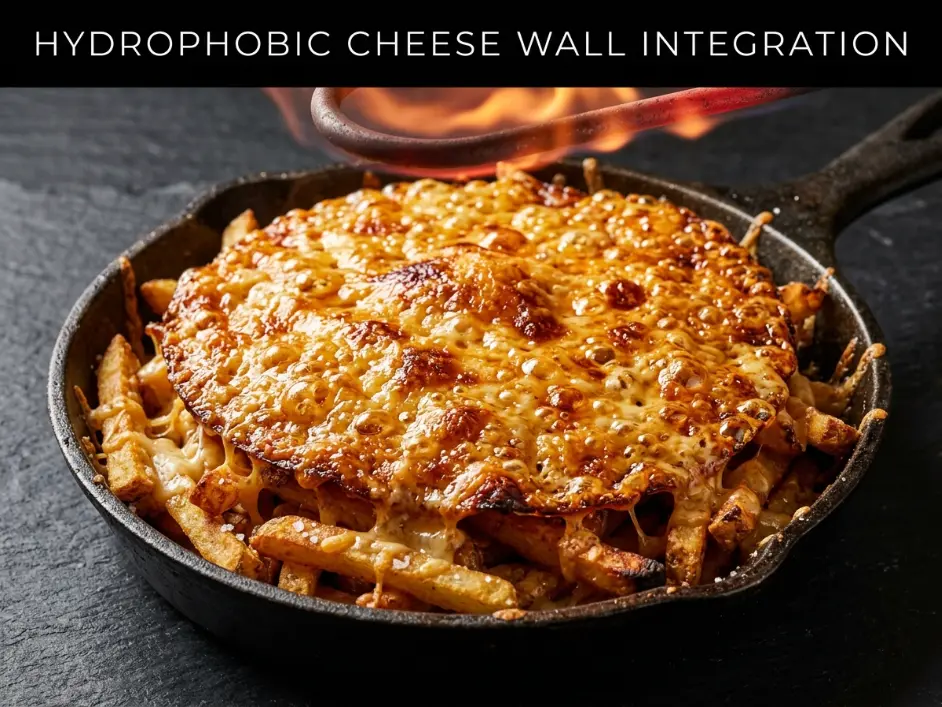
The third step creates a waterproof barrier using melted cheese to prevent steak juices from contacting the fries.
The Science of Lipid Barrier Formation
Cheese is approximately 25-35% fat (depending on variety), 25-30% protein, and 35-45% water. When melted, the fat phase becomes fluid while the protein network partially denatures and spreads. This creates a continuous coating that is hydrophobic—water-based liquids bead up on the surface rather than penetrating.
The key is using a blend of cheeses with different melting properties. Monterey Jack melts smoothly at low temperatures (around 140°F / 60°C) and creates good coverage. Sharp cheddar has higher protein content and melts at slightly higher temperatures, providing structural integrity and flavor complexity.
Combine 1.5 cups (150g) shredded Monterey Jack with ½ cup (50g) shredded sharp cheddar. Mix thoroughly so the two cheeses distribute evenly.
Immediately after removing the fries from the air fryer while they are still blazing hot (above 180°F / 82°C), spread them in a compact, even layer on an oven-safe serving platter or cast iron skillet. The heat from the fries is critical—it begins pre-melting the cheese from below while the broiler melts from above, creating complete fusion.
Scatter the cheese mixture uniformly over the hot fries—every fry should have cheese coverage. Do not leave gaps.
Place under a preheated broiler (set to high) positioned 4-6 inches from the heat source. Broil for 1-2 minutes, watching constantly. The cheese should melt completely, bubble, and develop light brown spots (additional Maillard reactions in the milk proteins).
Remove when the cheese forms a continuous, glossy layer with no unmelted patches. The melted cheese should look like a molten blanket—smooth and fluid, beginning to brown at the peaks.
This cheese layer is your primary defense against moisture migration. The fat content creates a hydrophobic barrier that repels the water-based juices from the steak. Think of it as waterproofing—oil and water do not mix, so the aqueous steak juices cannot easily penetrate the lipid cheese layer to reach the fries below.
For context on how cheese barriers function in other applications, see The Ultimate White Queso Dip: Just Like Your Favorite Mexican Restaurant!, where similar emulsion principles create smooth, stable dairy sauces.
Step 4: The Layered Structural Plating
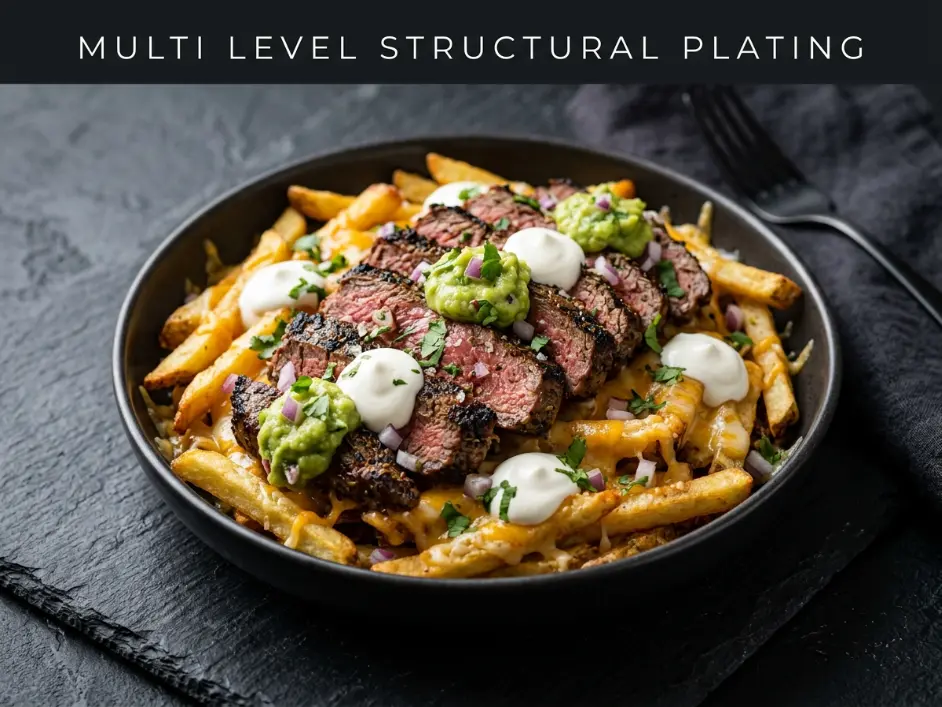
The fourth step manages moisture through strategic layering and component placement.
The Science of Capillary Fluid Rest and Moisture Redistribution
When you remove steak from high heat, the outer layers are hotter than the interior—this thermal gradient drives continued heat transfer inward (carryover cooking). Simultaneously, the contracted muscle fibers in the hot exterior begin relaxing as temperature drops. This relaxation allows previously expelled juices to be reabsorbed through capillary action.
If you cut the steak immediately after searing, the muscle fibers have not had time to relax and reabsorb moisture. The internal juices flow freely from the cut surfaces—this is the “bleeding” you see when cutting hot meat. This lost moisture would end up on your fries, causing instant sogginess.
Transfer the seared steak to a clean cutting board. Let rest uncovered for exactly 8 minutes. Do not tent with foil—this traps steam and can make the crust soggy. The steak will cool from approximately 130°F to 110-115°F (54°C to 43-46°C), and carryover cooking will raise the interior to 135-140°F (57-60°C).
After 8 minutes, slice the steak against the grain into ¼-inch (6mm) cubes—not strips. Cubes provide better distribution across the fries and minimize the amount of cut surface area that could release residual juices. Cut strips release more moisture because they have more exposed surface area.
Assembly sequence is critical:
- Base layer: Hot crispy fries (already on platter)
- Barrier layer: Melted cheese (already applied and set)
- Protein layer: Diced carne asada scattered evenly over cheese
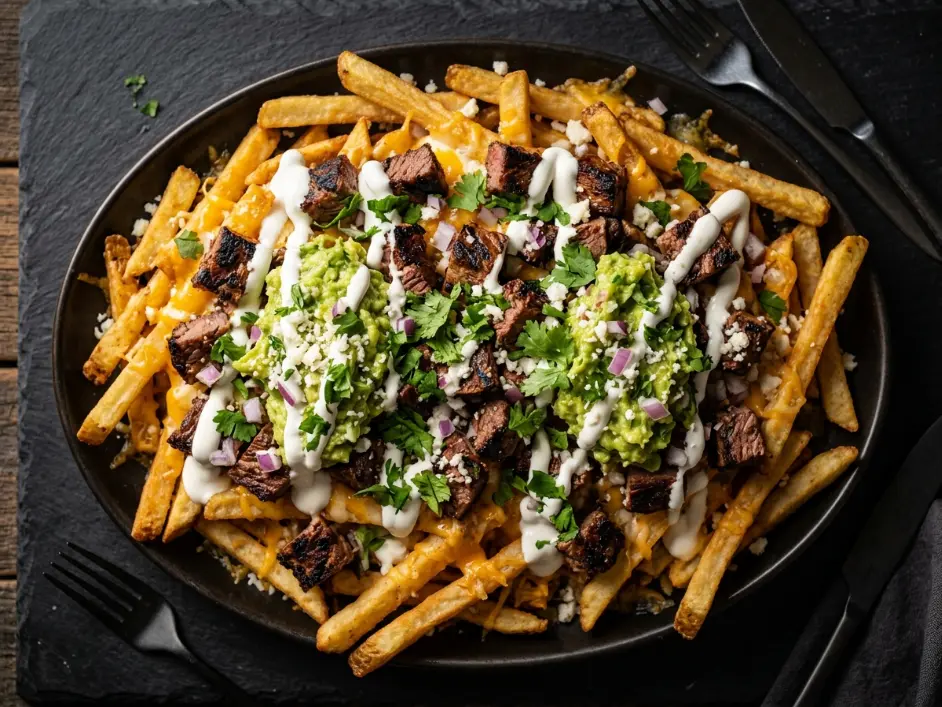
- Isolated topping islands: Thick guacamole and Mexican crema placed in discrete dollops—not spread continuously
The guacamole and crema should be thick—not runny. Watery guacamole or thin sour cream will flow across the surface and seep down into the fries. Thick preparations stay where placed, allowing you to control exactly which bites get which toppings.
Use approximately ½ cup (120g) thick guacamole (mashed avocado with minimal added liquid) and ⅓ cup (80ml) Mexican crema or thick sour cream. Place 6-8 small dollops of each scattered across the surface—not touching each other, not spread into a continuous layer.
Finish with ¼ cup (10g) finely chopped fresh cilantro scattered over everything.
Serve immediately. The structural integrity window is approximately 15-20 minutes if all steps were executed properly. The cheese barrier will hold for this duration, after which heat loss and continued moisture migration will eventually compromise the bottom fry layer.
Step 5: The Final Fluid Retention Evaluation
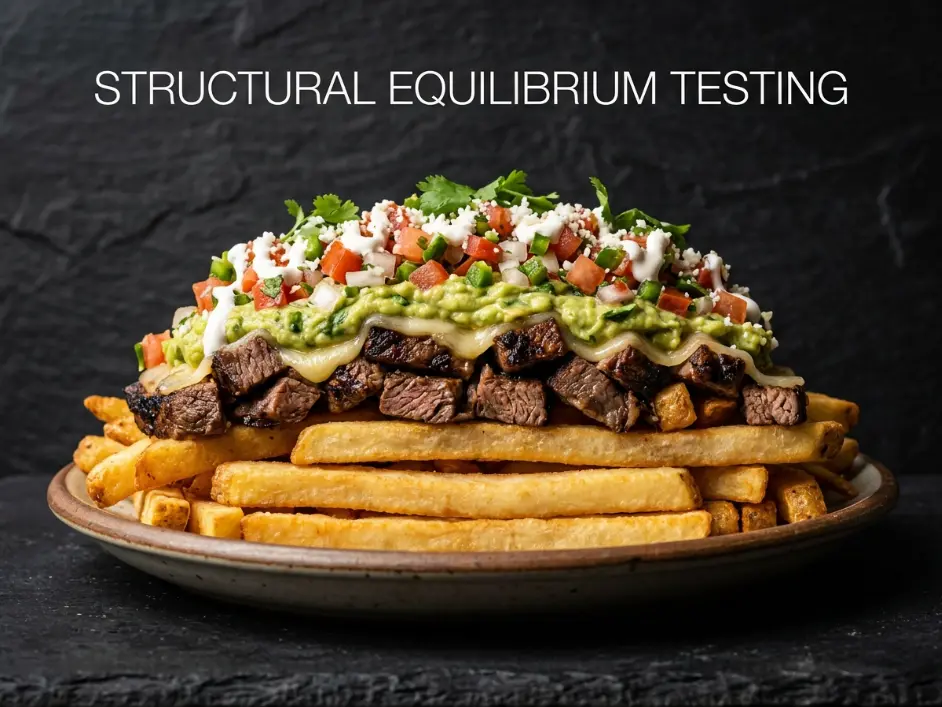
Proper Ultimate Carne Asada Fries should display:
- Bottom fry integrity: The fries on the bottom layer should maintain their rigid, straight structure—not bent, not limp. When you lift one with a fork, it should snap cleanly rather than bending.
- Cheese barrier function: The melted cheese layer should be visible as a distinct stratum between the fries and steak, not mixed or absorbed.
- Moisture isolation: The plate should show minimal liquid pooling—only small amounts of cheese oil. No watery puddles of steak juice or crema.
- Structural stability: The entire loaded pile should hold together when scooped, not collapsing into a shapeless mass.
If your fries are soggy: insufficient initial crisping, inadequate cheese barrier coverage, or skipped steak resting are the most common causes.
The 4 Rules to Prevent Soggy Fries
Now that you understand the process, these are the four non-negotiable rules that govern structural success.
Rule 1: Mandatory 8-Minute Steak Rest for Internal Moisture Reabsorption
The steak rest is the single most critical factor in preventing soggy fries. Skipping this step or reducing it to 3-5 minutes means the muscle fibers have not fully relaxed and reabsorbed expelled juices.
Rest uncovered on a clean cutting board for exactly 8 minutes after removing from heat. Internal temperature will rise 5-10°F through carryover cooking while the exterior cools. During this time, capillary action pulls juice back into the muscle fibers.
After resting, when you cut the steak, you should see minimal juice release—perhaps a few drops, but not a pool. If juice flows freely when cutting, the rest was insufficient.
Never rest on a plate—the flat surface traps juices underneath, creating a pool that would transfer to the fries during assembly. A cutting board with juice grooves allows any escaped liquid to drain away.
Rule 2: Precise ¼-Inch Cube Dicing to Minimize Cut Surface Area
The size and shape of steak pieces affects moisture release. Large strips (½-inch × 2-inch) have more exposed cut surface area than small cubes and release more juice.
Cut the rested steak into uniform ¼-inch (6mm) cubes. This size provides optimal distribution across the fries (small enough to spread evenly) while minimizing total cut surface area (larger than mince or shreds).
Cut against the grain—this shortens the muscle fibers and improves tenderness while also creating a tighter protein matrix that retains moisture better.
Use a sharp knife and clean cuts—sawing or tearing damages the protein structure and increases moisture release.
Rule 3: Complete Cheese Coverage Creating Continuous Lipid Barrier
The cheese barrier only works if it is continuous with no gaps. Sparse cheese coverage leaves exposed fry areas where steak juices can penetrate directly.
Use minimum 2 cups total cheese (1.5 cups Monterey Jack + 0.5 cups cheddar) for 24 ounces of fries. This ratio ensures complete coverage.
Melt under high-heat broiler to create a fluid, flowing cheese layer—not just softened cheese. Properly melted cheese fuses into a single continuous sheet. Under-melted cheese remains as separate shreds that leave gaps.
The cheese must be applied to hot fries (above 180°F / 82°C). Cold fries do not provide enough heat to initiate melting from below, resulting in incomplete fusion.
Rule 4: Thick-Viscosity Toppings in Isolated Dollops, Never Spread
Watery toppings are your enemy. Thin guacamole (made by adding lime juice, tomatoes, or other liquid ingredients) flows across the surface and seeps through the cheese layer. Thin sour cream or crema does the same.
Guacamole should be thick—mashed avocado with minimal additives. Add salt, minced jalapeño for heat, and perhaps a teaspoon of lime juice maximum. It should hold a spoon upright.
Mexican crema or sour cream should be thick—if using sour cream, whip it briefly with a pinch of salt to thicken it further. Thin crema can be thickened by letting it drain through a coffee filter for 30 minutes.
Place these thick toppings in isolated dollops—6-8 separate mounds scattered across the surface. Do not spread into a continuous layer. Isolated placement means each topping stays where placed rather than flowing and carrying moisture throughout the dish.
Chef Albert’s Insight
Carne Asada Fries represent one of the most challenging applications of moisture management in casual fusion cooking. You are deliberately combining crispy (fried potatoes), wet (steak juices, dairy toppings), and hot (fresh-cooked components) in a single dish and expecting the crispy element to survive. This is thermodynamically hostile—moisture naturally migrates to dry surfaces, heat drives fluid flow, and gravity pulls everything downward into the fry layer.
Success requires treating this as an engineering problem rather than just a recipe. The cheese is not flavoring—it is a hydrophobic barrier. The steak rest is not optional timing—it is capillary fluid mechanics. The assembly sequence is not aesthetic preference—it is strategic moisture isolation.
When you understand that crispy texture is fragile and moisture is aggressive, you build defenses rather than just hoping things work out. That is the difference between soggy pub food and properly executed fusion cuisine.
— Chef Albert, TastePillar
Pro Shopping Guide: USA-Specific Sourcing
For frozen fries: Ore-Ida Extra Crispy Fast Food Fries or Alexia Crispy Seasoned Fries (both available at major grocery stores nationwide) produce superior crispness. Avoid generic thin-cut fries—insufficient structure. Premium option: McCain Restaurant Style fries (Costco, Sam’s Club).
For steak: Flank steak or skirt steak from Costco (USDA Choice or Prime) offers excellent value and quality. Whole Foods butcher counter can cut to exact thickness. Skirt steak has more marbling (more flavor) but tougher grain (requires precise cutting against grain). Flank is leaner but more uniformly tender.
For cheese: Tillamook Monterey Jack and Tillamook Sharp Cheddar (widely available West Coast, increasingly national) melt excellently. Kraft or store brands work adequately. Buy blocks and shred fresh—pre-shredded cheese contains anti-caking cellulose that interferes with smooth melting.
For Mexican crema: Cacique Crema Mexicana (most grocery stores) is authentic and properly thick. La Lechera Table Cream works. For sour cream substitute, use Daisy or Breakstone’s (higher fat content, thicker) rather than low-fat varieties.
For avocados: Hass avocados (year-round availability) from California or Mexico. Choose ripe (yields to gentle pressure) but not overripe (mushy, brown inside). For thick guacamole, use only mashed avocado, salt, and minimal lime juice.
For air fryer: Cosori 5.8-quart or Ninja Air Fryer Max XL both accommodate 24 ounces of fries in single layer and provide strong convection for proper crisping.
Complete Ingredient Breakdown: US Customary & Metric
| Ingredient Category | Item | US Customary | Metric |
|---|---|---|---|
| Fry Base | Frozen extra-crispy French fries | 24 oz | 680g |
| Avocado oil (for frying) | 1 tbsp | 15ml | |
| Carne Asada | Flank or skirt steak | 1 lb | 450g |
| Fresh orange juice | 2 tbsp | 30ml | |
| Fresh lime juice | 1 tbsp | 15ml | |
| Garlic (minced) | 2 cloves | 6g | |
| Ground cumin | 1 tsp | 2g | |
| Smoked paprika | 1 tsp | 2g | |
| Kosher salt | 1 tsp | 6g | |
| Avocado oil (for searing) | 1 tbsp | 15ml | |
| Cheese Barrier | Shredded Monterey Jack | 1.5 cups | 150g |
| Shredded sharp cheddar | ½ cup | 50g | |
| Toppings | Thick Mexican crema | ⅓ cup | 80ml |
| Fresh guacamole (thick) | ½ cup | 120g | |
| Fresh cilantro (chopped) | ¼ cup | 10g |
Common Mistakes Table: What Destroys Fry Crispness
| The Mistake | What Actually Happens | The Fix |
|---|---|---|
| Cutting steak immediately without resting | Unreabsorbed juices flow freely from cut surfaces; flood fries with water-based liquid; instant sogginess | Always rest steak uncovered for full 8 minutes on cutting board before dicing |
| Using thin-cut or shoestring fries | Insufficient structural strength; collapse under topping weight even without moisture issues | Use only thick-cut or beer-battered frozen fries with substantial structure |
| Sparse or incomplete cheese coverage | Gaps in barrier allow steak juices to contact fries directly; localized soggy patches form | Use minimum 2 cups total cheese; melt until continuous sheet with zero gaps |
| Adding watery guacamole or thin crema | Liquid flows across surface and penetrates cheese layer; carries moisture to fries | Use thick guacamole (minimal liquid) and thick crema; place in isolated dollops only |
| Assembling on cold fries | Cheese does not melt properly; forms clumps rather than continuous barrier | Always assemble immediately on hot fries straight from air fryer (above 180°F) |
| Cutting steak into large strips | High cut surface area releases more juice; strips slide off fries rather than distributing evenly | Dice into precise ¼-inch cubes; minimal surface area, optimal distribution |
| Melting cheese in microwave instead of broiler | Uneven melting; no browning; inferior barrier formation | Always use high-heat broiler for 1-2 minutes to create fully melted, browned cheese layer |
Step-by-Step Method: The Complete Process
Step 1: Marinade Infiltration
Whisk together 2 tbsp orange juice, 1 tbsp lime juice, 2 cloves minced garlic, 1 tsp cumin, 1 tsp smoked paprika, and 1 tsp kosher salt in shallow dish. Submerge 1 lb flank or skirt steak. Cover and refrigerate exactly 1 hour.
Step 2: The Double-Crunch Blast
Toss 24 oz frozen fries with 1 tbsp avocado oil. Spread in single layer in air fryer basket. Cook at 400°F (204°C) for 20-22 minutes, shaking basket every 5 minutes. Fries should be uniformly golden-brown, rigid, and produce hard clicking sound when tapped together.
Step 3: The High-Heat Plancha Sear
Heat cast iron skillet over high heat for 4 minutes until smoking (500-550°F). Remove steak from marinade and pat bone-dry with paper towels. Add 1 tbsp avocado oil to pan. Sear steak 3-4 minutes per side. Pull at 130°F (54°C) internal temperature for medium-rare.
Step 4: The Capillary Fluid Rest
Transfer seared steak to cutting board. Rest uncovered exactly 8 minutes. Internal temperature will rise to 135-140°F through carryover. After rest, cut against grain into uniform ¼-inch (6mm) cubes. Minimal juice should release when cutting.
Step 5: Laminate the Cheese Shield
Immediately spread hot air-fried fries in compact layer on oven-safe platter. Scatter 1.5 cups Monterey Jack and ½ cup cheddar evenly over hot fries. Broil on high for 1-2 minutes until completely melted into continuous, bubbling, lightly browned sheet.
Step 6: Assemble the Structural Stack
Scatter diced carne asada evenly over melted cheese layer. Place 6-8 isolated dollops of thick guacamole across surface. Add 6-8 isolated dollops of thick Mexican crema. Finish with chopped cilantro scattered over all. Serve immediately.
Bottom fries should remain crisp and straight for 15-20 minutes. Cheese barrier should be visible as distinct layer between fries and toppings.
For those interested in how moisture control affects entirely different applications, see The Fudgiest Air Fryer Brownies: 3 Chemical Rules for a Flawless Crinkle Top Crust, where water activity creates opposite textural goals.
Nutrition Information (Per Serving, ¼ Recipe)
| Nutrient | Amount |
|---|---|
| Calories | 680 kcal |
| Protein | 38g |
| Total Fat | 40g |
| Saturated Fat | 14g |
| Total Carbohydrates | 42g |
| Dietary Fiber | 5g |
| Sugars | 1g |
| Cholesterol | 95mg |
| Sodium | 920mg |
| Iron | 20% DV |
| Calcium | 25% DV |
Note: Nutrition values are estimates based on USDA databases.
Storage & Reheating
| Storage State | Best Approach |
|---|---|
| Assembled loaded fries | Not recommended—fries become irreversibly soggy within 1 hour; always assemble fresh |
| Cooked steak (undiced) | 3 days refrigerated in airtight container; reheat gently before dicing |
| Cooked fries (plain) | Best fresh; acceptable reheating in 400°F air fryer for 3-4 minutes to re-crisp |
FAQ: Your Questions Answered
Can I use fresh-cut fries instead of frozen?
Yes, but they require different preparation. Fresh-cut fries need double-frying (blanch at 325°F, then finish at 375°F) to achieve comparable crispness to frozen. Frozen fries are pre-cooked at the factory, saving significant time and producing more consistent results.
Why does my cheese not form a continuous barrier?
Three causes: (1) fries too cold when cheese applied—cheese cannot melt from bottom; (2) insufficient broiler heat or time—cheese softens but does not flow; (3) using pre-shredded cheese with anti-caking coating—interferes with melting.
My steak is tough—what happened?
Either overcooked (pull at 130°F maximum for medium-rare) or cut with the grain instead of against it. Flank and skirt have pronounced grain direction—cutting parallel to fibers produces chewy texture. Always cut perpendicular to grain lines.
Can I make this with chicken instead of steak?
Structurally yes, but flavor profile changes significantly. Grilled chicken breast releases less moisture than steak but lacks the rich beef flavor essential to carne asada. Would recommend different seasoning profile if substituting.
How do I keep fries crispy for a party?
Impossible to hold assembled fries crispy for extended periods. Better strategy: keep components separate (hot fries, warm steak, melted cheese in heat-proof bowl, cold toppings). Assemble individual plates to order rather than one large platter.
Related Articles on TastePillar
Sheet Pan Steak Fajitas: A Gourmet Mexican Dinner with Zero Cleanup
The Ultimate White Queso Dip: Just Like Your Favorite Mexican Restaurant!
The Fudgiest Air Fryer Brownies: 3 Chemical Rules for a Flawless Crinkle Top Crust.
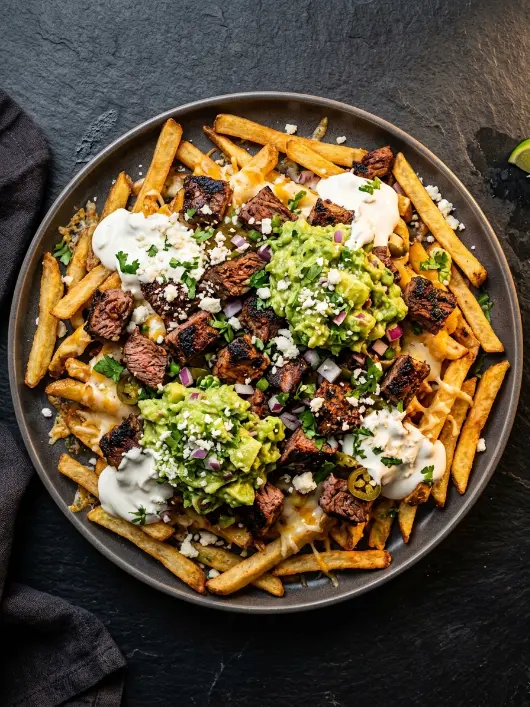
Ultimate Carne Asada Fries
Ingredients
Equipment
Method
- Marinade Infiltration: Whisk citrus, garlic, spices, salt. Submerge steak. Refrigerate 1 hour.
- Double-Crunch Blast: Toss frozen fries with oil. Air fry at 400°F for 20-22 minutes, shaking every 5 minutes until golden and rigid.
- High-Heat Sear: Pat steak dry. Sear in smoking-hot cast iron 3-4 minutes per side. Pull at 130°F internal.
- Capillary Rest: Rest steak uncovered on board exactly 8 minutes. Dice into ¼-inch cubes against grain.
- Cheese Shield: Spread hot fries on platter. Cover with cheese. Broil 1-2 minutes until melted into continuous layer.
- Structural Stack: Scatter steak over cheese. Add isolated dollops of guacamole and crema. Garnish cilantro. Serve immediately.
Notes
- 8-minute steak rest mandatory—prevents juice release onto fries.
- Cheese must form continuous barrier—no gaps.
- Thick toppings in dollops only—never spread.