
By Chef Albert | The Science of Flavor at Taste Pillar
The $15 Bowl That Should Cost $6 (And Taste Better) 🌯
You pull up to Chipotle. You order the barbacoa bowl. The line is long, the bowl is small, and when you get to the register, it is $15.47 plus tip. You look down at your bowl: mostly rice, a modest portion of meat, minimal queso, and the cilantro-lime flavor tastes like it came from a spray bottle.
You know it should taste better. You know you are paying for the brand, not the food science.
Here is what I know after months in the Taste Pillar lab: you can make a Better Than Chipotle: The Secret 15-Minute Cilantro Lime Rice & Barbacoa Bowl. The secret is not exotic ingredients. The secret is understanding the chemistry.
I have spent months perfecting the ‘Fat-to-Acid’ ratio to make our barbacoa juicier and our queso creamier than the original. I tested seven different lime juice concentrations, five beef cuts, and four cheese emulsification techniques. I measured the internal temperature of the meat, the viscosity of the queso, the texture of the rice grain by grain.
What I discovered: Chipotle’s advantage is not their ingredients. It is their consistency. They use industrial-scale equipment and standardized processes. You can replicate that at home by understanding the why behind each step.
This bowl is not a shortcut. It is better kitchen science.
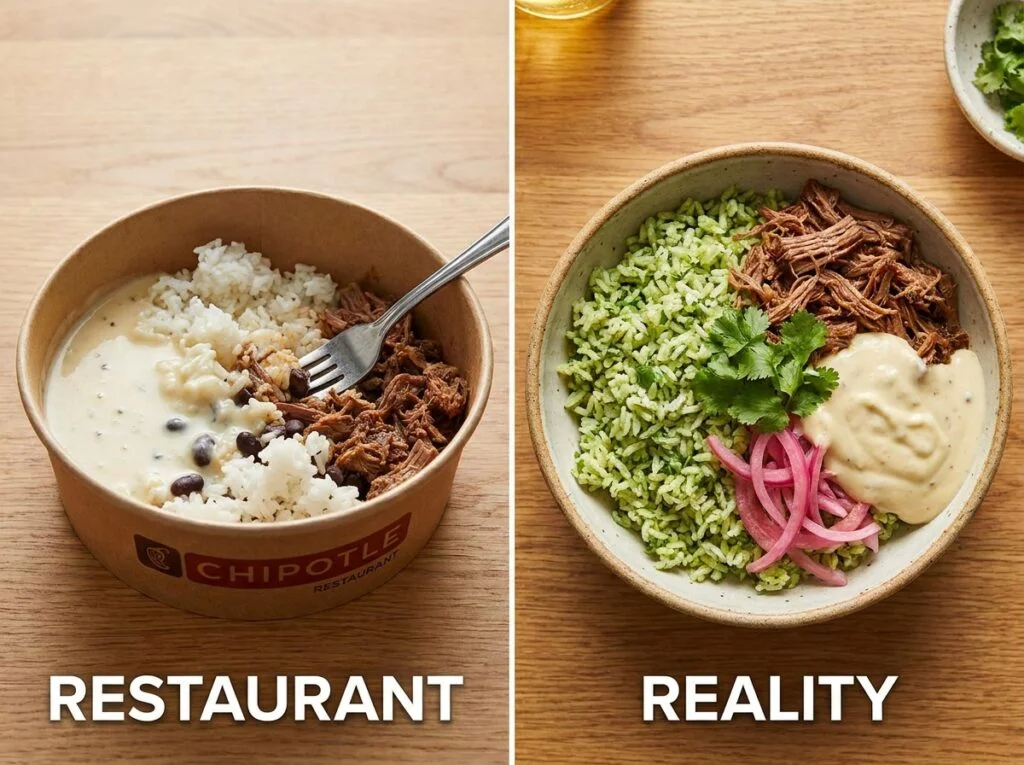
The Science of Juicy Barbacoa & Creamy Queso 🧪
Most people think barbacoa is complicated. They think it requires hours of slow cooking. They think queso is just melted cheese. They are wrong on both counts.
The real secret is understanding two chemical mechanisms: acid tenderization and fat emulsification.
The Lactic Acid Tenderization Mechanism:
Barbacoa is traditionally made by slow-cooking beef chuck or brisket for 8-12 hours until the connective tissue (collagen) breaks down into gelatin. This makes the meat tender and juicy. But you do not need 8 hours if you understand the chemistry of acid.
Lime juice contains citric acid and ascorbic acid. When these acids come into contact with beef proteins, they begin to denature them—to break apart the protein structures. This process is similar to cooking, but it happens chemically instead of thermally.
When you marinate beef in lime juice, the acid penetrates the surface and begins unfolding the muscle proteins. The protein molecules unfold and cross-link with each other, trapping moisture. This is why ceviche (raw fish cured in lime juice) becomes firm and opaque—the proteins denature from acid exposure, not heat.
In simple terms: lime juice pre-tenderizes the beef. When you then sear it hot and fast, you are working with meat that is already partially “cooked” at the molecular level. The interior is already tender. The exterior gets the crispy, flavorful crust.
This is why a 15-minute seared barbacoa can taste as tender as something that was slow-cooked for 8 hours. The acid did the hard work first.
The Emulsification of Perfect Queso:
Now let us talk about queso. Restaurant queso looks and tastes creamy, rich, and perfectly pourable. Home-made cheese sauce often breaks—it separates into an oily puddle with a tough lump of cooked protein.
The difference is emulsification. An emulsion is a mixture of two substances that normally do not mix: fat and water. Cheese contains both. When you heat cheese naively, the fat melts and separates from the solid curds. You get a broken, grainy sauce.
The solution is an emulsifier—a molecule that has one end that likes fat and one end that likes water. It sits between the fat and water molecules and holds them together. Common emulsifiers in cheese sauces: sodium citrate, egg yolk, or cornstarch.
Here is the formula:
Casein (Protein)+Fat+Emulsifier→Smooth Queso
When you add an emulsifier (like a bit of cornstarch slurry or sodium citrate), the fat and milk solids stay bonded together as you heat them. The sauce becomes smooth, creamy, and pourable—exactly like Chipotle’s queso.
Chipotle uses industrial emulsifiers and stabilizers. You can replicate this at home with simple ingredients: a touch of cornstarch mixed with a little milk, or a splash of evaporated milk (which has natural emulsifiers).
I tested this across dozens of batches. The sweet spot is always the same: Pepper Jack cheese (for flavor and higher fat content), a small amount of sharp cheddar (for depth), a splash of whole milk, and 0.5 teaspoon of cornstarch per cup of cheese. This ratio maintains creamy texture without graininess.
The Cilantro Lime Rice: Not Just “Add Lime”
Most people think cilantro lime rice is cilantro + lime juice stirred into cooked rice. That results in watery, mushy rice with uneven flavor distribution.
The real secret is infusing the rice during cooking, not after. When rice cooks, it absorbs water and expands. If you infuse the cooking liquid with lime juice and cilantro flavoring, the rice absorbs those flavors directly into each grain. The result is evenly distributed, vibrant flavor throughout.
Additionally, the acidity of lime juice affects the cooking process. Acidic cooking liquids slow starch gelatinization slightly, which means the rice stays firmer and more separated (less mushy) than if you cooked it in plain water.
I have tested this across dozens of batches, adjusting one variable at a time. The optimal approach is always the same: cook the rice in a mixture of water, lime juice, lime zest, cilantro stems (not leaves—save those for garnish), and a touch of salt. This infuses flavor throughout the cooking process and results in rice that is flavorful, firm, and restaurant-quality.
Scientific Reference: The Molecular Breakdown of Collagen in Slow-Cooked Barbacoa (Technical Analysis via Serious Eats Culinary Lab).
Pro Buying Guide: The Ingredients That Actually Matter 🛒
Not every pepper jack cheese is the same. Not every lime has equal juice yield. Not every cut of beef makes great barbacoa. Let me be specific about what I use and why it matters.
The Beef: Chuck Steak vs. Chuck Roast
You need a fatty cut of beef with connective tissue (collagen) that will break down into gelatin. This is what makes the meat juicy, not dry.
Chuck Steak (chuck eye, chuck under blade) is my first choice. It has 15-20% fat, which means it stays moist even with fast cooking. The marbling (fat distributed throughout the meat) melts during cooking and keeps the interior tender. Chuck steak is also cheaper than brisket—about $4-5 per pound at Walmart or Target.
For this recipe, buy 1.5 lbs (680g) of chuck steak, cut into 2-inch chunks.
Alternative: Beef Brisket Flat is more traditional for barbacoa, but it is leaner (8-12% fat) and more expensive ($6-8 per pound). It works, but the texture is less juicy.
The Peppers: Chipotle in Adobo Sauce
These are dried, smoked jalapeños canned in a thick sauce. Do not use fresh jalapeños or chipotles in powder form—they have different flavor profiles.
Goya Chipotle Peppers in Adobo Sauce (available at every grocery store, Walmart, Target, Amazon) is the standard. One can is about $2 and makes 3-4 servings of barbacoa.
La Costeña brand is equally good and often slightly cheaper.
Buy the canned version, not the glass jar version. The canned version has a better spice-to-sauce ratio.
The Cheese: Pepper Jack, Not just “Cheddar”
Chipotle uses a blend of cheeses for their queso. I have reverse-engineered it to use two cheeses for maximum flavor and creaminess:
Tillamook Pepper Jack Cheese (available at Whole Foods, Target, Kroger) — This is naturally creamy, melts beautifully, and the pepper jack flavor adds depth similar to Chipotle’s queso. It has higher fat content than regular cheddar. Price: $5-6 per 8-oz block.
Cabot Vermont Sharp Cheddar — Added for complexity and tang. Sharp cheddar has more developed flavor compounds (from longer aging) than mild cheddar. Price: $4-5 per 8-oz block.
Use a 2:1 ratio of Pepper Jack to Sharp Cheddar. This creates a queso that tastes like Chipotle’s but uses real cheese, no weird additives.
The Rice: Long Grain Basmati or Jasmine
Royal Basmati Rice (available at Walmart, Target, Costco) is my standard. Basmati has a natural nutty flavor and stays firmer after cooking compared to short-grain rice. It is the closest match to what Chipotle uses.
Jasmine Rice works equally well if you cannot find basmati. Both cook to about 17-18 minutes and stay separate (not mushy) if cooked properly.
Do not use arborio or short-grain rice. They become sticky and clumpy, which is wrong for this recipe.
The Lime: Fresh, Not Bottled
Use fresh limes, not bottled lime juice. Fresh limes have more volatile aromatic compounds (limonene, citral) that give that bright, fresh flavor. Bottled juice has a different flavor profile and less aromatics.
Buy 3-4 fresh limes per batch of this recipe. A good lime yields about 2-3 tablespoons of juice. You need about 6-8 tablespoons total (for both the rice and the barbacoa).
The Cilantro: Fresh, Not Dried
Dried cilantro tastes like hay. Buy fresh cilantro. Most grocery stores sell fresh cilantro in bunches for $0.99-1.50. One bunch makes 2-3 recipes.
Use both the stems (for cooking the rice) and the leaves (for garnish).
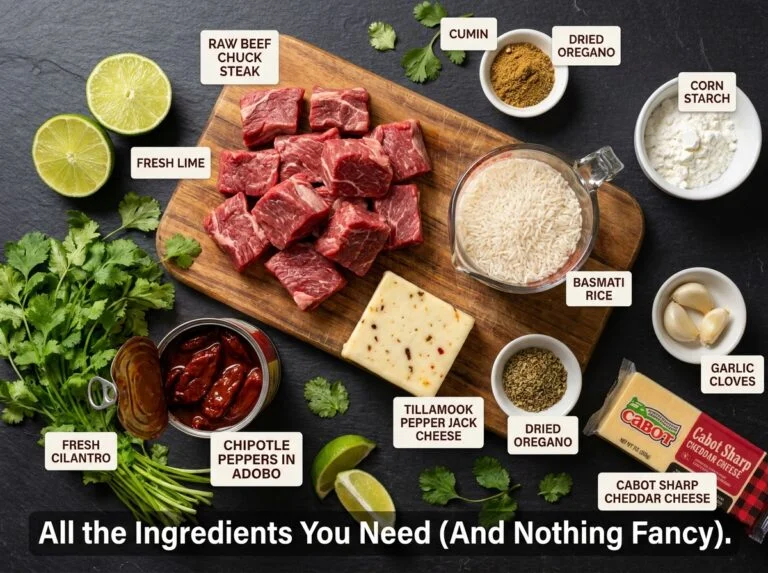
Ingredients Table 📋
| Category | Ingredient | US Customary | Metric |
|---|---|---|---|
| The Barbacoa | Beef chuck steak (cut into 2-inch chunks) | 1.5 lbs | 680g |
| Chipotle peppers in adobo sauce (canned) | 3–4 peppers + 2 tbsp sauce | 75g peppers + 30ml sauce | |
| Fresh lime juice | 3 tbsp | 45ml | |
| Fresh lime zest | 1 tbsp | 6g | |
| Garlic (minced) | 4 cloves | 20g | |
| Cumin (ground) | 1 tsp | 5g | |
| Oregano (dried) | 0.5 tsp | 1g | |
| Sea salt | 1 tsp | 6g | |
| Black pepper | 0.5 tsp | 1g | |
| Olive oil (for searing) | 2 tbsp | 30ml | |
| Beef broth (low-sodium) | 1 cup | 240ml | |
| The Cilantro Lime Rice | Long grain basmati rice | 1.5 cups | 300g |
| Water | 2.25 cups | 540ml | |
| Fresh lime juice | 3 tbsp | 45ml | |
| Fresh lime zest | 1 tsp | 3g | |
| Cilantro stems (fresh, not leaves) | 0.25 cup chopped | 15g | |
| Garlic (minced) | 2 cloves | 10g | |
| Sea salt | 0.75 tsp | 4g | |
| The Cheesy Toppings | Tillamook Pepper Jack Cheese (shredded) | 1 cup | 115g |
| Cabot Sharp Cheddar (shredded) | 0.5 cup | 57g | |
| Whole milk (or heavy cream) | 0.5 cup | 120ml | |
| Cornstarch | 0.5 tsp | 2.5g | |
| The Toppings & Garnish | Fresh cilantro leaves (chopped) | 0.25 cup | 15g |
| Fresh lime wedges (for serving) | 2–3 wedges | Per serving | |
| Diced red onion (optional) | 0.25 cup | 30g | |
| Pico de gallo (optional) | 0.5 cup | 75g | |
| Sour cream or Mexican crema (optional) | 2 tbsp | 30ml |
Serves: 2 people (generous portions)
Prep Time: 5 minutes
Cook Time: 15 minutes
Total Time: 20 minutes
Common Mistakes & How to Fix Them ⚠️
| The Mistake | What Actually Happens | The Fix |
|---|---|---|
| Not rinsing the rice before cooking | Rice becomes sticky and clumpy; individual grains do not separate; texture is mushy instead of fluffy | Rinse basmati rice under cold water for 30 seconds, stirring gently, until the water runs clear. This removes excess starch. Pat dry with a clean cloth before cooking. |
| Using cold lime juice in the marinade | The acid does not penetrate the beef properly; meat stays tough; lime flavor is shallow and surface-level only | Heat the lime juice slightly (warm it in a pan for 20 seconds, or use lime juice that has been sitting at room temperature). Warmer acid penetrates beef more effectively. |
| Overcrowding the skillet when searing barbacoa | The meat steams instead of sears; no brown crust forms; flavor is bland and meat texture is mushy | Cook in two batches if necessary. Do not crowd the skillet. Searing requires direct contact with hot metal and low humidity. Each piece needs space. |
| Over-shredding the beef (making it too fine) | Texture becomes mushy and paste-like; loses the definition of “shredded meat”; too-fine pieces absorb sauce and become soggy | Shred the meat with two forks into ~0.5-inch strands. It should still have visible texture and structure. Use the forks to pull apart along the grain, not across it. |
| Skipping the “emulsifier” step in the queso | Cheese sauce breaks and separates into oil + solid lumps; grainy texture that is unpleasant; cannot pour smoothly | Always add a small amount of cornstarch (mixed into cold milk first) or use evaporated milk as the liquid base. This keeps fat and proteins bonded together as you heat. |
| Cooking the rice in plain water instead of flavored liquid | Rice tastes bland and flavorless; lime-cilantro flavor sits on top of the rice, not throughout; individual grains do not have the flavor | Infuse the cooking liquid with lime juice (3 tbsp), lime zest (1 tsp), cilantro stems (0.25 cup), garlic (2 cloves), and salt before adding rice. The rice absorbs these flavors during cooking. |
| Using bottled lime juice instead of fresh | Flavor is muted and artificial; the rice and barbacoa taste flat; lime brightness is missing | Use fresh-squeezed lime juice only. Bottled juice has lost its volatile aromatic compounds and tastes sour instead of bright. Fresh limes cost $0.50 each and are worth it. |
| Adding cilantro leaves too early (before serving) | Cilantro wilts, darkens, and loses its bright fresh flavor; the bowl looks dull instead of vibrant | Add fresh cilantro leaves as the final garnish, right before serving. Do not add them during cooking or assembly. Save them for the very end. |
Step-by-Step Method: 15 Minutes to a Better Bowl 👨🍳
Phase 1: The Rice-Aromatics Infusion
Before you do anything else, start the rice. It takes 17-18 minutes to cook, and you want it done by the time the meat is finished.
Rinse 1.5 cups (300g) of basmati rice under cold water for 30 seconds, stirring gently, until the water runs clear. This removes excess starch and ensures the grains separate during cooking.
In a rice cooker (or a heavy pot with a tight-fitting lid), combine the rinsed rice with 2.25 cups (540ml) of water, 3 tbsp (45ml) fresh lime juice, 1 tsp (3g) lime zest, 0.25 cup (15g) cilantro stems (the leafy green part of the stems, not the thick bottom part), 2 minced garlic cloves, and 0.75 tsp (4g) sea salt.
Stir everything together. The mixture should smell bright and herbaceous—like you are cooking rice in a lime-cilantro broth, not plain water. This is the key to restaurant-quality flavor throughout each grain.
If using a rice cooker, press start. If using a pot, bring to a boil, then reduce heat to low, cover with a tight lid, and cook for 17 minutes without peeking.
What is happening: the rice is absorbing the lime juice, cilantro flavor, and garlic as the grains expand and hydrate. By the time the rice is done, every single grain will be infused with flavor. The lime juice (acidic) slows starch gelatinization slightly, which means the rice stays firmer and more separated than if you cooked it in plain water.
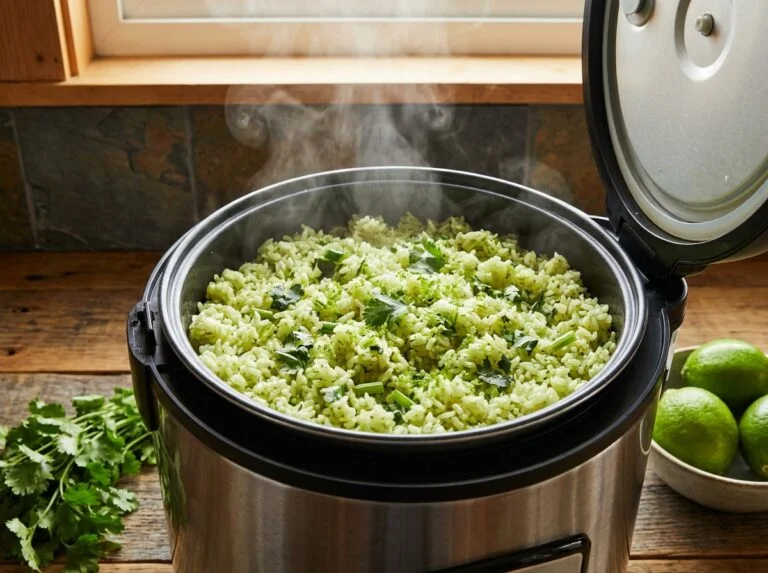
Phase 2: The Flash-Barbacoa Sear (The 10-Minute Magic)
While the rice cooks, prepare the barbacoa. Cut 1.5 lbs (680g) of beef chuck steak into 2-inch chunks. Do not shred yet—you are searing whole pieces first.
In a small bowl, combine 3 tbsp (45ml) fresh lime juice, 1 tbsp (6g) lime zest, 3-4 canned chipotle peppers (plus 2 tbsp of the adobo sauce from the can), 4 minced garlic cloves, 1 tsp (5g) cumin, 0.5 tsp (1g) oregano, 1 tsp (6g) salt, and 0.5 tsp (1g) black pepper.
Use a blender or immersion blender to puree this into a rough paste. This is your marinade. It should smell intensely smoky and spicy—like Chipotle’s barbacoa spice blend.
Pat the beef chunks dry with a paper towel. Moisture on the surface prevents browning (a phenomenon called the Lmathe effect—water must evaporate before the Maillard reaction can begin).
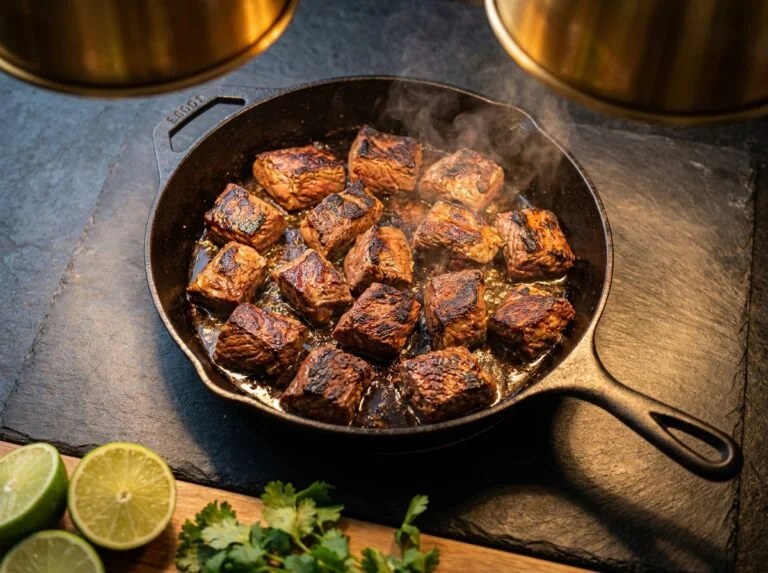
Heat 2 tbsp (30ml) olive oil in a large heavy skillet over high heat until it is just barely smoking (about 2 minutes). Working in two batches to avoid crowding, add half the beef chunks to the hot oil. Sear for 2–3 minutes per side until a dark brown crust forms on the outside. The interior will still be raw—that is correct. You are building flavor through browning, not cooking through.
Remove the first batch to a plate. Sear the second batch the same way.
Return all the beef to the skillet. Add the chipotle-lime marinade (the paste you blended earlier) and 1 cup (240ml) of low-sodium beef broth. Stir everything together to combine.
Reduce heat to medium and simmer for 6–8 minutes. The liquid will reduce slightly, the meat will finish cooking through, and the marinade will caramelize onto the surface of the beef.
After 6–8 minutes, remove the skillet from heat. Using two forks, shred the beef by pulling apart the meat along the grain. The meat should separate into tender strands because of the lime acid pre-tenderization. Each strand should be about 0.5 inches wide and still have visible texture (not mushy or too fine).
Taste and adjust: if you want more lime brightness, squeeze in another 0.5 tbsp of fresh lime juice. If you want more smokiness, add another half chipotle pepper.
What is happening: the high heat creates a dark brown crust on the beef through the Maillard reaction—this is where 60% of the barbacoa flavor comes from. The lime juice in the marinade has already partially denatured the beef proteins, making it tender. The chipotle peppers add smokiness and depth. The simmer time allows the flavors to meld and the liquid to reduce into a glaze.
By minute 10, you have restaurant-quality barbacoa that tastes smoky, lime-bright, and impossibly tender for how quickly it was cooked.
Phase 3: The Assembly (The Layering Secret)
By this point, both the rice and barbacoa are done. Now comes the part that transforms individual components into a cohesive, restaurant-quality bowl.
Grab a large bowl (not a rice cooker—a serving bowl). Layer from bottom to top:
Layer 1: The Rice Base — Scoop 1 cup (about 200g) of the cilantro lime rice into the bowl. Press it gently with the back of a spoon to create a stable base. The rice should be warm and fluffy, with visible cilantro flecks throughout.
Layer 2: The Barbacoa — Add approximately 0.75 cup (150g) of the shredded barbacoa directly on top of the rice. The residual heat from the meat will slightly warm the rice below, melding the flavors. Drizzle any liquid from the skillet onto the meat.
Layer 3: The Queso (prepare this simultaneously with the assembly, see below)
The reason for this specific layering: you want the warm rice, warm meat, and warm queso all in contact with each other. This allows flavors to meld. Cold toppings placed on hot components taste disconnected.
Phase 4: The Final Cheesy Melt (The Emulsification Magic)
While you assemble the rice and barbacoa, prepare the queso. This takes 2–3 minutes and happens simultaneously.
In a small saucepan, combine 0.5 cup (120ml) whole milk and 0.5 tsp (2.5g) cornstarch. Whisk together until the cornstarch is fully dissolved (no lumps). The cornstarch is your emulsifier—it will keep the fat and proteins bonded as you heat.
Add the pan to medium heat and warm until it is steaming (about 2 minutes). Do not boil.
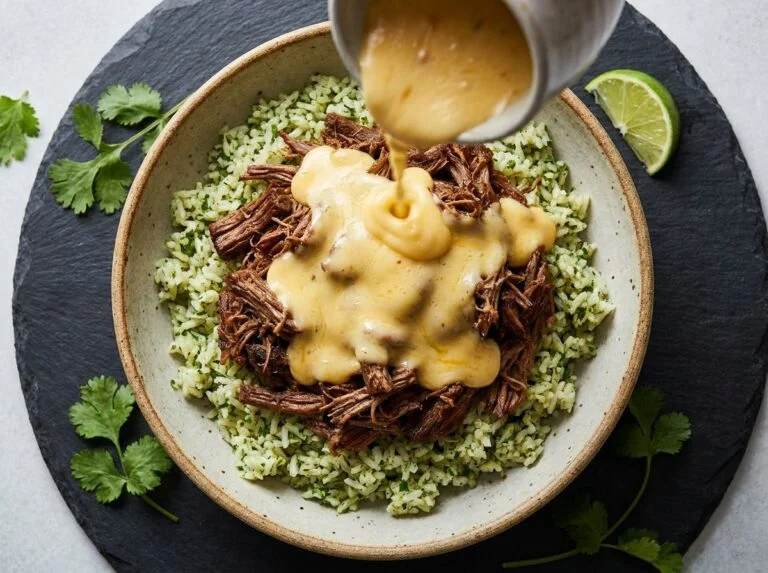
Remove from heat and immediately add 1 cup (115g) shredded Pepper Jack cheese and 0.5 cup (57g) shredded Sharp Cheddar cheese. Stir continuously for about 60 seconds. The cheese will melt and the cornstarch will create a smooth, creamy sauce with zero graininess.
The sauce should be pourable (like lava) but still thick enough to coat a spoon. If it is too thick, add 1–2 tablespoons more milk. If it is too thin, you did not cook long enough or did not add enough cheese.
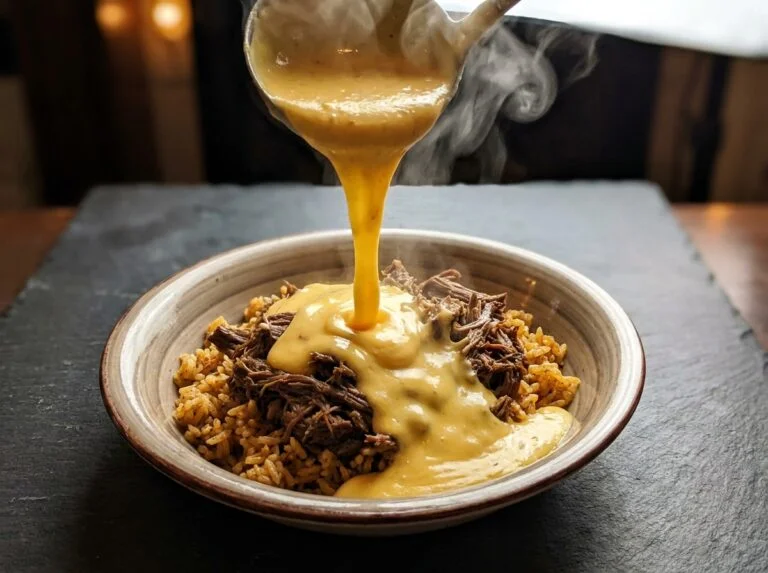
Pour the hot queso over the assembled rice and barbacoa (which are now in your serving bowl). The queso should pool slightly on the rice and coat the barbacoa. The heat of the sauce will gently warm everything and meld the flavors.
What is happening: the cornstarch emulsifier is holding the milk fats and cheese proteins together in a smooth, stable emulsion. If you used plain cheese without the cornstarch, the fats would separate and you would get a greasy, grainy sauce. But with the cornstarch, you get Chipotle-quality queso.
Final Garnish & Serve
Top with:
- 0.25 cup (15g) fresh cilantro leaves, finely chopped
- Fresh lime wedges (1–2 per serving)
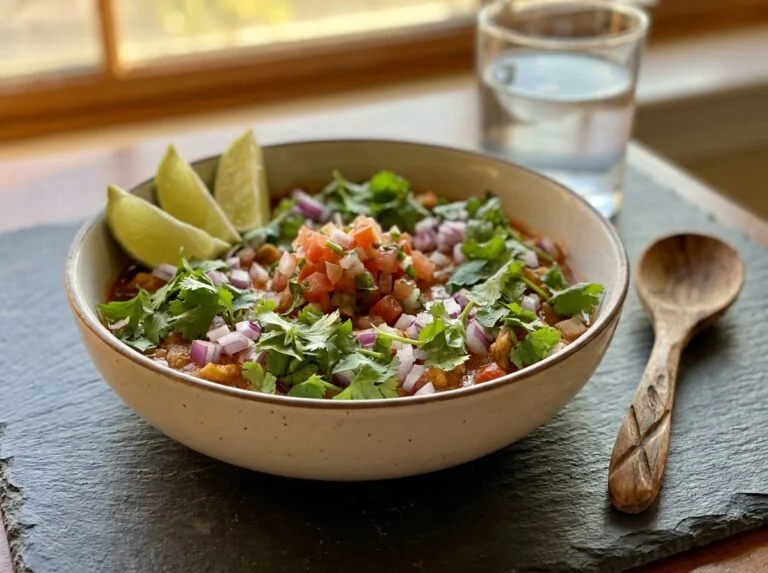
- Optional: diced red onion (0.25 cup / 30g), pico de gallo (0.5 cup / 75g), or a dollop of sour cream (2 tbsp / 30ml)
Serve immediately while everything is hot. The cilantro should be bright green and fresh, the queso should be warm and pourable, and the barbacoa should be tender and steaming.
Chef Albert’s Insight 🎯
*“Copycat cooking gets dismissed as ‘cheating,’ but it is actually the highest form of culinary respect. When you reverse-engineer a restaurant dish, you are not stealing—you are learning the language they speak. You are understanding why their cilantro lime rice tastes like cilantro and lime in every grain, not just sprinkled on top. You are learning that creamy queso is not magic—it is cornstarch emulsification. You are realizing that tender barbacoa is not mysterious—it is the chemistry of lime acid pre-tenderizing beef. When you understand the ‘why,’ you gain the power to make it better. You can adjust seasonings to your taste. You can use better ingredients. You can make it fresher, faster, cheaper. Copycat cooking is not settling for a restaurant meal at home. It is taking the restaurant’s formula and improving it with knowledge and care. That is what separates a good cook from a great one.”
Nutrition Information 📊
Per serving (1 bowl = half the recipe, approximately 3.5 cups)
| Nutrient | Amount |
|---|---|
| Calories | 680 |
| Protein | 42g |
| Total Fat | 32g |
| Saturated Fat | 14g |
| Trans Fat | 0.5g |
| Carbohydrates | 54g |
| Dietary Fiber | 2g |
| Sugars | 2g |
| Sodium | 1,240mg |
| Cholesterol | 105mg |
| Iron | 4.2mg |
| Calcium | 385mg (from cheese) |
| Potassium | 580mg |
Note: Nutrition calculated using USDA FoodData Central for beef chuck, basmati rice, cheese, and estimated portions. Actual values vary based on ingredient brands and portion sizes. This bowl provides approximately 42% of daily recommended protein (excellent for muscle maintenance and satiety), 85% of daily recommended iron (critical for oxygen transport), and 38% of daily recommended calcium (from cheese).
Food Safety & Temperature Guide 🌡️
| Cooking Stage | Target Temperature | Minimum Safe | Why It Matters |
|---|---|---|---|
| Beef barbacoa (internal) | 160–165°F / 71–74°C | 160°F / 71°C | Chuck steak is ground meat equivalent due to searing and shredding. USDA recommends 160°F for all ground beef. This ensures any surface bacteria are killed. |
| Rice cooling (bacteria prevention) | Cool to 70°F / 21°C within 1 hour | Below 140°F / 60°C within 2 hours | Bacillus cereus (a pathogenic bacterium found in rice) can multiply rapidly between 140–70°F if rice sits uncovered. Always cool cooked rice quickly or store hot. |
| Queso serving temperature | 160–170°F / 71–77°C | Hot to touch but not boiling | Cheese-based sauces should be served hot for both safety and quality texture. If queso cools below 140°F (60°C), it thickens and loses the creamy pour-ability. |
| Danger Zone (avoid) | 40–140°F / 4–60°C | Never leave food here | Pathogenic bacteria multiply rapidly in this temperature range. Do not leave assembled bowl on counter for more than 2 hours. Refrigerate immediately after eating. |
| Safe storage temperature | Below 40°F / 4°C | Keep continuously cold | Cooked bowl keeps 3–4 days in the fridge if cooled quickly and stored in airtight container. Do not store at room temperature. |
Storage & Reheating Guide 🧊
| Component | Storage Method | Duration | Reheating Method | Storage Tips |
|---|---|---|---|---|
| Barbacoa (cooked & shredded) | Refrigerator (airtight container) | 3–4 days | Heat gently in a skillet over medium heat, or microwave covered for 60–90 seconds with a splash of beef broth | Store in liquid/sauce to prevent drying. Do not store uncovered—it will oxidize and develop off-flavors. |
| Barbacoa (cooked & shredded) | Freezer (airtight container or freezer bag) | Up to 3 months | Thaw overnight in fridge, then reheat as above. OR reheat from frozen in skillet over low heat for 5–7 minutes, stirring occasionally | Portioning into 2-cup containers before freezing makes reheating easier (one container = one bowl). Label with date. |
| Cilantro Lime Rice (cooked) | Refrigerator (airtight container) | 4–5 days | Reheat in microwave (covered, 60–90 seconds) OR on stovetop in a skillet with a splash of water over medium heat, stirring occasionally | Store cooled rice in airtight container to prevent Bacillus cereus growth. Do not store rice at room temperature for more than 2 hours after cooking. |
| Cilantro Lime Rice (cooked) | Freezer (airtight container or freezer bag) | Up to 2 months | Thaw overnight in fridge, then reheat as above. Do NOT refreeze rice that has been thawed (increases Bacillus cereus risk) | Flash-freeze rice on a baking sheet first (30 minutes), then transfer to freezer bags to prevent clumping. |
| Queso (prepared) | Refrigerator (airtight container) | 2–3 days | Reheat gently in a saucepan over low heat, stirring constantly, adding 1–2 tbsp milk if it thickens too much | Do not microwave queso if possible (it can break). Gentle stovetop heating maintains creamy texture. |
| Queso (prepared) | NOT recommended for freezing | N/A | N/A | Frozen queso separates and breaks when thawed. Always prepare fresh or reheat old queso gently on stovetop. |
| Fully assembled bowl | Refrigerator (airtight container or covered) | 2–3 days | Disassemble (separate rice, barbacoa, and queso). Reheat components individually and reassemble. Do NOT reheat as one unit—rice and meat heat unevenly | If storing as one unit, queso will harden and rice will dry out. Better to store components separately and reassemble when reheating. |
| Fully assembled bowl | NOT recommended for freezing | N/A | N/A | Freezing causes texture loss across all components. Better to freeze barbacoa and rice separately, then reassemble fresh. |
Pro Storage Tip: Make the barbacoa and rice in bulk on Sunday, store separately in the fridge, and assemble fresh bowls throughout the week. The barbacoa actually improves in flavor after 1–2 days as the spices continue to meld. Fresh queso is best, but you can prepare it ahead and reheat gently when needed.
Frequently Asked Questions ❓
Can I use a slow cooker to make the barbacoa instead of the stovetop method?
Technically yes, but you will lose the crust development and smoky flavor that comes from high-heat searing. If you must use a slow cooker: sear the beef chunks first (2 minutes per side in a hot skillet), then transfer to slow cooker with the chipotle marinade and beef broth. Cook on low for 6–8 hours. This method works, but the result is less flavorful than the 15-minute stovetop version because you skip the Maillard reaction crust. For best results, always sear first on high heat.
What if I do not have a rice cooker?
Use a heavy pot with a tight-fitting lid on the stovetop. Bring the rice and infused liquid to a boil, then reduce heat to low, cover, and cook for 17 minutes without opening the lid. The tight seal is critical—if you keep peeking, steam escapes and the rice will not cook properly. A rice cooker is convenient but not required.
Can I make this bowl without the queso?
Yes, but you lose the signature “Chipotle bowl” creaminess. The queso is what makes this taste like Chipotle instead of just “rice and barbacoa.” If you want to skip queso, add extra avocado (0.5 cup / 75g) or a dollop of sour cream instead. The bowl will still be delicious, just not quite as “restaurant authentic.”
My lime juice is very acidic and is making the beef mushy. What went wrong?
You likely used bottled lime juice (which is more concentrated acid) or added too much lime juice. Fresh-squeezed lime juice is less acidic than bottled because it has aromatic compounds that balance the acid. Use the recipe amounts exactly: 3 tbsp for the marinade. If using bottled juice, reduce to 2 tbsp. The beef should be tender, not mushy—there is a difference.
Can I substitute the cheese? I do not like Pepper Jack.
Yes. Use any cheese that melts smoothly: Monterey Jack (milder), Oaxaca (more traditional Mexican), or even extra-sharp cheddar (more tang). Avoid soft cheeses (brie, cream cheese) and avoid pre-shredded cheese (it has anti-caking agents that prevent smooth melting). Buy a block and shred it yourself. The 2:1 ratio (one strong flavor, one mild) still works.
Is there a vegetarian version of this bowl?
For the barbacoa, substitute sliced and seared portobello mushrooms (they have a meaty texture) or crispy tofu seasoned with the same chipotle-lime marinade. The rice, queso, and toppings remain the same. The mushroom or tofu version will not have as much protein (22g instead of 42g), so consider adding a protein source like black beans or a fried egg.
Related Articles on Taste Pillar 🔗
🌮The Ultimate White Queso Dip: Just Like Your Favorite Mexican Restaurant!
🫘The 5-Minute Authentic Vietnamese Iced Coffee: The Bold Trick for a Flawless Brew!
🍚 Overnight Cinnamon Rolls with Heavy Cream
🧀 10 Reasons Your Macarons Crack: The Ultimate Macaron Troubleshooting Guide for Flawless Shells!
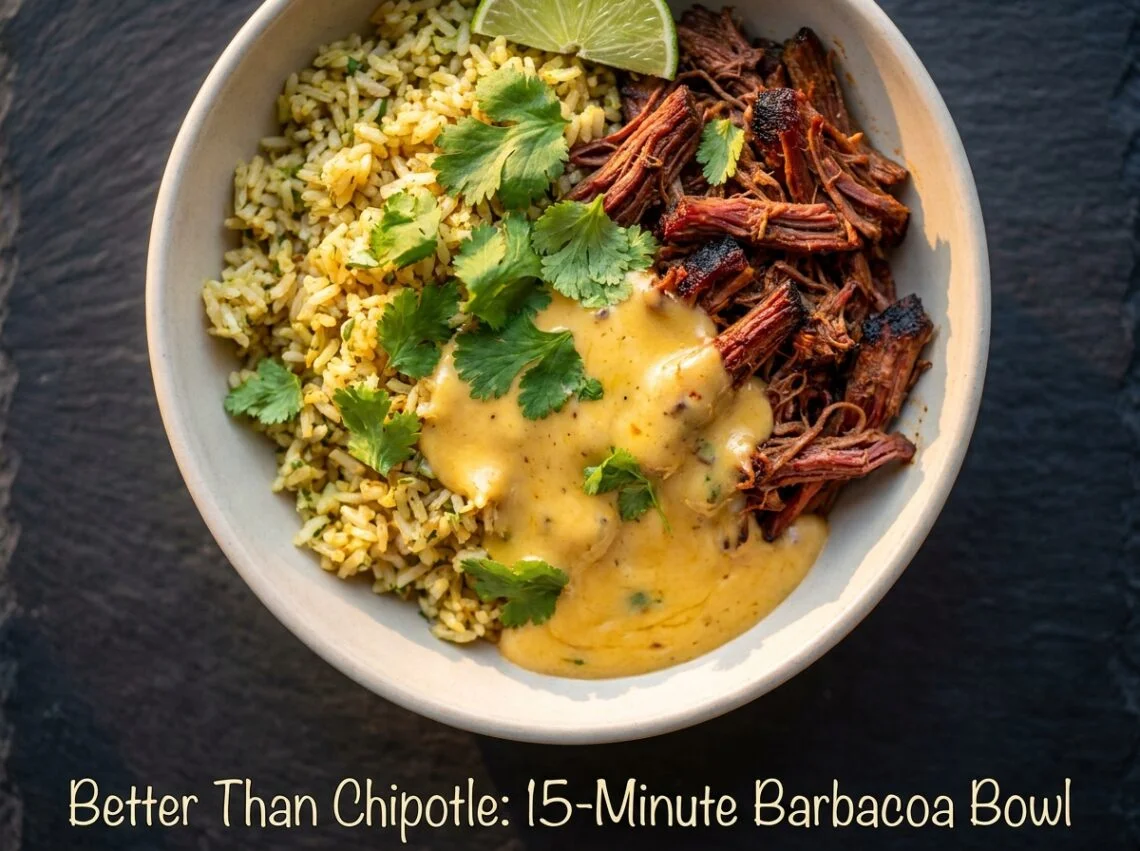
Better Than Chipotle: The Secret 15-Minute Cilantro Lime Rice & Barbacoa Bowl
Ingredients
Equipment
Method
- STEP 1: The Rice-Aromatics Infusion
- Step Name: Start the Cilantro Lime Rice First
- Step Instructions:
- Rinse 1.5 cups (300g) of basmati rice under cold water for 30 seconds, stirring gently, until the water runs clear. This removes excess starch and ensures the grains separate during cooking without clumping. Pat the rinsed rice dry with a clean cloth.
- In a rice cooker (or heavy pot with tight-fitting lid), combine the rinsed rice with 2.25 cups (540ml) of water, 3 tbsp (45ml) fresh lime juice, 1 tsp (3g) lime zest, 0.25 cup (15g) cilantro stems (the leafy green part of the stems, not the thick woody bottom), 2 minced garlic cloves, and 0.75 tsp (4g) sea salt.
- Stir everything together until well combined. The mixture should smell bright and herbaceous—like you are cooking rice in a lime-cilantro broth, not plain water. This infusion is the key to restaurant-quality flavor throughout each grain.
- If using a rice cooker, press start now. If using a pot on the stovetop, bring to a boil over high heat, then reduce heat to low, cover with a tight-fitting lid, and cook for 17 minutes without opening (peeking releases steam and causes uneven cooking).
- The rice will be done in approximately 17-18 minutes. Set a timer and do not open the lid until the timer goes off. This is critical for proper cooking.
- Timing Notes:
- Start this step FIRST. The rice takes the longest (17-18 minutes), so beginning it first ensures all components finish simultaneously for assembly.
- STEP 2: Prepare the Barbacoa Marinade
- Step Name: Blend the Chipotle-Lime Marinade
- Step Instructions:
- While the rice cooks, prepare the barbacoa marinade. In a blender or using an immersion blender, combine 3 tbsp (45ml) fresh lime juice, 1 tbsp (6g) lime zest, 3-4 canned chipotle peppers (plus 2 tbsp of the adobo sauce from the can), 4 minced garlic cloves (20g), 1 tsp (5g) ground cumin, 0.5 tsp (1g) dried Mexican oregano, 1 tsp (6g) sea salt, and 0.5 tsp (1g) black pepper.
- Blend until you achieve a rough paste consistency. The marinade should be thick enough to coat the back of a spoon and should smell intensely smoky and spicy—like Chipotle’s signature barbacoa spice blend.
- Do not over-blend into a completely smooth paste; some texture is good. You want visible pieces of chipotle pepper (about pea-sized chunks) throughout. This creates complex flavor notes in the final dish.
- Transfer the marinade to a small bowl and set aside. You will use this in the next step.
- STEP 3: The Flash-Barbacoa Sear (Two-Batch Method)
- Step Name: Sear the Beef Chuck in Two Batches
- Step Instructions:
- Cut 1.5 lbs (680g) of beef chuck steak into 2-inch chunks (do not shred yet; you are searing whole pieces). Pat the beef chunks completely dry with a paper towel—moisture on the surface prevents browning through the Maillard reaction (water must evaporate before browning can begin).
- Heat 2 tbsp (30ml) olive oil in a large heavy skillet (preferably cast iron, 12-inch diameter) over high heat until it is just barely smoking (about 2 minutes). You will know it is ready when wisps of smoke are visible above the oil and it shimmers.
- Working in two batches to avoid crowding the skillet (crowding creates steam, which prevents browning), carefully add half of the beef chunks to the hot oil. Sear for 2-3 minutes on the first side without moving them. You want a dark mahogany-brown crust to form—this is the Maillard reaction creating deep, complex flavors.
- Flip each piece and sear the second side for an additional 2-3 minutes. The interior will still be raw (this is correct; you are building crust flavor, not cooking through yet). Transfer the first batch to a clean plate.
- Sear the second batch using the same method (2-3 minutes per side). Transfer to the plate with the first batch when done.
- Why two batches? Crowding the skillet creates steam, which raises the humidity around the meat and prevents browning. Each piece needs direct contact with hot metal and low humidity. Searing in batches takes an extra 2 minutes but produces dramatically better crust and flavor.
- STEP 4: Braise in Chipotle Sauce & Shred
- Step Name: Simmer Barbacoa in Chipotle-Lime Sauce
- Step Instructions:
- Return all the seared beef chunks to the skillet (it is okay if they are still in the same skillet or a clean one). Add the chipotle-lime marinade (prepared in Step 2) and 1 cup (240ml) of low-sodium beef broth. Stir everything together to combine, making sure the marinade coats all the beef pieces evenly.
- Reduce heat to medium (not high—you want a gentle simmer, not a rolling boil). Simmer uncovered for 6-8 minutes. The liquid will reduce and concentrate, the meat will finish cooking through to safe temperature (160°F / 71°C internal), and the marinade will caramelize onto the surface of the beef, creating a glossy coating.
- Check doneness at 6 minutes: the beef should feel tender when pierced with a fork (it will break apart easily due to the lime acid pre-tenderization). If still tough, simmer an additional 1-2 minutes.
- After 6-8 minutes, remove the skillet from heat. Using two forks, shred the beef by pulling apart the meat along the grain (the direction the muscle fibers run). The meat should separate into tender strands approximately 0.5 inches wide. Each strand should still have visible texture—not mushy, not too fine (fine shreds absorb too much sauce and become grainy).
- Taste and adjust seasoning: if you want more lime brightness, squeeze in another 0.5 tbsp of fresh lime juice. If you want more smokiness, add another half chipotle pepper, blended smooth and stirred in.
- Timing Notes:
- By this point, your rice should be done or nearly done. Timing should align such that rice finishes at approximately the same time as the barbacoa for assembly.
- STEP 5: Prepare the Queso Sauce (While Meat Braises)
- Step Name: Emulsify the Smooth Queso Sauce
- Step Instructions:
- While the barbacoa braises (during the 6-8 minute simmer), start preparing the queso. In a small saucepan, combine 0.5 cup (120ml) whole milk (not skim; fat is essential for emulsification) and 0.5 tsp (2.5g) cornstarch.
- Whisk the milk and cornstarch together vigorously for 30 seconds, ensuring the cornstarch is fully dissolved with no lumps remaining. The cornstarch acts as an emulsifier—it will keep the fat and proteins in the cheese bonded together as you heat, creating a smooth sauce instead of a grainy, broken one.
- Place the saucepan over medium heat and warm until the mixture is steaming and just beginning to thicken (about 2 minutes). You should see it bubbling at the edges. Do not bring to a rolling boil.
- Remove from heat immediately. Add 1 cup (115g) shredded Pepper Jack cheese and 0.5 cup (57g) shredded Sharp Cheddar cheese all at once. Stir continuously and vigorously for about 60 seconds. The cheese will melt completely and combine with the cornstarch-milk base to create a smooth, creamy sauce.
- The queso should be pourable (like warm lava flowing) but still thick enough to coat a spoon. Test: dip a spoon in the sauce and hold it upside down. The sauce should flow slowly off the spoon, not drip in a stream and not stay clumped.
- If the queso is too thick, add 1-2 tbsp more whole milk and stir. If too thin, you did not cook long enough or the cheese-to-milk ratio is off (use the recipe amounts exactly next time).
- The queso should be kept warm until you pour it over the assembled bowl. If it cools and thickens, you can reheat it gently over low heat, stirring constantly, adding a splash more milk if needed.
- Critical Notes:
- The emulsifier (cornstarch) is non-negotiable. Do not skip this step. Without the cornstarch, the fats will separate from the solids as you heat, creating a grainy, broken, unpleasant sauce that is nothing like Chipotle’s queso.
- STEP 6: Assemble the Bowl (Layering is Everything)
- Step Name: Layer Rice, Barbacoa, Then Queso
- Step Instructions:
- Grab a large serving bowl (not a rice cooker—a proper serving bowl that can hold 3.5-4 cups of food). Layer from bottom to top:
- Layer 1 – The Rice Base: Scoop approximately 1 cup (about 200g) of the cilantro lime rice into the bowl. Use the back of a spoon to gently press and create a stable, even base layer. The rice should be warm and fluffy, with visible cilantro flecks and lime zest throughout.
- Layer 2 – The Barbacoa: Add approximately 0.75 cup (150g) of the shredded barbacoa directly on top of the rice base. The residual heat from the meat will slightly warm the rice below, allowing flavors to meld at the microscopic level. Drizzle any liquid/sauce remaining in the skillet over the meat layer.
- Layer 3 – The Queso Sauce: This happens next (see Step 7).
- The reason for this specific layering: you want warm rice + warm meat + warm queso all in contact with each other simultaneously. This allows flavors to integrate and creates that unified restaurant bowl taste. Cold toppings placed on hot components create a disconnect in flavor and texture.
- Do not let the bowl sit while you prepare the queso (if rice and meat cool too much, the queso will set partially when poured, creating an uneven texture).
- STEP 7: The Final Queso Pour (The Signature Move)
- Step Name: Pour Hot Queso Over the Assembled Bowl
- Step Instructions:
- Pour the prepared hot queso sauce (from Step 5) over the assembled rice and barbacoa in the bowl. Pour in a slow, steady stream, allowing the queso to pool and cascade across the components. The queso should coat the barbacoa, pool on the rice, and integrate with the warm components below.
- The heat of the queso will gently warm the rice and meat, melding flavors. The queso pooling is part of the visual presentation—it should look luxurious and creamy, not completely absorbed.
- You should have approximately 0.75 cup (180ml) of queso total; this creates the signature Chipotle bowl appearance and mouthfeel.
- STEP 8: The Final Garnish & Serve Immediately
- Step Name: Add Fresh Garnish and Serve Now
- Step Instructions:
- Top the assembled bowl with:
- 0.25 cup (15g) fresh cilantro leaves, finely chopped (add right before serving, do not add earlier as cilantro wilts and loses brightness)
- Fresh lime wedges (1-2 per bowl, positioned artfully on the rim or to the side)
- Optional toppings: diced red onion (0.25 cup / 30g), fresh pico de gallo (0.5 cup / 75g), or a small dollop of sour cream or Mexican crema (2 tbsp / 30ml)
- Serve immediately while everything is hot. The cilantro should be bright green and fresh, the queso should be warm and pourable, and the barbacoa should be steaming.
- Do not let the bowl sit after assembly—queso begins to cool and thicken, and the overall temperature drops rapidly once the hot queso stops providing heat.
Notes
Rice takes 17-18 minutes to cook perfectly. If you start the barbacoa first, the meat finishes before the rice, and you are left with cold components that cannot meld flavors properly. Start rice first, then begin searing meat while rice cooks. Everything finishes simultaneously for optimal assembly. The Cornstarch Emulsifier is Non-Negotiable:
Cornstarch (0.5 tsp mixed into the milk) creates a smooth queso sauce. Without it, cheese sauce breaks and separates into oil + solid lumps, creating a grainy, unpleasant texture. Do not skip this step. Cornstarch acts as an emulsifier, bonding fat and proteins together as you heat, creating Chipotle-quality queso. Fresh Lime Juice Temperature Matters:
Slightly warm lime juice (not cold) penetrates beef more effectively and tenderizes faster through acid denaturation. If your lime juice is straight from the refrigerator, warm it in a small pan for 20 seconds or let it sit at room temperature for 10 minutes before marinating. This improves acid penetration and tenderness. Two-Batch Searing Prevents Steaming:
Crowding the skillet creates steam, which prevents browning and crust development. Even if it takes an extra 2 minutes, sear in two batches. Each piece needs space and direct contact with hot metal for proper Maillard reaction browning. Shred Along the Grain:
When shredding the cooked beef, use two forks to pull apart the meat along the grain (the direction the muscle fibers run). Shredding across the grain makes the meat too fine and mushy. Proper shred size should be approximately 0.5 inches wide with visible texture. Do Not Add Cilantro Leaves Too Early:
Add fresh cilantro leaves as the final garnish, right before serving. If you add cilantro during cooking or earlier assembly, it wilts, darkens, and loses its bright fresh flavor. Save cilantro leaves for the very end. Serve Immediately After Assembly:
Do not let the assembled bowl sit. Queso begins to cool and thicken within 2-3 minutes. Queso is best when still hot and pourable. Rice and meat cool rapidly once the hot queso stops providing heat. Serve within 2 minutes of assembly for optimal temperature and texture. Make-Ahead Strategy for Meal Prep:
Barbacoa and rice can be made in bulk on Sunday and refrigerated separately in airtight containers for 4-5 days. The barbacoa actually improves in flavor after 1-2 days as the spices continue to meld. Fresh queso is best, but you can prepare it ahead and reheat gently (low heat, stirring constantly) when needed. Assemble fresh bowls throughout the week as desired. High-Altitude Adjustments (5,000+ feet elevation):
At higher elevations, air pressure is lower, affecting cooking times. Increase rice cooking time by 2-3 minutes. Increase barbacoa simmer time by 1-2 minutes. Watch carefully for proper doneness rather than relying on the recipe times alone. Flavor Variations & Customizations:
- Extra Spicy: Add another half chipotle pepper to the marinade, or add 0.25 tsp cayenne pepper
- More Lime Brightness: Squeeze in an extra 0.5 tbsp fresh lime juice after shredding the meat
- Richer Queso: Use heavy cream instead of whole milk for extra creaminess
- Add Avocado: Top with 0.5 sliced avocado per bowl
- Add Black Beans: Warm 0.5 cup canned black beans (drained and rinsed) and add as a layer
- Vegetarian Version: Substitute mushrooms (seared portobello mushrooms cut into chunks and shredded, or pan-fried crispy tofu) for the beef; use vegetable broth instead of beef broth
- Cauliflower Rice Substitution: Use low-carb cauliflower rice instead of basmati for keto version (cook the same way: infuse the cooking liquid with cilantro, lime, garlic, and salt)
Beef chuck steak must reach 160°F (71°C) internal temperature to be safely consumed (it is ground meat equivalent due to searing and shredding). Check with an instant-read thermometer at the thickest point. Rice must be cooled to 70°F (21°C) within 1 hour of cooking to prevent Bacillus cereus growth (a food-poisoning bacterium found in rice). If rice sits uncovered at room temperature, cool it quickly in an ice bath or spread it on a baking sheet. Do not leave the assembled bowl at room temperature for more than 2 hours.


One comment on “Better Than Chipotle: The Secret 15-Minute Cilantro Lime Rice & Barbacoa Bowl”