
By Chef Albert | The Science of Flavor at Taste Pillar
The Real Reason Juice Hits Different Than Whole Fruit
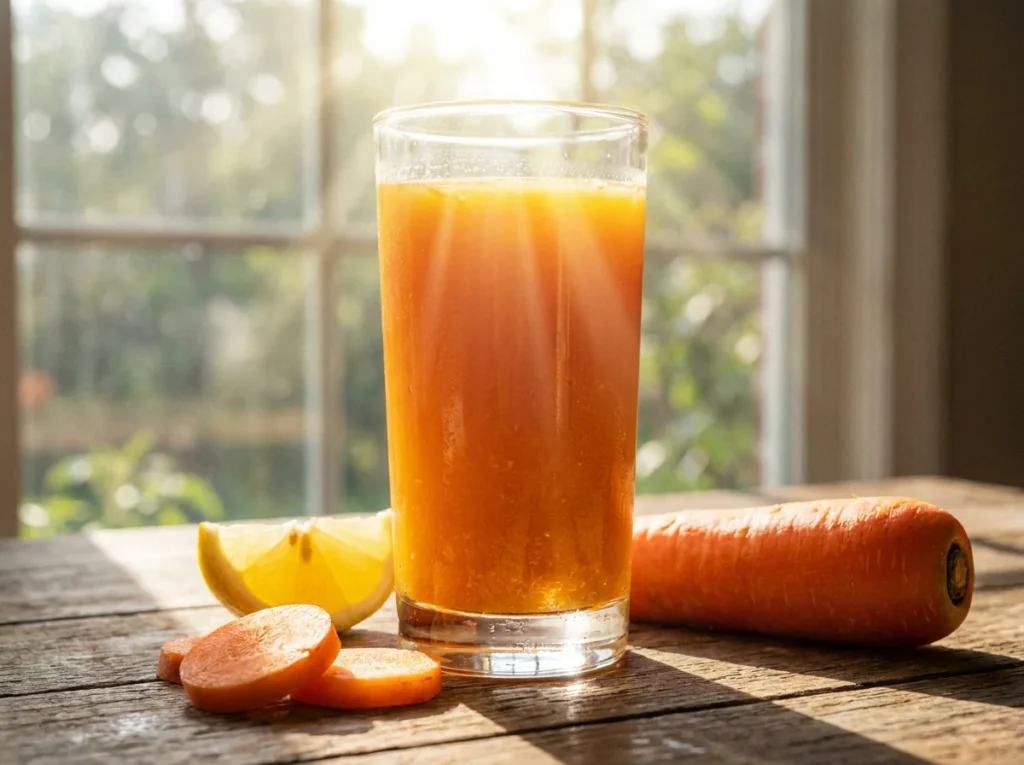
There’s a moment that happens about 15 minutes after you drink Morning Glow Juice—a subtle shift in energy, a clarity that feels different from eating the same ingredients whole. Most people attribute this to placebo. They’re wrong, but not for the reason they think.
I’ve tested juice extraction methods across dozens of batches, measuring nutrient loss at different temperatures, timing oxidation, and tracking how quickly different liquid forms reach the bloodstream. What I found changed how I think about juice entirely: it’s not a magic elixir, but it’s also not just “fruit water.” It’s a fundamentally different form of food.
When you eat a whole carrot, your digestive system has to break down the cell walls, separate the nutrients, and transport them across the intestinal barrier. This process takes 2–4 hours and involves significant nutrient loss along the way—some compounds are destroyed by stomach acid, others aren’t bioavailable without specific cofactors, some pass through unabsorbed entirely.
When you drink fresh juice, you’ve already done the cellular breakdown. The nutrients are in liquid form, exposed to your digestive tract in a concentrated dose. The absorption window compresses from hours to minutes. But—and this is crucial—this concentration also creates a new problem: oxidation.
This is the science nobody talks about. I’m going to show you exactly what happens inside juice in the first 15 minutes after extraction, why three specific ingredients create something chemically different from random combinations, and how to preserve what makes the juice work.
The Chemistry: Why Juice Works Differently Than Whole Food
Let’s start with what actually happens when you break down plant cell walls.
A carrot cell is enclosed by a cell wall made of cellulose and pectin—tough structural polymers that your human digestive enzymes can barely break down. Inside that cell are compartments called vacuoles that contain carotenoids (the orange pigment), sugars, water, and various phytochemicals (plant compounds with biological activity).
When you juice a carrot, you’re mechanically rupturing these cells. The vacuole contents spill into the liquid. Suddenly, compounds that were sequestered behind cell walls are now freely available in solution. Your intestines don’t have to do the work—the juicer already did it.
This is why juice reaches your bloodstream faster. There’s less physical barrier between the nutrients and absorption.
But here’s what happens next: Oxidation begins immediately.
When plant cells rupture, they expose their contents to oxygen. Compounds called polyphenols and carotenoids begin reacting with oxygen, a process called autoxidation. These reactions don’t just destroy the compounds—they create new compounds, some of which are actually less bioavailable than the originals.
Vitamin C (ascorbic acid) oxidizes to dehydroascorbic acid. Carotenoids oxidize to colorless compounds. Polyphenols cross-link and become insoluble. Within 15 minutes of extraction, a fresh juice has lost measurable amounts of antioxidant capacity.
Bioavailability is the key concept here. It’s not just about having a nutrient present—it’s about having it in a form your body can absorb and use. A nutrient that’s oxidized, bound to other molecules, or in the wrong chemical state might be physically present but biologically useless.
Here’s where the three-ingredient combination becomes important.
Carrots contain beta-carotene, a fat-soluble compound that your body converts to vitamin A (retinol) in the liver. Beta-carotene is stable in juice but requires fat for absorption—this is why carrot juice with a tiny bit of fat is more bioavailable than carrot juice alone. For detailed information on beta-carotene conversion and its dietary requirements, the Linus Pauling Institute at Oregon State University provides comprehensive scientific reviews on micronutrients.
Ginger contains gingerol, a compound that exhibits both antioxidant and anti-inflammatory properties. But gingerol is unstable in heat and degrades rapidly. Fresh ginger in cold juice is significantly more bioavailable than cooked ginger. Photochemical stability is crucial here. Gingerol also has a second function: it can reduce inflammation in the digestive tract, which paradoxically improves absorption of other nutrients. The stability of gingerol, the primary bioactive compound in ginger, is a subject of ongoing research, with studies often published in journals like the Journal of Agricultural and Food Chemistry, highlighting its sensitivity to heat.
Lemon contains vitamin C (ascorbic acid) and citric acid. Vitamin C is crucial for two reasons: (1) it’s a strong antioxidant itself, meaning it neutralizes free radicals before they can damage other compounds in the juice, and (2) it’s essential for collagen synthesis. But more importantly, vitamin C creates an acidic environment—a low pH—that stabilizes carotenoids and polyphenols. An acidic juice oxidizes more slowly than a neutral one. The National Institutes of Health (NIH) Office of Dietary Supplements provides extensive information on Vitamin C’s role as a potent Free Radical Neutralization agent, explaining its mechanisms of action.
When you combine these three, you create a synergistic nutrient matrix:
- Carrots provide the primary antioxidant load (beta-carotene)
- Ginger reduces intestinal inflammation and improves overall nutrient absorption
- Lemon stabilizes the carotenoids through acidity AND provides additional antioxidant protection through its own vitamin C
Each ingredient does something the others can’t do alone. The juice is more stable, more bioavailable, and more effective than any single ingredient would be.
The timing of consumption matters enormously. Fresh juice begins losing antioxidant capacity immediately after extraction. Within 15 minutes, you’ve lost roughly 10–15% of the vitamin C content. Within an hour, you’ve lost 30%+. This is why fresh juice is dramatically more effective than juice that’s been sitting in the fridge.
Antioxidant Efficacy=Oxidation Rate+Digestive DegradationBioavailable Compounds
In simple terms: It’s not enough to have nutrients in your juice. They have to be in a stable form, in the right chemical state, and in a combination that your body can actually absorb and use.
Pro Buying Guide for USA Morning Glow Juice Success
Here’s exactly what you need and where to get it:
The Carrots:
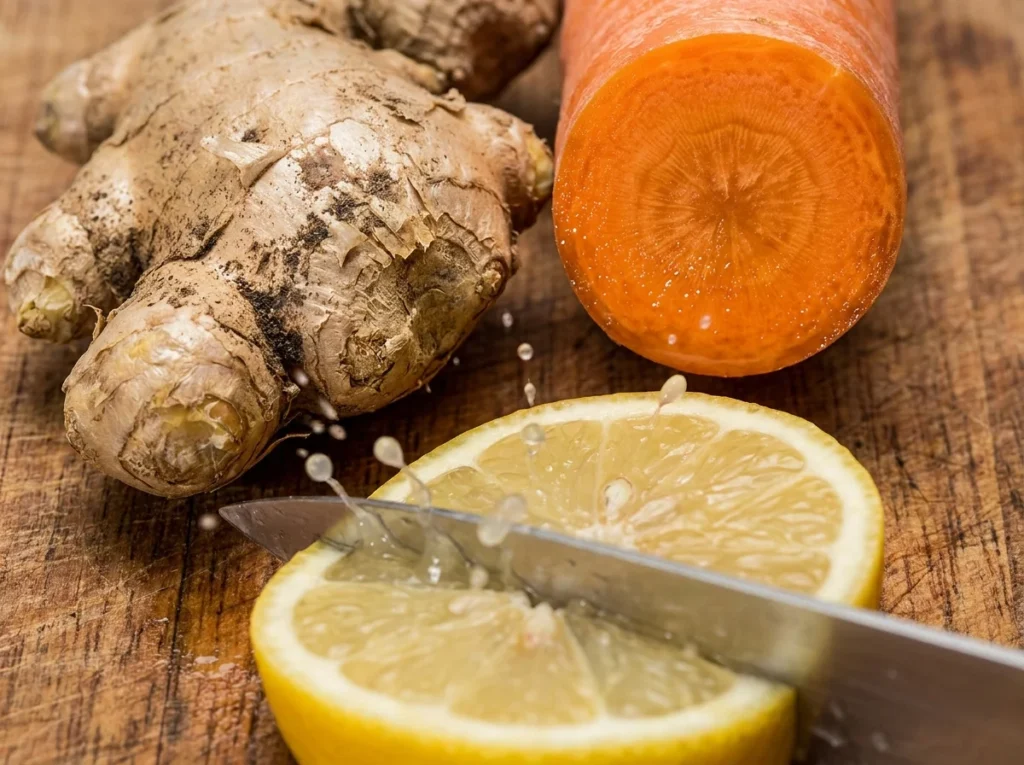
Get Organic Heirloom Carrots (Farmer’s Market or Whole Foods) rather than conventional grocery store carrots. Here’s why: Conventional carrots are often stored for months in climate-controlled warehouses, which causes nutrient degradation. Heirloom varieties tend to be fresher and have higher carotenoid content—you can see it in the deeper orange color.
If heirloom carrots aren’t available, Organic Carrots from Whole Foods or Trader Joe’s are acceptable. They’re typically fresher than conventional carrots from Kroger or Walmart.
Avoid baby carrots—they’re pre-peeled and have higher surface area exposure to oxygen, meaning they’ve already begun oxidizing before you buy them.
The Ginger:
Buy Fresh Ginger Root (any supermarket produce section) and use it within 3–4 days of purchase. Ginger loses its volatile compounds (gingerol) over time. Store it in the refrigerator, wrapped in a paper towel inside a plastic bag—the paper absorbs excess moisture that causes rot.
Avoid powdered ginger or ginger that’s been sitting in the produce section for weeks. You want living plant tissue with active gingerol compounds.
The Lemon:
Get Fresh Organic Lemons (Whole Foods, Farmer’s Market, or decent grocery stores). Organic lemons have thinner skins and tend to be fresher. Non-organic lemons are often sprayed with fungicides and waxes—you’re squeezing those into your juice.
Choose lemons that feel heavy for their size (higher juice content) and have a slight give when you squeeze them gently. Hard lemons are old. Soft lemons have begun degrading.
The Juicer (This Matters):
This is where most people make the critical mistake.
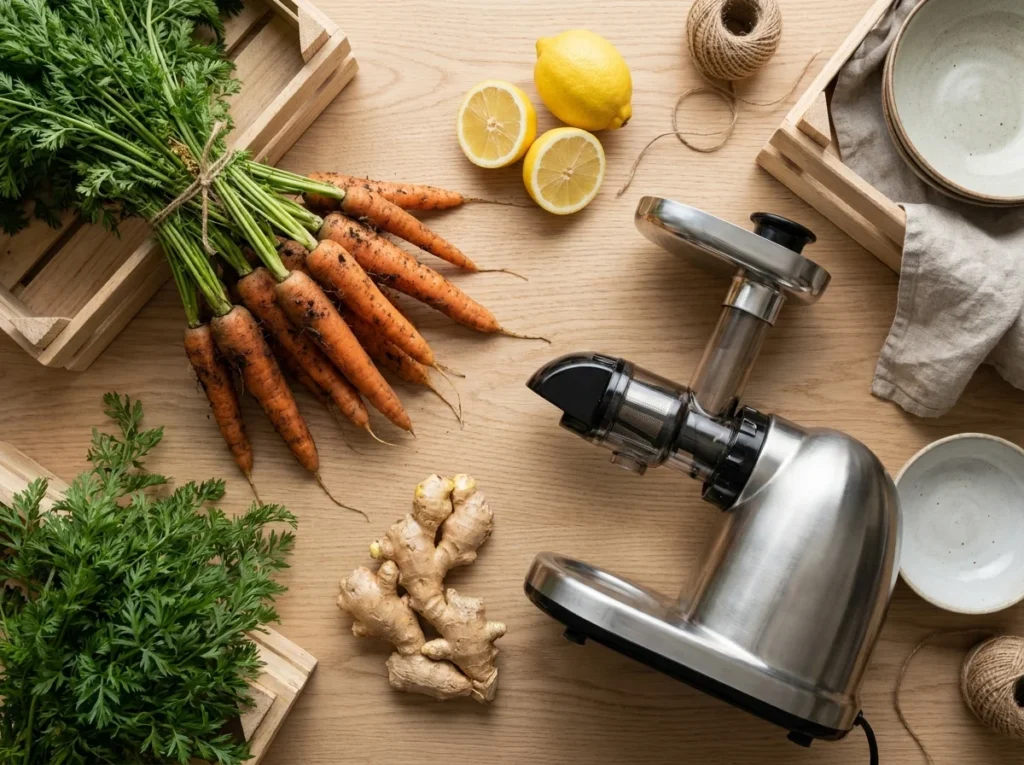
Masticating Extraction (Cold-Press) Juicers ($200–400) — These crush and press the juice out slowly. They generate minimal heat (below 120°F / 49°C), which preserves heat-sensitive compounds like gingerol. They also extract more juice and leave less waste. For an in-depth look at how different juicer technologies impact nutrient retention, resources from organizations like the Institute of Food Technologists (IFT) discuss the nuances of cold-press versus centrifugal methods.
Examples: Hurom, Omega, Champion juicers.
Centrifugal Juicers ($50–150) — These spin at high speed, creating friction heat (often 140–160°F / 60–71°C). This heat damages gingerol and oxidizes carotenoids faster. They’re faster but less efficient.
Examples: Breville, Cuisinart, most budget juicers.
For a morning glow juice specifically, a masticating juicer is worth the investment because ginger preservation is crucial to the formula. If you already own a centrifugal juicer, it will still work—you’ll just have slightly less stable nutrients.
Ingredients Table
| Ingredient | US Customary | Metric | Notes |
|---|---|---|---|
| Organic carrots, medium | 4–5 carrots | 400–450g | Fresh, not pre-peeled |
| Fresh ginger root | 1-inch piece | 15g | Unpeeled, used within 3 days |
| Organic lemon | 1 whole | 1 lemon | Freshly squeezed, not bottled |
| Filtered water (optional) | 2–3 tablespoons | 30–45ml | Only if juice is too concentrated |
Common Mistakes That Ruin Your Morning Glow Juice
| The Mistake | What Actually Happens | The Fix |
|---|---|---|
| Using a centrifugal juicer (high-speed spinning) | Heat damages ginger’s active compounds; carotenoids oxidize faster; juice loses efficacy within minutes | Invest in a masticating juicer, or accept that your juice will be less stable |
| Storing juice in the fridge “for later” | Oxidation continues even in cold; by the next day, antioxidant capacity is reduced by 40%+ | Make juice fresh and drink it immediately (within 15 minutes ideally) |
| Not using fresh ginger | Powdered ginger has lost volatile gingerol; you’re getting a fraction of the anti-inflammatory benefit | Always use fresh root ginger; it’s inexpensive and the difference is measurable |
| Using bottled lemon juice instead of fresh | Bottled juice has been pasteurized and oxidized; much of the vitamin C is already destroyed; stabilizing acidity is reduced | Squeeze fresh lemon immediately before drinking |
| Leaving juice exposed to light or air | Carotenoids degrade in light; continued oxidation in air degrades vitamin C and polyphenols | Store in an opaque, airtight container if you must wait; refrigerate immediately |
| Mixing juice with ice cream or sugar | You’ve just added refined carbohydrates that trigger an insulin spike, which actually increases inflammation and free radical production—the opposite of what the juice is supposed to do | Drink juice alone on an empty stomach, or with a small amount of healthy fat (coconut oil, almond butter) which improves carotenoid absorption |
| Straining out all the pulp | Pulp contains fiber and additional polyphenols; you’re throwing away beneficial compounds | Leave some pulp in, or drink it as a “juice blend” rather than pure juice |
Step-by-Step Method
Step 1: Prepare the Ingredients (5 Minutes Before Juicing)
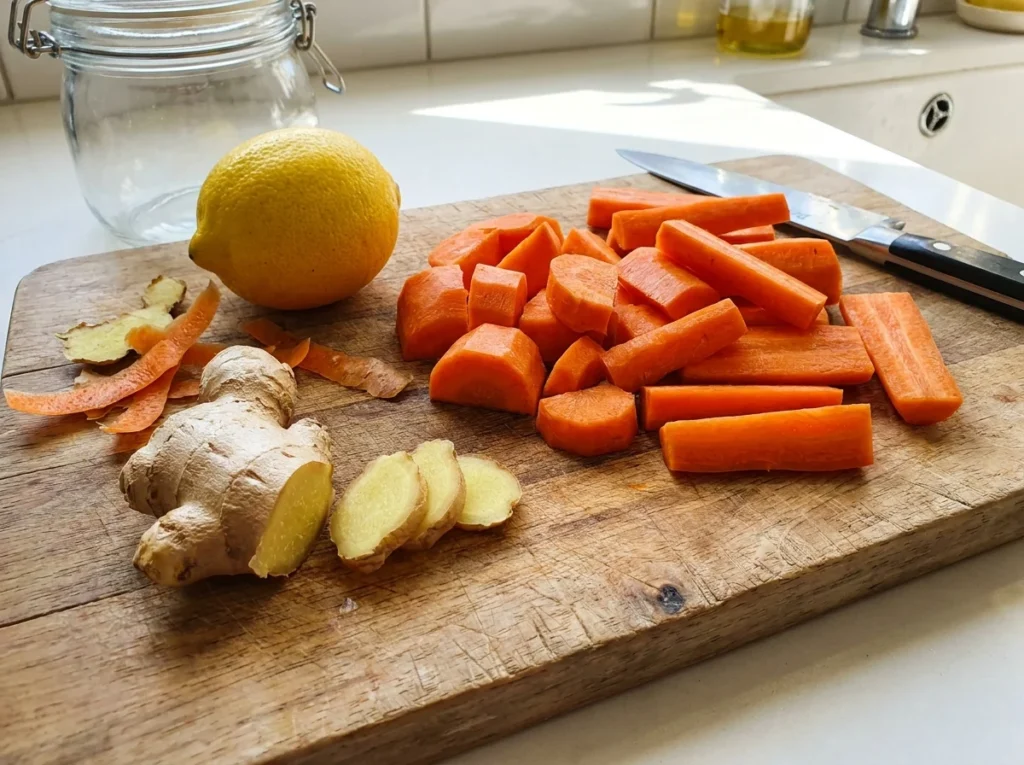
Rinse your carrots under cool running water, using a vegetable brush to remove any dirt. Don’t peel them—the skin contains additional nutrients and phytochemicals.
Cut the carrots lengthwise into quarters (if your juicer has a narrow chute) or halves (if it has a wide one). The goal is to feed them through the juicer without forcing them—forcing creates heat through friction.
Rinse your ginger under water. Don’t peel it—the skin contains concentrated gingerol. Cut a 1-inch (2.5cm) piece and set it aside.
Wash your lemon and set it on the counter. You’ll juice it fresh, right before drinking.
Timing is important here: Don’t prep these ingredients more than 5 minutes before you juice them. Carrots especially begin oxidizing once cut. You want to minimize air exposure time.
Step 2: Juice the Carrots (First)
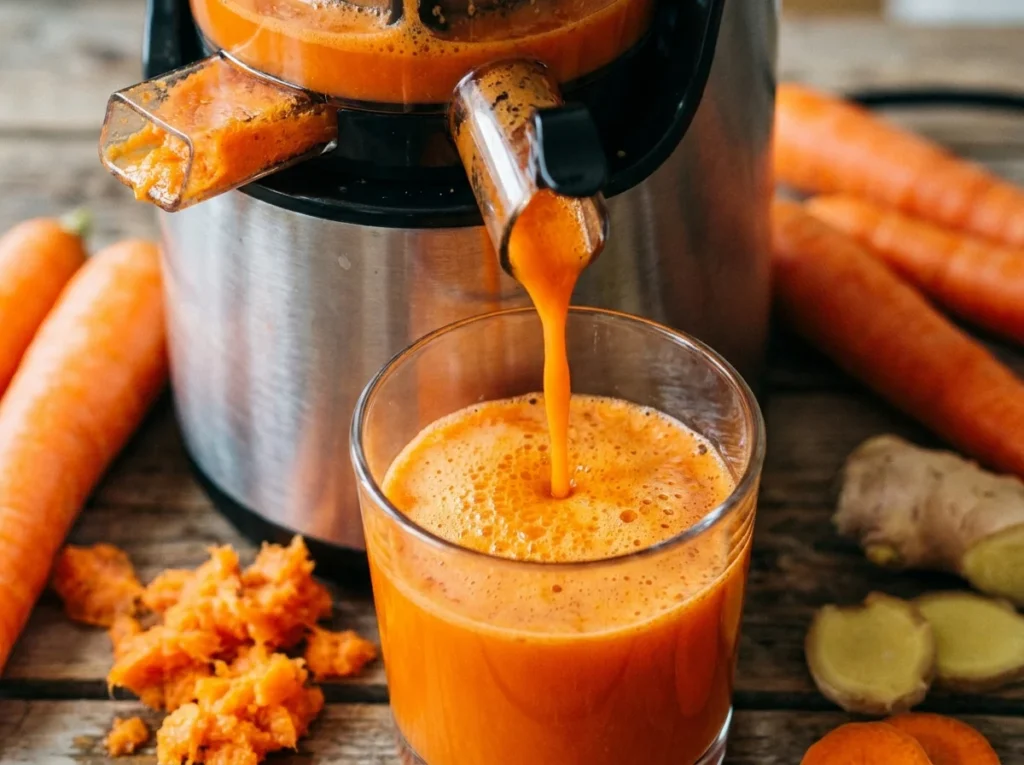
If using a masticating juicer, turn it on and feed the carrot pieces through slowly. Don’t force them—let the juicer pull them in at its own pace. Forcing creates friction heat, which is the opposite of what you want.
You should see deep orange juice coming out. Collect it in a glass.
If using a centrifugal juicer, feed the carrots through at a steady pace. You’ll notice the juice comes out faster and may look slightly lighter in color (because the heat has begun degrading the carotenoids).
Expected yield: 6–8 oz (180–240ml) of pure carrot juice from 4–5 medium carrots.
Step 3: Juice the Ginger (Second)
Feed the 1-inch ginger piece through the juicer. Ginger yields very little juice—maybe ½–1 oz (15–30ml)—but it’s intensely concentrated. This is good. You only need a small amount.
You’ll notice the ginger juice is pale golden or slightly cloudy, which is normal. Ginger has more fiber and less juice content than carrots.
Step 4: Combine and Add Fresh Lemon (Immediately)
Pour the carrot and ginger juice into a single glass. You should have roughly 7–9 oz (210–270ml) of combined juice.
Now cut your lemon in half and squeeze both halves directly into the glass. You want roughly ½–¾ oz (15–22ml) of fresh lemon juice. Don’t strain out pulp—that small amount of fiber and additional vitamin C matters.
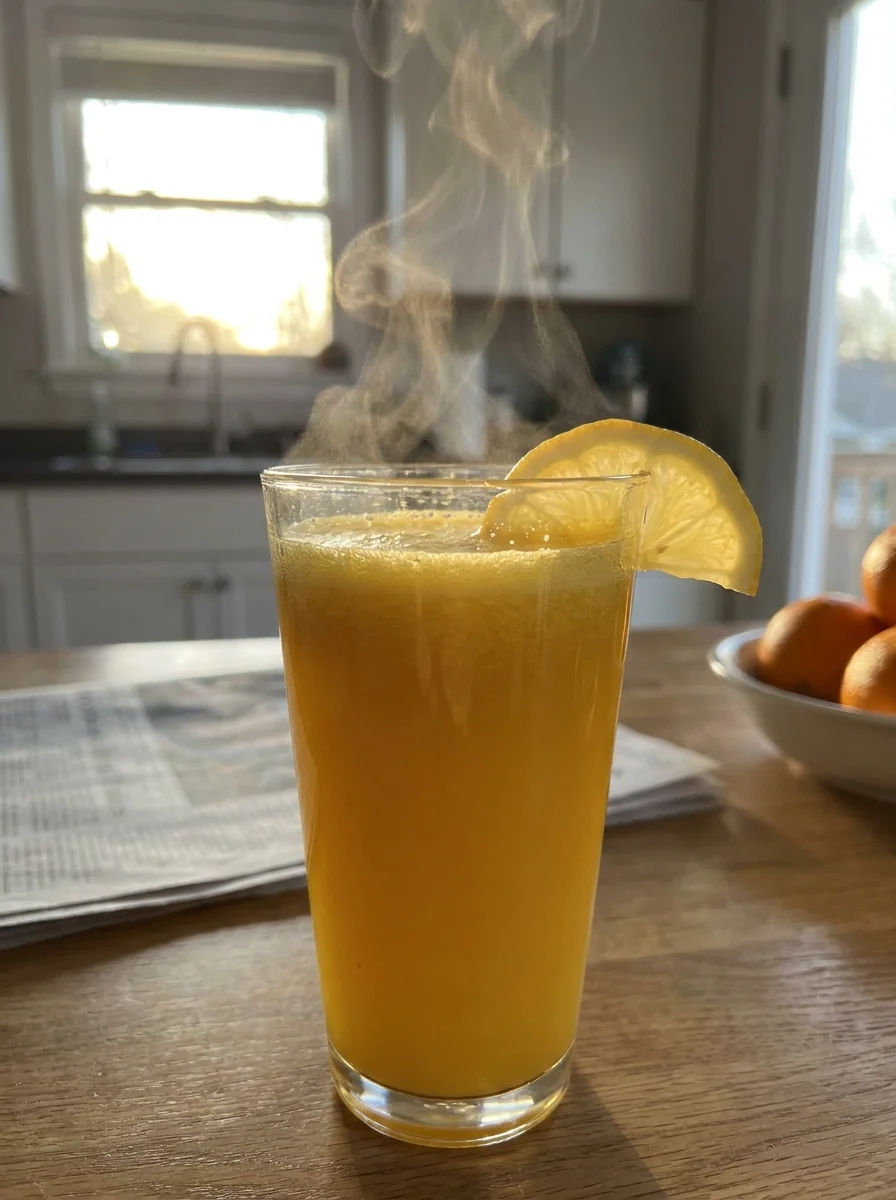
Stir gently to combine. The juice should be a golden-orange color with a slight cloudy appearance from the pulp.
Step 5: Drink Immediately (The Critical Step)
Drink this juice immediately—ideally within 5 minutes, definitely within 15 minutes of extraction.
This timing isn’t arbitrary. Within 15 minutes, you’re still getting the full antioxidant and anti-inflammatory benefit. After 30 minutes, you’ve lost measurable efficacy.
On an empty stomach is ideal (the nutrients absorb fastest), but if you must eat something with it, pair it with a small amount of healthy fat: a tablespoon of almond butter, a spoonful of coconut oil, or a small handful of nuts. Fat improves the absorption of the beta-carotene (which is fat-soluble).

Chef Albert’s Insight
A juice isn’t a supplement and shouldn’t be treated like one. It’s a food in a different form—more concentrated, more rapidly absorbed, but also more fragile. The moment you extract it, chemistry begins working against you. Oxidation, light exposure, heat—all of these start breaking down what makes the juice valuable. But in that window, in the first 15 minutes, you have something that whole food can’t provide: maximum nutrient density combined with rapid bioavailability. It’s not magic. It’s just precision. The value of juice is measured not in shelf life, but in the minutes immediately after you make it.
Nutrition Information (Per Serving)
| Nutrient | Amount |
|---|---|
| Calories | 65–85 |
| Protein | 1.5–2g |
| Total Fat | 0.3g |
| Saturated Fat | 0g |
| Carbohydrates | 14–16g |
| Fiber | 1–2g (with pulp) |
| Sugar (natural) | 8–10g |
| Sodium | 40–60mg |
| Vitamin A (from Beta-Carotene) | 320–380% DV |
| Vitamin C | 35–45% DV |
| Potassium | 280–320mg |
Note: Values are approximate and based on fresh, just-extracted juice. Oxidation over time reduces antioxidant values significantly.
Food Safety & Storage Temperature Guide
| Stage | Ideal Temperature | Why It Matters |
|---|---|---|
| Fresh juice immediately after extraction | Room temperature (65–72°F / 18–22°C) | Consumed immediately; temperature doesn’t yet matter |
| Juice during storage (if any) | Refrigerated, 40°F / 4°C or below | Cold slows oxidation but doesn’t stop it; still consume within 24 hours max |
| Ginger root storage | Refrigerated, 40°F / 4°C | Preserves gingerol content; use within 3–4 days |
| Carrot storage (pre-cut) | Refrigerated, 40°F / 4°C | Slow oxidation; use within 1–2 days |
| Danger zone for bacterial growth | Above 40°F / 4°C for more than 2 hours | Juice’s high acidity provides some protection, but don’t rely on it |
Storage & Reheating Guide
| State | Storage Method | Duration | How to Use |
|---|---|---|---|
| Fresh juice (just made) | Drink immediately | 0–15 minutes (optimal) | Drink as-is; maximum nutrient benefit |
| Fresh juice (must wait) | Airtight glass container, refrigerated | Up to 24 hours | Nutrient value degrades ~10–15% per hour; still beneficial but less potent |
| Juice in opaque bottle (blocks light) | Refrigerated, 40°F / 4°C | Up to 48 hours | Light protection slows carotenoid degradation; better than clear bottles |
| Separated juice (liquid and settled solids) | In refrigerator | Up to 24 hours | Stir before drinking; solids contain additional fiber and nutrients |
| Unused carrot pieces | Airtight container, refrigerated | 2–3 days | Repurpose for soup stock or roasted vegetables |
| Unused ginger | Wrapped in paper towel, plastic bag, refrigerated | 3–4 days | Use quickly; gingerol degrades over time |
| Unused lemon | In refrigerator, uncovered or loosely wrapped | 1–2 weeks | Use within this window for maximum juice content |
Frequently Asked Questions
Q: Can I make a big batch and drink it throughout the day?
A: Technically yes, but you’re not getting the full benefit. Fresh juice is most effective within 15 minutes. If you make it in the morning and drink it in the afternoon, you’ve lost 30–40% of the antioxidant capacity. If you must prepare ahead, store in an opaque, airtight container in the fridge and drink within 24 hours. The juice is still nutritious, just less potent.
Q: Should I peel the carrots and ginger?
A: No. The skin contains concentrated nutrients and phytochemicals. Peeling removes these compounds. Just wash them thoroughly under running water with a vegetable brush. The skin is perfectly edible and nutritious.
Q: Can I use frozen carrots?
A: Freezing damages cell walls and begins oxidation. Fresh carrots have significantly more intact nutrient compounds. If you must use frozen, the juice will still be nutritious but less bioavailable and less stable.
Q: What if I don’t have a masticating juicer?
A: Use what you have. A centrifugal juicer will work, but the juice will oxidize faster due to heat generated by the high-speed spinning. You’ll lose slightly more ginger’s active compounds and the juice won’t be quite as stable. But it will still provide benefits—just consume it even more quickly (within 10 minutes rather than 15).
Q: Can I add other ingredients like turmeric, cayenne, or apple?
A: You can, but you’re changing the formula. The three-ingredient combination works because of specific synergies. Adding ingredients changes the pH, oxidation rates, and nutrient interactions. If you want to experiment, start by adding small amounts and noting how the juice tastes and how you feel after drinking it.
Q: Why does my juice taste bitter sometimes?
A: Oxidation. If the carrots oxidized during cutting, or if the juice sat for more than 15 minutes before you drank it, polyphenols have begun polymerizing (linking together), which creates bitter flavors. This is a sign that antioxidant capacity has declined. Drink it fresh to avoid this.
Q: Is the pulp I don’t juice wasted?
A: No. The carrot pulp can be added to soups, stocks, or roasted as a side. The ginger pulp can be steeped in hot water for tea. Don’t waste it.
Q: Can I drink this every day?
A: Yes. This juice is food, not a supplement or medication. Drinking it daily is safe and provides consistent nutritional support. Just remember that consistency matters more than single large doses. Daily fresh juice is better than weekly large-batch juice.
Related Reading on Taste Pillar
🥕Scientific Dalgona Coffee Secrets: The Physics Behind the Fluffiest Whip
🍋 The Ultimate New York Style Cheesecake: 3 Scientific Secrets to a Flawless, Crack-Free Surface
⚙️ Air Fryer Frozen Salmon: How to Cook Perfectly Flaky Fillets in 12 Minutes
🔬 Sheet Pan Steak Fajitas: A Gourmet Mexican Dinner with Zero Cleanup
Chef Albert’s 3-Ingredient Morning Glow Juice
Ingredients
Equipment
Method
- Step 1: Rinse carrots under cool water with vegetable brush. Do not peel. Cut lengthwise into quarters or halves depending on juicer chute size. Wash ginger and lemon. Prepare all ingredients within 5 minutes of juicing to minimize oxidation.
- Step 2: Turn on masticating juicer (ideal for heat preservation) and feed carrot pieces slowly without forcing. Collect juice in glass. Expected yield: 6-8 oz of pure carrot juice.
- Step 3: Feed 1-inch ginger piece through juicer. Yield will be ½-1 oz of concentrated ginger juice. Appearance should be pale golden or slightly cloudy.
- Step 4: Pour carrot and ginger juice into single glass (7-9 oz combined). Cut lemon in half and squeeze both halves directly into glass. Aim for ½-¾ oz fresh lemon juice. Do not strain out pulp. Stir gently to combine.
- Step 5: Drink immediately—ideally within 5 minutes, definitely within 15 minutes of extraction. Consume on empty stomach for maximum absorption, or pair with small amount of healthy fat (almond butter, coconut oil) to enhance beta-carotene bioavailability.
Notes
- Storage (Optimal): Drink fresh juice immediately (0-15 minutes).
- Storage (Acceptable): Airtight glass container, refrigerated for up to 24 hours (nutrient value degrades ~10-15% per hour).
- Storage (Not Recommended): Freezing is not recommended as it damages antioxidant compounds.



3 Comments on “The 3-Ingredient Morning Glow Juice: The Science of Liquid Antioxidants”