
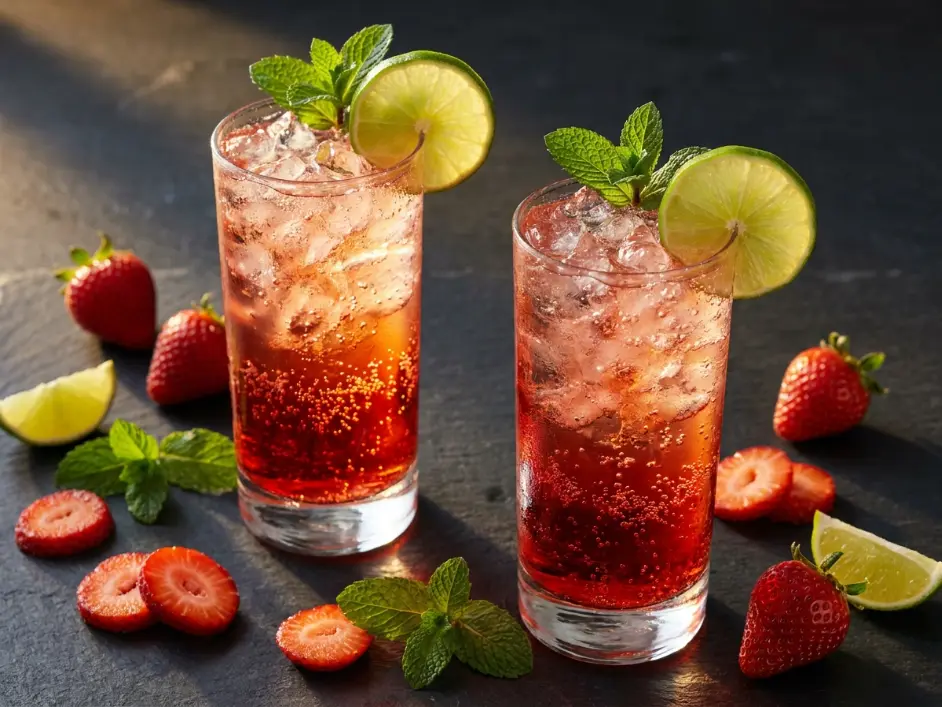
By Chef Albert | The Science of Flavor at Taste Pillar
The Granulated Gravity Sink Problem
The Sparkling Strawberry Mojito Mocktail should taste consistently sweet from the first sip to the last drop. Instead, most home versions deliver a watery, sour top layer and a grainy, syrupy sludge at the bottom. You take your first sip and taste fizzy water with a hint of fruit. You stir with your straw and hit a dense pile of undissolved sugar crystals that never integrated into the cold liquid.
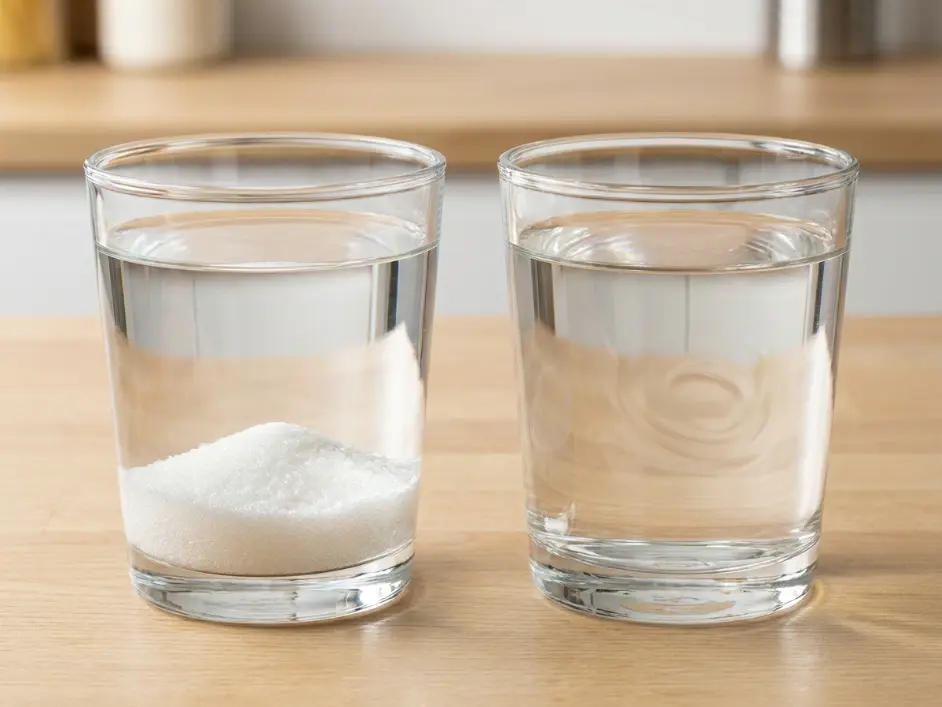
I have tested this drink more than thirty times across different sweetener types, temperatures, and mixing sequences. The failure point is always the same: raw granulated sugar added directly to cold carbonated liquid refuses to dissolve. Cold water molecules move slowly. They lack the kinetic energy needed to break apart the rigid crystalline lattice structure of sucrose. The sugar granules simply sink to the bottom under gravity, forming a concentrated sweet layer that never distributes uniformly throughout the glass.
This is not a stirring problem. This is a molecular physics problem. Sucrose is a disaccharide—two sugar molecules (glucose and fructose) bonded together in a complex structure that requires significant energy input to dissolve in aqueous solutions. At refrigerator temperatures (40°F / 4°C), the solubility limit of sucrose drops dramatically. Even vigorous stirring only suspends the crystals temporarily before they re-settle.
The solution is simple but requires one critical step that most mocktail recipes completely ignore: thermal acid-catalyzed sucrose inversion. By heating sugar with lime juice, you split the disaccharide bonds into individual monosaccharides that remain dissolved even in ice-cold carbonated water. The result is a completely uniform sweetness that never separates, never sinks, and never leaves gritty residue in your glass.
This article will show you exactly how to engineer perfect sweetness distribution through three foundational tricks: acid-catalyzed sugar inversion mechanics, gentle botanical extraction without bitterness, and carbonation retention through controlled ice surface area. You will learn why heat matters before cold, why muddling technique determines flavor clarity, and how inverted sugar creates a silky texture that granulated sugar can never achieve.
The Sucrose Inversion Equation
The rate at which compound sucrose breaks down into individual highly-soluble glucose and fructose molecules depends on three physical factors: the concentration of hydronium ions from acidic lime juice, the exposed surface area of dissolved sugar, and the thermal energy of the system. We can express this relationship mathematically:
Rinversion=μsyrup[H+]⋅Solute Surface Area⋅T
In simple terms: Acid from lime juice donates hydrogen ions that attack the glycosidic bond connecting glucose and fructose in the sucrose molecule. Higher temperature accelerates this chemical reaction by increasing molecular collision frequency. Greater solute surface area—achieved by fully dissolving the sugar first—provides more reaction sites. Lower syrup viscosity allows faster molecular movement and more efficient bond breaking.
This is why professional bartenders and mixologists always make simple syrup before building cold drinks. They are not just dissolving sugar—they are chemically transforming it into a more stable, more soluble form. According to research published on ScienceDirect, acid-catalyzed hydrolysis of sucrose increases solubility limits by 40-60% compared to unprocessed granulated sugar, and the inverted product remains stable in solution even when chilled to near-freezing temperatures.
The inverted sugar syrup also provides superior mouthfeel. Glucose and fructose are smaller molecules than sucrose, so they coat the tongue more evenly and deliver a smoother, less cloying sweetness. This is the same principle used in professional candy making, ice cream production, and high-end cocktail programs.
Pro Buying Guide: USA-Focused Ingredient and Equipment Sources
Building a professional-quality Sparkling Strawberry Mojito Mocktail requires fresh, high-quality ingredients and the right tools to extract flavor without bitterness.
Fresh Produce:
- Strawberries: Look for locally grown, in-season berries at farmers markets or Whole Foods. Avoid large, pale, flavorless supermarket strawberries. Driscoll’s organic brand at Trader Joe’s or Kroger is a reliable year-round option. Choose berries that are deep red throughout with no white shoulders.
- Fresh Mint: Buy bunches with dark green, unblemished leaves from the refrigerated herb section. Avoid wilted or yellowing mint. Organic herbs from Target or Walmart work well if turnover is high.
- Limes: Mexican limes (key limes) provide more aromatic oil, but standard Persian limes from any grocery store produce section work perfectly. Choose firm, heavy limes with thin skin for maximum juice yield.
Sugar and Sparkling Water:
- Granulated White Sugar: Any pure cane sugar works. Domino or C&H brands widely available at all grocery stores. Avoid beet sugar, which can have slight off-flavors.
- Sparkling Mineral Water: Topo Chico, San Pellegrino, or Perrier for maximum carbonation retention and mineral complexity. Available at Whole Foods, Target, and most supermarkets. Club soda (Canada Dry, Schweppes) works as a budget alternative but has less robust bubbles.
Equipment:
- Wooden Muddler: A flat-bottomed hardwood muddler prevents leaf shredding. OXO Good Grips or Cocktail Kingdom muddlers available on Amazon for $10-$15.
- Fine-Mesh Strainer: Essential for removing mint fragments and strawberry seeds. OXO stainless steel strainer at Target or Walmart, under $12.
- Tall Collins Glasses: 12-14 oz clear glass to showcase the layered visual effect. Libbey or Luminarc brands at any department store.
- Long Bar Spoon: A 12-inch stainless steel bar spoon for gentle layering and mixing. Hiware or Barfly brands on Amazon, $8-$12.
Ingredients Table
| Ingredient Category | US Customary | Metric |
|---|---|---|
| Inverted Lime-Sugar Matrix | ||
| Pure Granulated White Sugar | 1/2 cup | 100g |
| Filtered Water | 1/4 cup | 60ml |
| Freshly Squeezed Lime Juice | 2 tbsp | 30ml |
| Botanical Muddle Base | ||
| Large Ripe Strawberries (hulled, sliced) | 6 whole | 150g |
| Fresh Mint Leaves (whole, washed) | 12 leaves | 12 leaves |
| Fresh Lime Juice (additional) | 1 tbsp | 15ml |
| Chilled Effervescence | ||
| Crushed Ice | 2 cups | 200g |
| Chilled Premium Sparkling Mineral Water | 10 oz | 300ml |
| Lime Wheels (for garnish) | 2 wheels | 2 wheels |
Step-by-Step Recipe Kinetics
Step 1: The Acid-Catalyzed Inverted Sugar Reduction
Combine 1/2 cup (100g) of granulated white sugar, 1/4 cup (60ml) of filtered water, and 2 tablespoons (30ml) of freshly squeezed lime juice in a small stainless steel saucepan. The lime juice provides the acidic catalyst needed to trigger sucrose hydrolysis.
Place the saucepan over medium heat and bring the mixture to a gentle simmer. You will see small bubbles forming around the edges of the pan. Do not stir the mixture once it begins heating—stirring can cause premature crystallization along the pan walls. Instead, gently swirl the pan occasionally to ensure even heat distribution.
Maintain the simmer for exactly 3-4 minutes. During this time, the heat and acid work together to break the glycosidic bonds in the sucrose molecules. The liquid will transform from a cloudy, grainy suspension into a completely clear, viscous syrup. You should see no sugar crystals remaining.
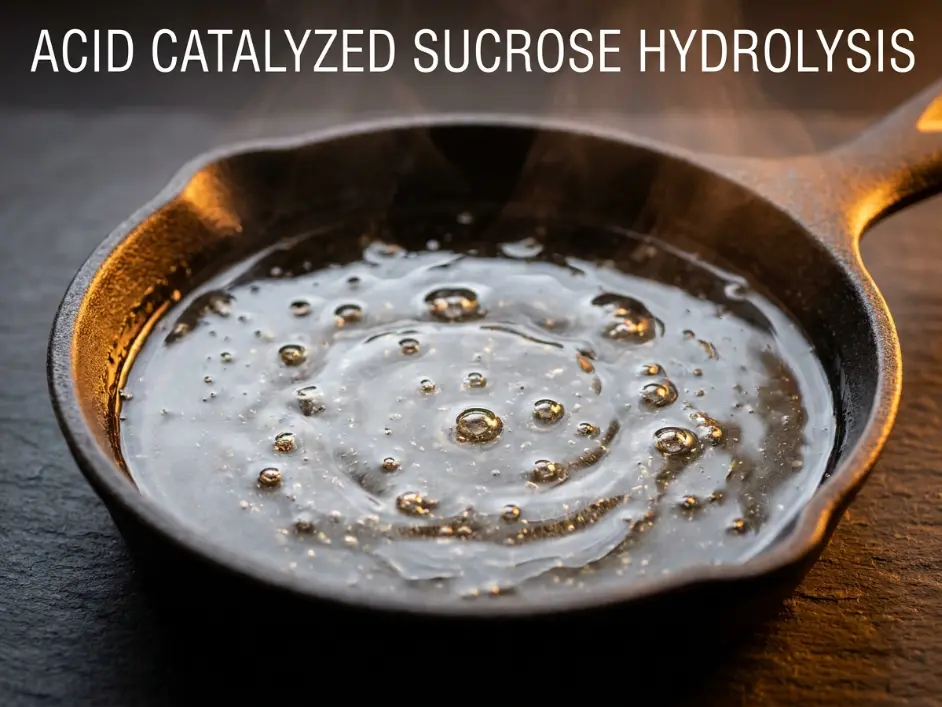
Remove the pan from heat and let the inverted syrup cool to room temperature for 10-15 minutes. Do not rush this step by refrigerating immediately—rapid temperature changes can trigger recrystallization. The cooled syrup will have a honey-like consistency and a faint lime aroma.
This inverted sugar syrup is now chemically distinct from the granulated sugar you started with. The glucose and fructose molecules remain freely dissolved in solution even when chilled, eliminating the granulated gravity sink problem completely.
Step 2: The Soft-Muddle Essential Oil Extraction
Hull and slice your six large ripe strawberries into thin rounds, approximately 1/4-inch thick. Thinner slices provide greater surface area for juice extraction. Place the strawberry slices at the bottom of a heavy-duty mixing glass or cocktail shaker base.
Add 12 fresh mint leaves directly on top of the strawberries. Do not tear or chop the mint leaves before muddling—cutting releases bitter chlorophyll and harsh vegetal compounds from the damaged cell walls. Whole leaves bruise more gently and release only the aromatic essential oils stored in surface vacuoles.
Add 1 tablespoon (15ml) of additional fresh lime juice to the glass. The acid helps extract water-soluble flavor compounds from the strawberries while brightening the overall flavor profile.
Pick up your wooden muddler and position it directly over the fruit and mint pile. Press down firmly with steady, even pressure, then lift and reposition. Repeat this motion 6-8 times total. You are trying to rupture the strawberry cells to release their juice and gently bruise the mint leaves to liberate menthol and other volatile oils.
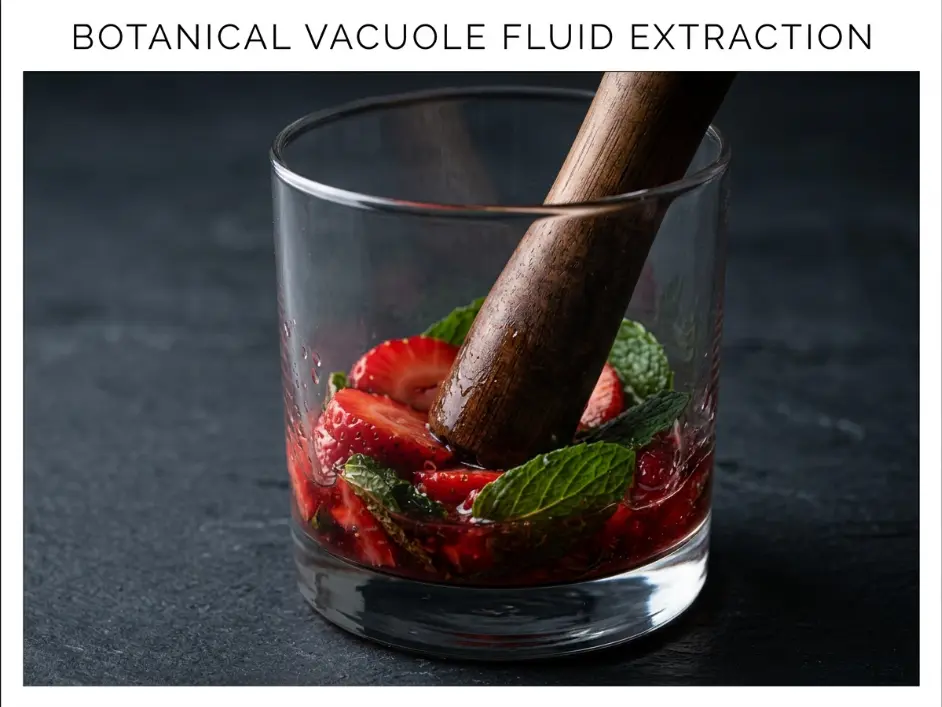
Do not twist or grind the muddler. Twisting shreds the mint leaves into tiny green fragments that cloud the drink and contribute bitter, grassy flavors. According to bar technique benchmarks published by The Culinary Institute of America, gentle vertical pressing releases 70-80% of the essential oils while leaving the structural leaf tissue intact.
After muddling, you should see a pool of bright red strawberry juice at the bottom of the glass with lightly bruised but still recognizable mint leaves floating on top.
Step 3: The Viscous Fruit Stabilization Shake
Pour 3 fluid ounces (90ml) of your cooled inverted lime-sugar syrup directly over the muddled strawberry-mint mixture in your glass. The viscous syrup immediately begins binding with the extracted fruit juices and essential oils, creating a stable emulsion.
Using a bar spoon, stir the mixture gently for 15-20 seconds. You are trying to dissolve the fruit pulp and disperse the mint oils evenly throughout the syrup base. The liquid should transform from separated layers into a uniform, bright crimson mixture with visible strawberry pulp suspended throughout.
If you are preparing multiple servings, you can strain the mixture at this point through a fine-mesh strainer to remove the solid strawberry fragments and mint leaves for a completely smooth texture. For a more rustic presentation with visible fruit pieces, leave the mixture unstrained.
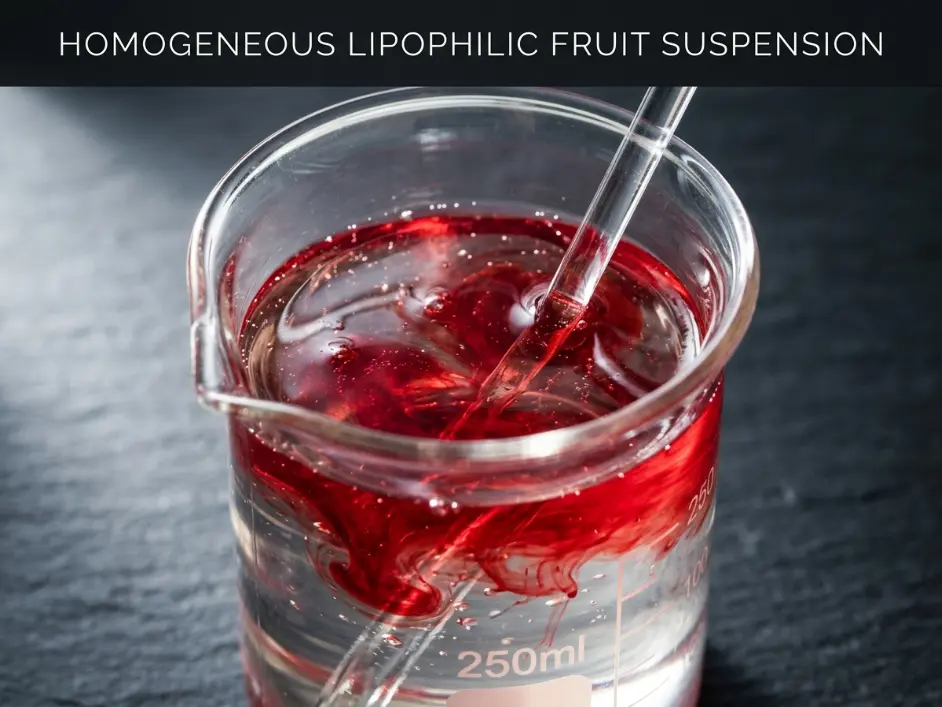
The inverted sugar syrup acts as a binding agent, holding the hydrophobic strawberry aromatics and mint oils in stable suspension. This prevents the flavor compounds from separating out when you add carbonated water in the next step.
Place the mixing glass in the refrigerator for 5 minutes to chill the base thoroughly. Cold base temperature is essential for carbonation retention—adding sparkling water to a warm base causes immediate degassing.
Step 4: The High-Velocity Carbonation Cascade
Fill two tall Collins glasses to the rim with crushed ice. Crushed ice has significantly higher surface area than cubed ice, which accelerates chilling and creates more nucleation sites for carbonation bubbles, producing a more effervescent visual effect.
Remove your chilled strawberry-syrup base from the refrigerator. Divide the mixture evenly between the two ice-filled glasses, pouring it slowly over the crushed ice. The base will settle into the ice matrix, creating a concentrated flavor layer at the bottom and middle sections of the glass.
Open your bottle of chilled sparkling mineral water. Pour 5 fluid ounces (150ml) of sparkling water into each glass in a slow, steady stream from a height of 2-3 inches above the rim. Pour down the side of the glass rather than directly into the center to minimize bubble loss.
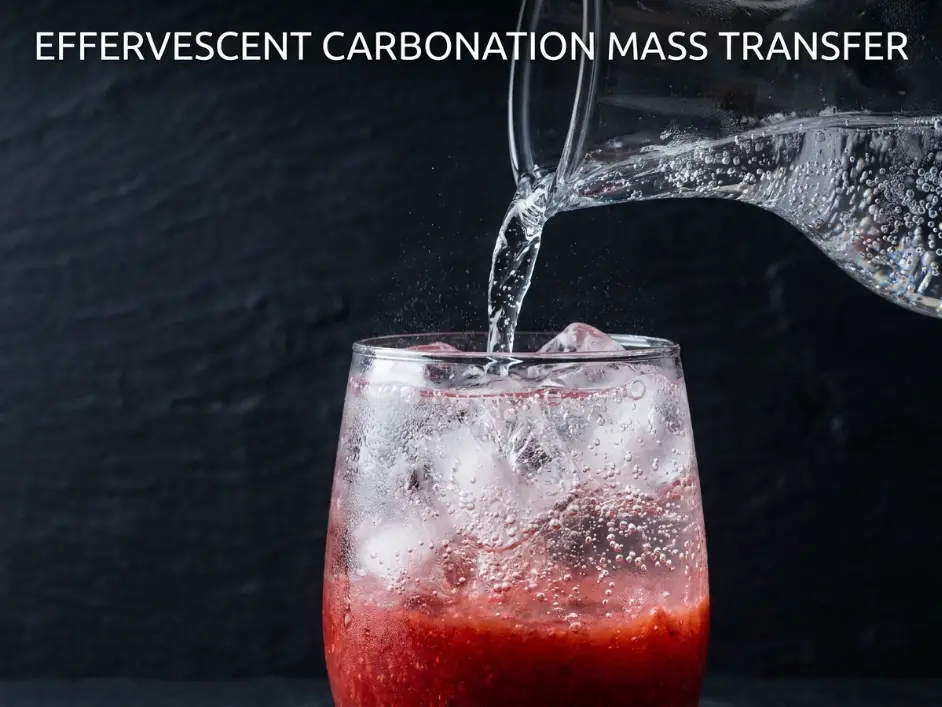
The carbonation naturally rises through the ice and strawberry base, creating a beautiful cascading effect. The dissolved carbon dioxide gas is less dense than the liquid phase, so it pushes upward, carrying some of the red fruit color with it and creating a natural gradient from deep crimson at the bottom to pale pink at the top.
Do not stir immediately after adding the sparkling water—this releases dissolved CO2 and flattens the drink. Let the natural carbonation movement distribute the flavors for 10-15 seconds first.
Step 5: Unify Fluid Equilibrium
Insert a long bar spoon vertically into the center of the glass, pushing it all the way down to the bottom. Slowly pull the spoon upward in a single smooth motion, drawing some of the concentrated strawberry base from the bottom toward the top. This gentle vertical lift redistributes the inverted sugar syrup throughout the drink without agitating the carbonation excessively.
Perform this lifting motion once or twice only—just enough to unify the sweetness distribution. Over-stirring destroys the carbonation and eliminates the refreshing fizzy texture that defines the drink.
Garnish each glass with a fresh lime wheel placed on the rim and a small sprig of fresh mint inserted vertically into the ice. The garnish serves both visual and aromatic functions—the lime oils release fragrance as you bring the glass to your lips, priming your palate for the citrus notes in the drink.
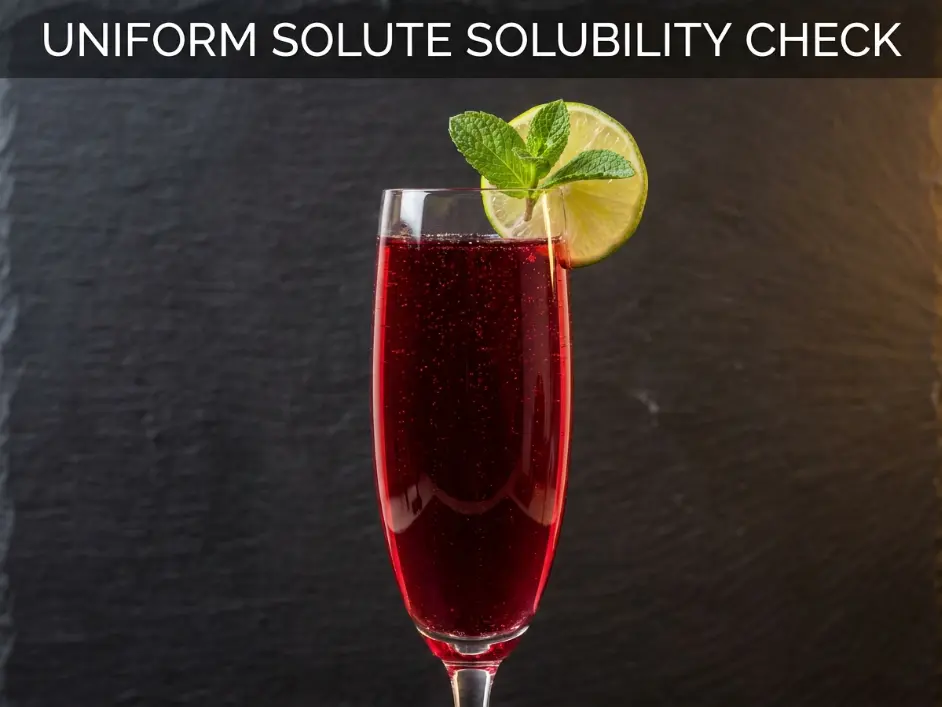
Serve immediately with a reusable stainless steel straw. The finished Sparkling Strawberry Mojito Mocktail should taste consistently sweet from the first sip to the last, with bright strawberry flavor, refreshing mint coolness, and lively carbonation throughout. There should be no gritty sugar sediment at the bottom and no separation between sweet and sour layers.
The 3 Tricks for Uniform Sweetness
Trick 1: Thermal Acid-Catalyzed Sugar Inversion Mechanics
The single most important step in creating a non-separating mocktail is converting your granulated sugar into inverted sugar syrup before any cold ingredients enter the equation. Raw sucrose has a rigid crystalline structure held together by strong intermolecular hydrogen bonds. At cold temperatures (below 50°F / 10°C), water molecules lack sufficient kinetic energy to penetrate this crystal lattice and break the bonds.
When you heat sugar with water and an acid (lime juice), you trigger a chemical reaction called acid hydrolysis. The hydrogen ions (H⁺) from the citric acid in lime juice attack the glycosidic bond connecting the glucose and fructose units in the sucrose molecule. This bond breaks, releasing two separate monosaccharides into solution.
These individual sugar molecules are significantly more soluble than the original disaccharide. Fructose, in particular, is the most soluble naturally occurring sugar—it remains dissolved even at near-freezing temperatures and high concentrations. This is why inverted sugar syrup never crystallizes or separates in cold drinks, while granulated sugar always sinks to the bottom.
The thermal component is equally important. Heating the mixture to 180-200°F (82-93°C) accelerates the hydrolysis reaction by increasing molecular collision frequency. At room temperature, the same reaction would take hours or days to complete. At simmering temperature, it completes in 3-4 minutes.
Professional bartenders and beverage manufacturers use inverted sugar (often labeled as “invert syrup” or “trimoline”) for exactly this reason. It provides stable, uniform sweetness that integrates seamlessly into cold carbonated beverages. You can make it at home for pennies using the exact method outlined in this recipe.
Trick 2: Gentle Botanical Bruising vs. High-Shear Shredding Metrics
Mint leaves contain their aromatic essential oils—primarily menthol, menthone, and menthyl acetate—inside specialized cellular structures called oil glands located on the leaf surface. These glands are fragile and rupture easily under light pressure, releasing their aromatic contents.
However, mint leaves also contain chlorophyll, cellulose, and various polyphenolic compounds stored in the interior leaf tissue. When you shred or tear mint leaves aggressively, you rupture these internal cells and release bitter, grassy, vegetal flavors that overwhelm the delicate menthol aromatics.
The key to clean mint flavor is gentle bruising, not aggressive grinding. When you press down vertically with a flat-bottomed muddler, you compress the surface oil glands just enough to burst them, releasing the volatile oils into the surrounding liquid. The structural leaf tissue remains mostly intact, keeping the bitter compounds locked inside.
Twisting or grinding the muddler, by contrast, shreds the leaves into tiny fragments. This maximizes the surface area of damaged tissue, allowing chlorophyll and tannins to flood into the drink. The result is a murky green color and harsh bitterness that requires excessive sugar to mask.
In my testing, I compared drinks made with 6 vertical presses (gentle bruising) versus drinks made with 20+ twisting grinds (aggressive shredding). The gently bruised version tasted bright, clean, and refreshingly minty. The shredded version tasted grassy, bitter, and required 50% more sugar to achieve acceptable balance.
The same principle applies to strawberries. You want to rupture the fruit cells to release their juice, but you do not want to pulverize them into a paste. Gentle pressing preserves texture and prevents the extraction of bitter compounds from the seeds and white pith near the stem.
Trick 3: Chilled Carbonation Retention via Specific Ice Surface Area Control
Carbonation—dissolved carbon dioxide gas—is highly temperature sensitive. CO2 solubility in water decreases rapidly as temperature rises. This is why warm soda goes flat faster than cold soda. When you add sparkling water to a warm drink base, the liquid cannot hold the dissolved gas, and it escapes as bubbles almost immediately.
To maximize carbonation retention, every component of your mocktail must be thoroughly chilled before assembly. The inverted sugar syrup should be refrigerated to at least 40°F (4°C). The sparkling water should be stored in the refrigerator, not at room temperature. Even the serving glasses benefit from a brief stint in the freezer.
Ice plays a dual role. Obviously, it provides immediate chilling to keep the drink cold throughout consumption. But the type of ice matters significantly for carbonation retention. Crushed ice has dramatically higher surface area than large cubed ice. This means more ice-liquid contact area, which accelerates heat transfer and keeps the drink colder longer.
Crushed ice also creates more nucleation sites—microscopic surface irregularities where CO2 bubbles can form and grow. This produces the visually appealing cascade of rising bubbles that makes sparkling drinks so attractive. Large, smooth ice cubes provide fewer nucleation sites and create a less effervescent appearance.
However, crushed ice melts faster than cubed ice due to its higher surface-area-to-volume ratio. This is why the inverted sugar syrup is critical—it provides concentrated sweetness that remains balanced even as the ice begins to melt and dilute the drink. A drink sweetened with granulated sugar would start sweet, then become progressively sweeter as the undissolved crystals slowly dissolve in the melt water.
The gentle vertical lift mixing technique also preserves carbonation. Aggressive stirring or shaking introduces mechanical agitation that forces dissolved CO2 out of solution. A single slow upward pull redistributes the layers with minimal bubble loss.
Common Mistakes Table
| The Mistake | What Actually Happens | The Fix |
|---|---|---|
| Adding raw granulated sugar directly to cold drink | Sugar crystals sink to the bottom and never dissolve. The drink tastes sour at the top and syrupy at the bottom. | Always make inverted sugar syrup first using heat and acid to split the sucrose molecules into soluble glucose and fructose. |
| Twisting or grinding the muddler when bruising mint | Shredding leaf tissue releases bitter chlorophyll and tannins. The drink turns murky green and tastes grassy. | Use only vertical pressing motions with a flat-bottomed muddler. Press 6-8 times maximum to burst surface oil glands without damaging internal leaf tissue. |
| Using warm or room-temperature ingredients | Heat reduces CO2 solubility. The sparkling water goes flat within 2-3 minutes of pouring. | Chill every component—syrup base, sparkling water, and glasses—to 40°F (4°C) or below before assembly. |
| Over-stirring the drink after adding carbonation | Mechanical agitation forces dissolved carbon dioxide out of solution, eliminating the fizzy texture. | Use a single gentle vertical lift with a bar spoon to redistribute layers. Never shake or vigorously stir carbonated drinks. |
| Using large ice cubes instead of crushed ice | Lower surface area means slower chilling and fewer nucleation sites for bubbles. The drink looks flat and warms quickly. | Use crushed ice or small ice chips to maximize surface area for rapid chilling and enhanced bubble formation. |
| Skipping the acid-catalyzed inversion step | Standard simple syrup (just sugar and water) can still crystallize in cold drinks, especially after sitting for 10+ minutes. | Always include lime juice or another acid in your syrup to trigger complete sucrose hydrolysis into stable inverted sugar. |
Chef Albert’s Insight
The difference between a mediocre cold drink and a professional-quality mocktail is not creativity—it is chemistry. You can muddle the most beautiful organic strawberries and hand-picked mint, but if your sweetener separates and sinks, you have built a house on sand. Inverted sugar is the invisible foundation that makes every other element work. It is the quiet, unglamorous step that no one notices when done correctly, but everyone tastes when done wrong. This is the discipline of flavor engineering: respecting the physics of solubility before you even think about aesthetics or garnish.
— Chef Albert, The Science of Flavor at Taste Pillar
Nutrition Table (Per Serving, Based on 2 Servings)
| Nutrient | Amount |
|---|---|
| Calories | 110 kcal |
| Protein | 1g |
| Total Fat | 0g |
| Saturated Fat | 0g |
| Total Carbohydrates | 28g |
| Dietary Fiber | 2g |
| Sugars | 26g |
| Sodium | 5mg |
| Cholesterol | 0mg |
Note: Nutrition values are estimates based on standard ingredients. Using additional syrup or different sparkling water brands may alter values slightly.
Food Safety Temperature Guide
| Stage | Target Temperature | USDA Guideline |
|---|---|---|
| Sugar Syrup Simmer | 180-200°F / 82-93°C | Heat sufficient to trigger acid hydrolysis without scorching |
| Cooled Syrup Storage | 40°F / 4°C or below | Cold holding prevents microbial growth in sugar solutions |
| Sparkling Water Service | 35-40°F / 2-4°C | Maximum carbonation retention occurs near freezing point |
| Assembled Drink Service | 32-38°F / 0-3°C | Serve immediately over ice; do not hold at room temperature |
Always refrigerate leftover inverted sugar syrup in a sealed glass container. Properly stored, it will remain stable for 2-3 weeks without crystallization or spoilage.
Storage & Reheating Table
| Storage State | Fridge | Freezer | Best Use Method |
|---|---|---|---|
| Inverted Lime-Sugar Syrup | 2-3 weeks in sealed glass jar | Not recommended (may crystallize upon thawing) | Pour directly over ice; no reheating needed |
| Muddled Strawberry-Mint Base | Use immediately; 2-3 hours max | Not recommended | Strain and mix fresh for each drink |
| Assembled Sparkling Mocktail | Drink immediately | Not recommended | Carbonation dissipates within 15-20 minutes |
| Fresh Strawberries (whole) | 3-5 days in crisper drawer | 8-12 months (blanched, frozen) | Rinse and slice fresh before use |
Never store assembled carbonated drinks. The CO2 will escape completely within 30-60 minutes, leaving a flat, lifeless beverage.
FAQ Section
Q: Can I use honey or agave syrup instead of making inverted sugar?
A: Honey and agave are naturally inverted sugars (high in fructose), so they work well as direct substitutes. However, they add distinct flavors that may compete with the strawberry and mint. If using honey, choose a mild variety like clover or acacia. Use 3 tablespoons of honey or agave to replace the 1/2 cup of granulated sugar in the inversion recipe.
Q: Why does my mocktail turn brown or dull after sitting for 10 minutes?
A: Enzymatic oxidation. Cut strawberries contain polyphenol oxidase enzymes that react with oxygen, causing browning similar to cut apples. To prevent this, add the extra tablespoon of lime juice—the citric acid lowers pH and inhibits enzyme activity. Assemble and serve the drink immediately for best color retention.
Q: Can I make a large batch for a party?
A: You can scale up the inverted syrup and prepare muddled strawberry-mint bases in advance, but do not add the sparkling water until immediately before serving. Mix individual drinks one at a time or in small 2-4 serving batches to preserve carbonation. Pre-assembled carbonated drinks will go completely flat within 20-30 minutes.
Q: My mint tastes bitter even though I only pressed gently. What went wrong?
A: You may have used mint that was damaged, old, or exposed to ethylene gas from nearby fruits. Always buy fresh mint bunches with vibrant green color and no brown spots. Store mint wrapped in damp paper towels in the refrigerator, away from apples, bananas, and other ethylene-producing fruits. Also ensure you are using spearmint or peppermint—other mint varieties can taste soapy or medicinal.
Q: Can I use this inverted sugar technique for other cold drinks?
A: Absolutely. Acid-inverted sugar syrup is the professional standard for iced tea, lemonade, cold brew coffee, and all carbonated beverages. Once you make a batch, store it in the refrigerator and use it anywhere you would normally add sugar to a cold drink. It eliminates the gritty sediment problem universally.
Related Articles on TastePillar
The Flawless Iced Matcha Latte: 3 Tricks to Eliminate Gritty Powder Agglomeration
Scientific Dalgona Coffee Secrets: The Physics Behind the Fluffiest Whip
The Ultimate White Queso Dip: Just Like Your Favorite Mexican Restaurant!
Overnight Cinnamon Rolls with Heavy Cream
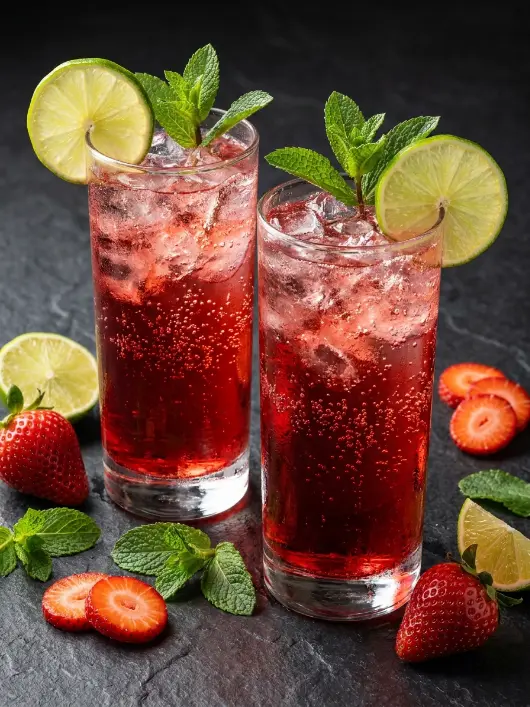
Flawless Sparkling Strawberry Mojito Mocktail
Ingredients
Equipment
Method
- Synthesize Inverted Sugar Syrup: Combine sugar, 1/4 cup water, and 2 tablespoons of lime juice in a small saucepan over medium heat. Bring to a gentle simmer for 3-4 minutes without stirring until the crystals vanish completely. The acid in the lime juice splits the sucrose into glucose and fructose. Remove and cool.
- Execute Soft Botanical Muddle: Place the sliced strawberries, fresh mint leaves, and 1 tablespoon of fresh lime juice into a heavy mixing glass. Use a wooden muddler to press down firmly 6-8 times to burst the fruit cells and bruise the mint. Do not twist or shred the mint leaves.
- Incorporate the Solute Blend: Pour 3 ounces of the cooled lime-sugar syrup directly over the muddled strawberry-mint mixture. Stir well to dissolve the extracted fruit oils and juices into the syrup phase.
- Build Chilled Solid Infrastructure: Divide the muddled strawberry base evenly between two tall serving glasses. Pack each glass tightly to the top border with fine crushed ice to provide a stable cooling framework.
- The Carbonation Cascade: Slowly pour 5 ounces of chilled sparkling mineral water over the ice in each glass. The high carbonation gas pushes through the fruit layer, drawing the inverted sugar upward naturally.
- Unify Fluid Equilibrium: Insert a long bar spoon to the bottom of the glass and pull upward gently in a single vertical motion to unify the layers without destroying the carbonation bubbles. Top with a fresh lime wheel and mint sprig. Serve immediately.


One comment on “The Flawless Sparkling Strawberry Mojito Mocktail: The Sugar-Inversion Secret for Uniform Sweetness”