By Chef Albert | The Science of Perfect Flavour
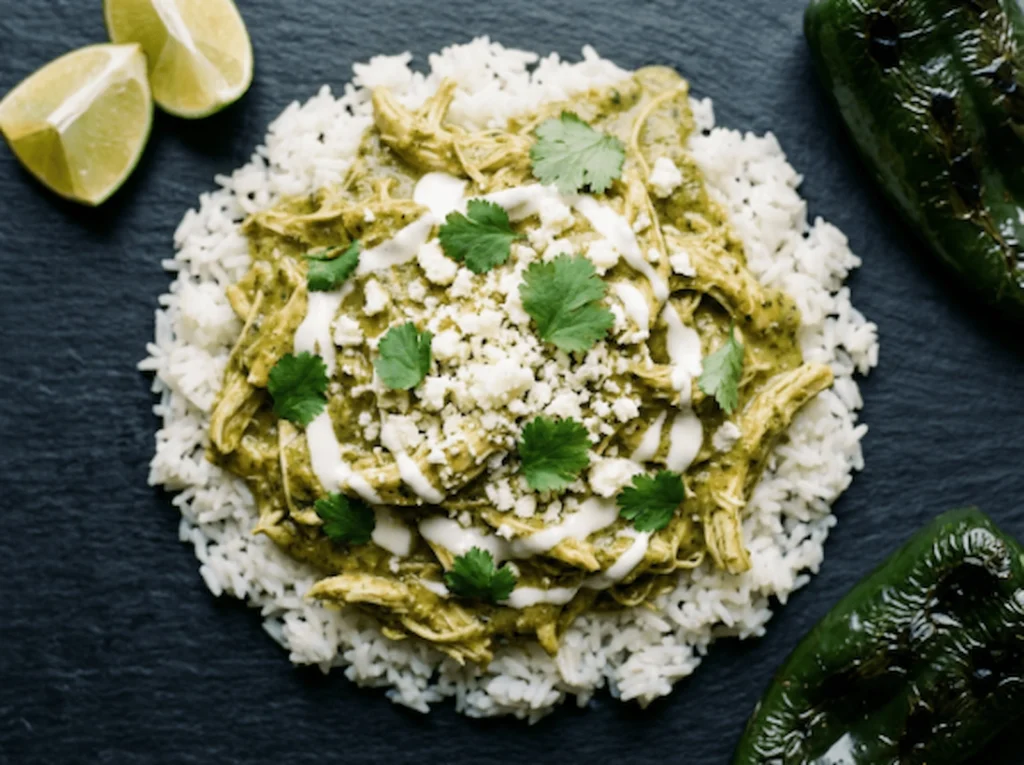
There is a moment in every Mexican kitchen when the smell of Creamy Poblano Chicken fills the air and everyone knows something special is about to happen. The pepper skins blister and char over the open flame, releasing a sweet, earthy smoke that carries memories of street vendors and family celebrations. This is not the aggressive heat of jalapeños or the smoky punch of chipotles. Poblanos bring something different to the table—a gentle warmth, a grassy depth, and when transformed into a cream sauce, an almost magical ability to make everything taste both familiar and extraordinary.
I have made Pollo en Crema de Poblano more times than I can count, adjusting the heat levels for my wife who prefers mild dishes, testing different cream ratios to avoid the heartbreak of a split sauce, and learning exactly how long to simmer without boiling the dairy into grainy disaster. The dish itself is deceptively simple: seared chicken bathed in a silky green sauce made from fire-roasted poblanos, Mexican crema, and aromatics. But the difference between a version that tastes flat and one that makes people close their eyes after the first bite comes down to technique, not talent.
The biggest challenge home cooks face with this recipe is not the roasting—it is keeping the cream sauce smooth and stable. Pour cold crema into a hot pan and you will watch it curdle in real time. Skip the steaming step after roasting and you will spend twenty frustrating minutes trying to peel stubborn pepper skins. Rush the simmer and the sauce breaks. But when you understand the science behind emulsion stability and apply a few quiet, deliberate moves, this dish becomes foolproof.
Why Poblano Peppers Are the Secret to Balanced Heat
Poblanos sit in a unique position on the Scoville scale—mild enough for most palates but flavorful enough to carry a dish. They measure between 1,000 and 2,000 Scoville Heat Units, which is roughly four to eight times milder than a jalapeño. What makes them invaluable in creamy sauces is not just their heat level, but their earthy, almost vegetal sweetness that intensifies dramatically when roasted.
The roasting process does several things at once. First, it chars the thin outer skin, making it easy to peel away and leaving behind only the tender pepper flesh. Second, it triggers a series of chemical changes known as the Maillard reaction and caramelization. The natural sugars in the pepper concentrate and transform, creating layers of flavor that raw poblanos simply cannot deliver. The smokiness from charring adds another dimension, but it is the depth—that almost chocolatey, mineral-rich quality—that makes roasted poblanos irreplaceable in this sauce.
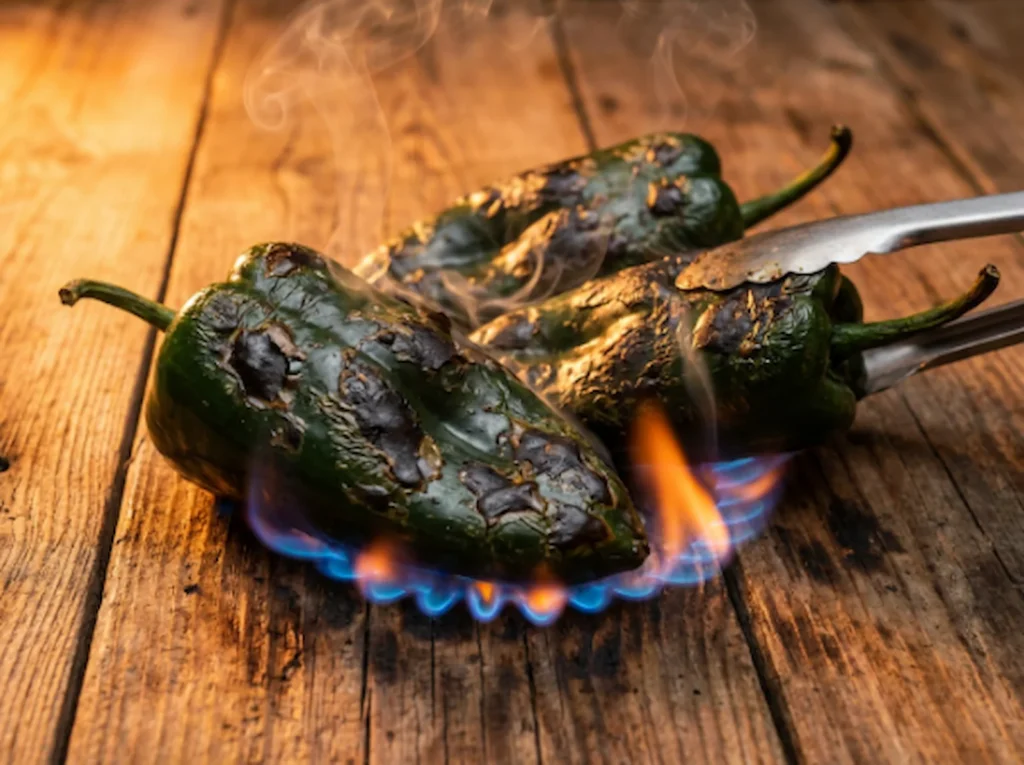
When you blend roasted poblanos with fat (in this case, Mexican crema), the fat-soluble flavor compounds distribute evenly throughout the sauce. This is why the sauce tastes so much richer and more complex than you would expect from just three peppers. The emulsion traps aromatic molecules, coating your palate with every spoonful and delivering consistent flavor in each bite.
But here is the critical part: you must remove the seeds and interior ribs if you want to control the heat. The capsaicin—the compound responsible for spiciness—concentrates in those white membranes inside the pepper. Leave them in and you will have a sauce with unpredictable heat. Scrape them out and you are left with pure, balanced poblano flavor.
The Culinary Institute of America has published extensive research on pepper preparation and emulsion stability in dairy-based sauces, emphasizing the importance of proper roasting technique and temperature control when working with fresh cream or crema. The Culinary Institute of America
The Emulsion Science Behind a Velvet-Smooth Cream Sauce
Mexican crema is thicker and tangier than American sour cream, with a consistency closer to crème fraîche. It has a fat content around 30%, which gives it natural stability when heated gently. But—and this is where most home recipes fail—dairy emulsions are fragile. Heat them too quickly and the proteins clump together, squeezing out moisture and fat, leaving you with a grainy, separated mess.
The key to a stable poblano cream sauce is twofold: blending and tempering. When you puree the roasted poblanos with the crema, onion, garlic, and a small amount of chicken broth, you are creating a temporary emulsion where fat droplets are suspended in a liquid matrix. The vegetable fibers from the peppers and onions act as natural stabilizers, surrounding the fat droplets and preventing them from clumping.
Tempering is the second critical step. Before you pour the blended sauce into the hot skillet with the seared chicken, the pan temperature must come down to low heat. If you dump cold cream into a screaming-hot pan, thermal shock will break the emulsion instantly. Instead, reduce the heat, let the pan cool for thirty seconds, then add the sauce and gently warm it through. This gradual temperature increase allows the proteins to unfold slowly without coagulating.
In simple terms: treat your cream sauce like you would a custard. Low heat, patience, and constant awareness.
Buying the Right Ingredients
Poblano peppers are widely available across the United States, but quality varies depending on where you shop. I have found the freshest, firmest poblanos at Mexican grocery stores like Northgate Market or Cardenas, but Whole Foods and Trader Joe’s also carry them year-round. Look for peppers that feel heavy for their size, with taut, glossy skin and no soft spots. Avoid any with wrinkled skin or brownish patches—they are past their prime.
For Mexican crema, skip the sour cream aisle at regular supermarkets and head to the refrigerated Latin section. Brands like Cacique, El Mexicano, and La Chona deliver the authentic tang and consistency you need. If you cannot find Mexican crema, you can make a close substitute by mixing regular sour cream with two tablespoons of heavy cream per cup. This thins the sour cream slightly and adds enough fat to prevent curdling.
Chicken breast quality matters more than most people realize. I prefer air-chilled, organic chicken breasts from brands like Mary’s Free Range or Bell & Evans, available at Whole Foods, Sprouts, and some Kroger locations. Air-chilled chicken retains less added water, which means better browning and more concentrated flavor when you sear it. If you are working with standard supermarket chicken, pat it completely dry with paper towels before seasoning—this step alone will improve your sear dramatically.
For cotija cheese, the crumbly, salty finishing cheese that garnishes the dish, Cacique and El Mexicano are reliable brands found at most Walmart and Target stores. If you cannot find cotija, crumbled feta makes an acceptable substitute, though the flavor profile shifts slightly more toward Mediterranean tang.
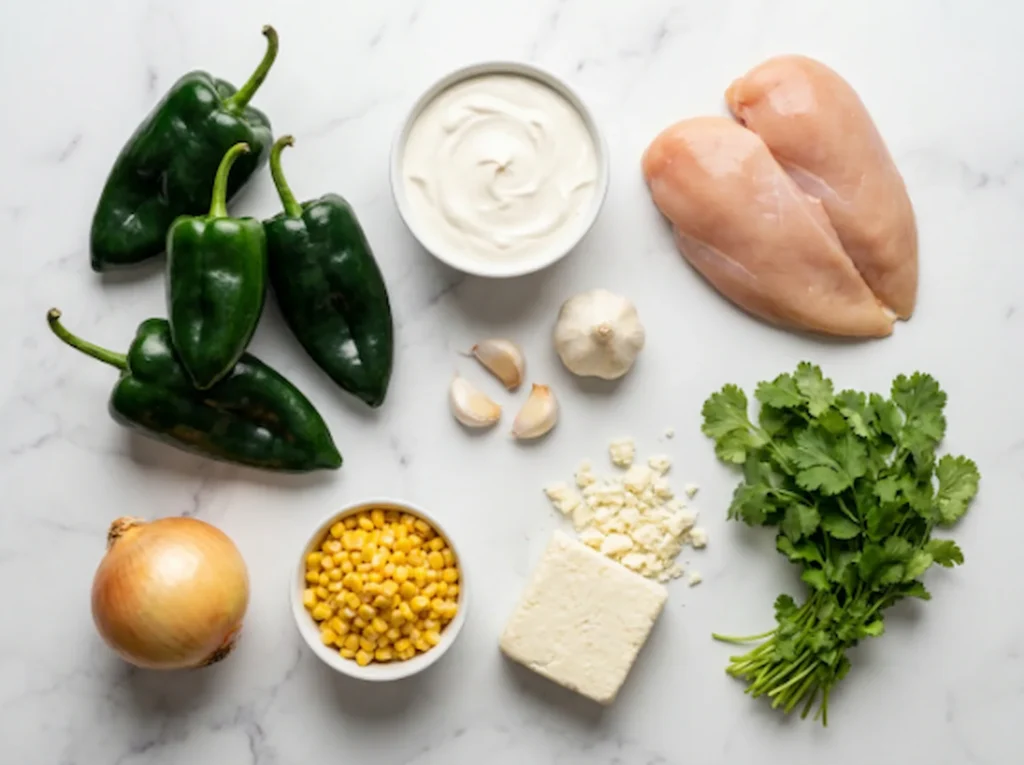
Ingredients
| For the Roasted Poblano Sauce | Us Customary | Metric |
|---|---|---|
| Large Fresh Poblano Peppers | 3 whole | 3 whole |
| Mexican Crema (or sour cream + heavy cream substitute) | 1 cup | 240ml |
| Low-Sodium Chicken Broth | 1/2 cup | 120ml |
| Yellow Onion (chopped) | 1/2 medium | 75g |
| Garlic Cloves (peeled) | 2 cloves | 8g |
| Salt | 1/2 tsp | 3g |
| For the Chicken & Assembly | US Customary | Metric |
|---|---|---|
| Boneless Skinless Chicken Breasts (sliced into 1/2-inch strips) | 1.5 lbs | 680g |
| Olive Oil | 1 tbsp | 15ml |
| Unsalted Butter | 1 tbsp | 14g |
| Garlic Powder | 1/2 tsp | 2g |
| Salt & Black Pepper | 1/2 tsp each | 3g each |
| Sweet Yellow Corn Kernels (cooked) | 1/2 cup | 80g |
| Fresh Cilantro (chopped, for garnish) | 2 tbsp | 5g |
| Cotija Cheese (crumbled, for garnish) | 1/4 cup | 30g |
Common Mistakes and How to Avoid Them
| The Mistake | What Actually Happens | The Fix |
|---|---|---|
| Skipping the steaming step after roasting | Pepper skins stick stubbornly and tear the flesh when you try to peel them | Cover roasted peppers tightly in a bowl for 10 minutes—the trapped steam loosens the skin effortlessly |
| Pouring cold crema directly into a hot pan | Thermal shock causes the cream proteins to curdle and the sauce separates into grainy lumps | Reduce heat to low and let the pan cool for 30 seconds before adding the blended sauce |
| Leaving seeds and ribs inside the poblanos | Unpredictable, sometimes overwhelming heat that masks the pepper’s earthy flavor | Slice open roasted peppers and scrape out all seeds and white membranes with a spoon |
| Overcrowding the chicken in the pan | Chicken steams instead of sears, resulting in pale, rubbery texture with no browning | Sear chicken in a single layer—work in batches if necessary to maintain high pan heat |
| Boiling the cream sauce vigorously | High heat breaks the emulsion, causing the fat to separate and the sauce to look oily and curdled | Keep the sauce at a gentle simmer on low heat—it should barely bubble around the edges |
| Using pre-shredded cotija cheese | Anti-caking agents prevent proper melting and add a chalky texture | Buy a block of cotija and crumble it yourself just before serving |
Step-by-Step Method
Roasting and Steaming the Poblanos
The first move sets the tone for everything that follows. Place your poblano peppers directly over an open gas burner flame, turning them every two minutes with tongs. You want the skin to blister, char, and blacken all over. This takes about eight to ten minutes. If you do not have a gas stove, set your oven to broil, place the peppers on a baking sheet, and position the rack as close to the heating element as possible. Turn them every few minutes until the skins are completely charred.
The moment the peppers are fully blistered, transfer them immediately to a heatproof bowl and cover the bowl tightly with plastic wrap. The trapped steam continues cooking the flesh gently while loosening the charred skin from the pepper walls. This resting period is not optional—it transforms a frustrating peeling process into something effortless.
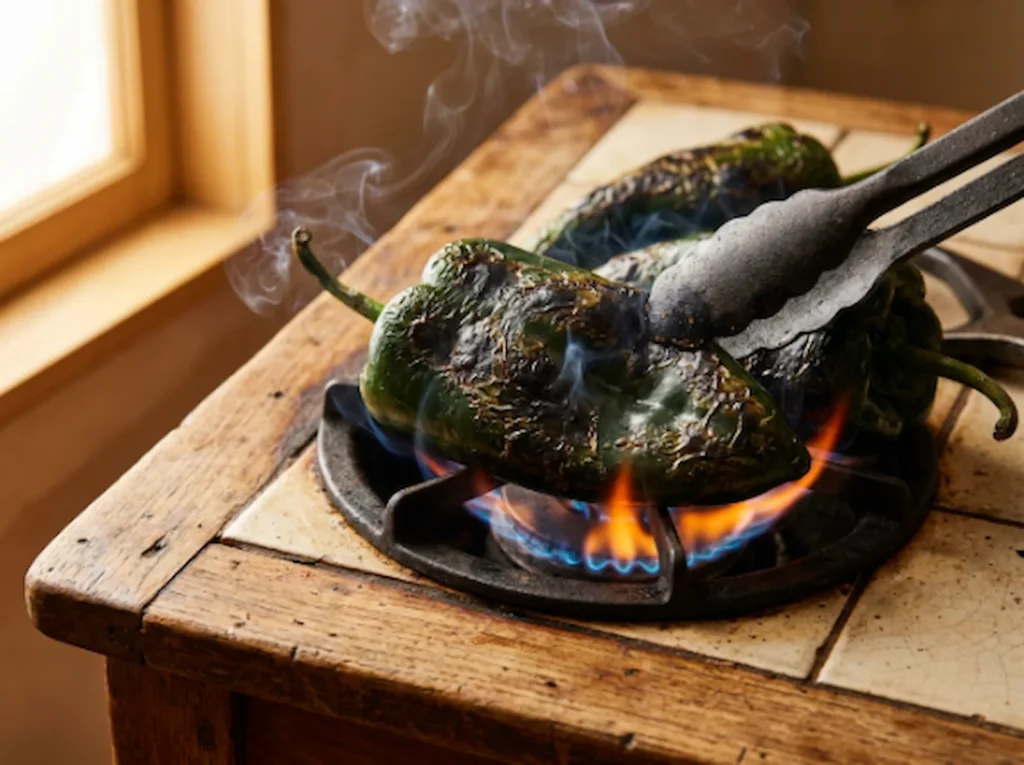
After ten minutes, unwrap the bowl. The skins will slip off with almost no effort. Use your fingers or a paper towel to rub away the charred exterior, then cut off the stem, slice the pepper open lengthwise, and use a spoon to scrape out every seed and white membrane rib. Work over the sink or a cutting board—this step can get messy. What remains is the tender, smoky pepper flesh, ready to become the heart of your sauce.
Searing the Seasoned Chicken
Pat the chicken breast strips completely dry with paper towels. This step is critical. Any surface moisture will create steam when the chicken hits the hot pan, preventing the Maillard reaction that creates that golden-brown crust. Season both sides generously with salt, black pepper, and garlic powder.
Heat a large cast iron skillet or heavy-bottomed sauté pan over medium-high heat for two full minutes. Add the olive oil and let it shimmer, then drop in the butter. The moment the butter stops foaming, add the chicken strips in a single layer, making sure they do not touch each other. If your pan is not large enough, work in batches. Crowding the pan drops the temperature and turns searing into steaming.
Let the chicken cook undisturbed for four minutes. Do not move it. Do not peek underneath. Let the heat do its work. When you flip the pieces, they should release easily from the pan and show a deep golden-brown crust. Cook the second side for another three to four minutes until the internal temperature reaches 165°F / 74°C. Food Safety and Inspection Service
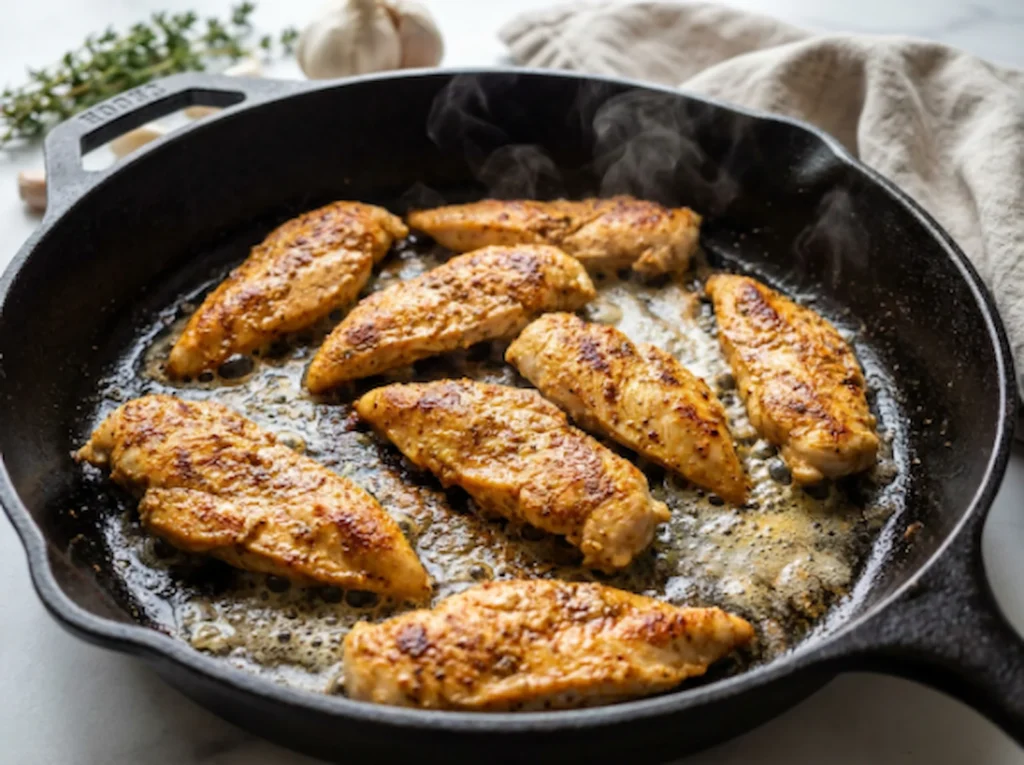
Transfer the seared chicken to a plate and set it aside. Do not wipe out the pan—those browned bits stuck to the bottom (the fond) will add depth to the final sauce.
Blending the Velvet Poblano Cream
Add the peeled roasted poblanos, Mexican crema, chicken broth, chopped onion, garlic cloves, and salt to a high-speed blender. Blend on high for sixty to ninety seconds until the sauce is completely smooth and uniform in color—a soft, pastel green with no visible chunks. The onion and garlic should disappear entirely into the puree.
Taste the sauce at this point. It should have a mild, earthy heat with creamy richness and just enough salt to enhance the pepper flavor. If it tastes flat, add another pinch of salt. If you want more heat, blend in half a jalapeño with the seeds removed. If you want a thinner consistency, add another splash of chicken broth.
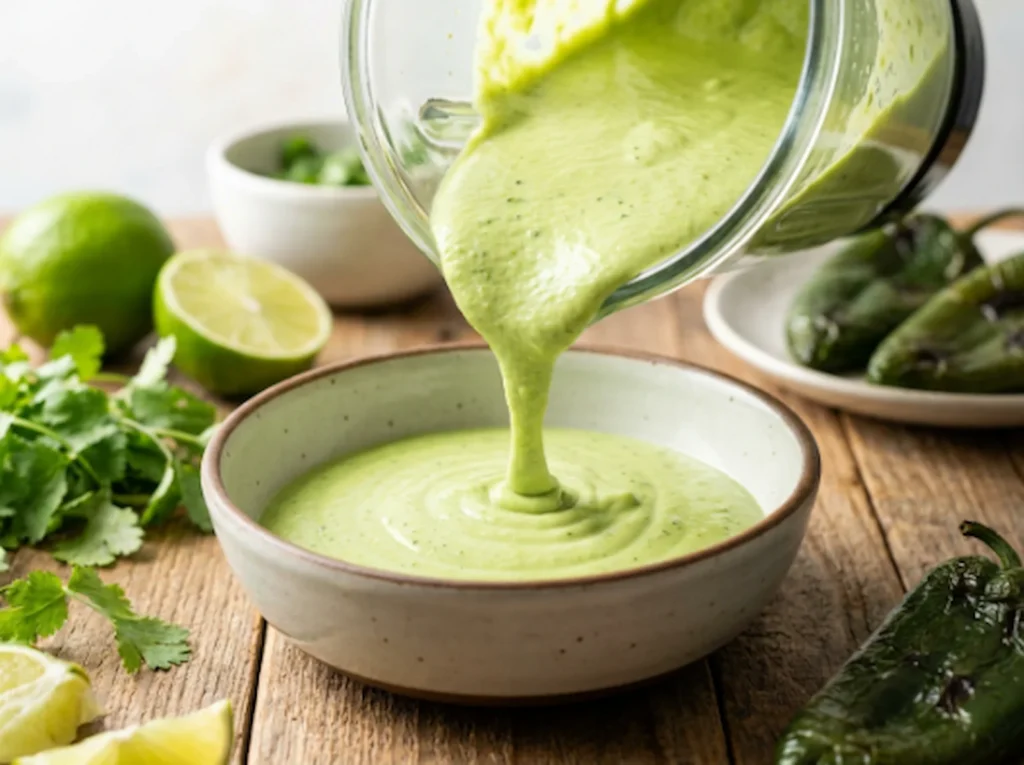
The texture should coat the back of a spoon and fall in a slow, steady ribbon when you pour it. This viscosity tells you the emulsion is stable and ready to withstand gentle heat without breaking.
Simmering and Combining
Return the skillet to the stove and reduce the heat to low. Let the pan cool for thirty seconds—this step prevents thermal shock when you add the cold cream sauce. Pour the blended poblano crema into the skillet, using a wooden spoon or silicone spatula to scrape up any browned bits from the bottom of the pan. Those caramelized fragments dissolve into the sauce, adding a savory depth that complements the sweetness of the roasted peppers.
Nestle the seared chicken strips back into the sauce, making sure each piece is mostly submerged. Scatter the cooked corn kernels over the top. The corn adds textural contrast and a pop of sweetness that balances the earthy poblano flavor beautifully.
Let the sauce come to a bare simmer—you should see tiny bubbles breaking gently around the edges, but not a rolling boil. Simmer for three to five minutes, stirring occasionally, until the sauce thickens slightly and the chicken is heated through. The goal is to marry the flavors without cooking the cream so aggressively that it curdles.
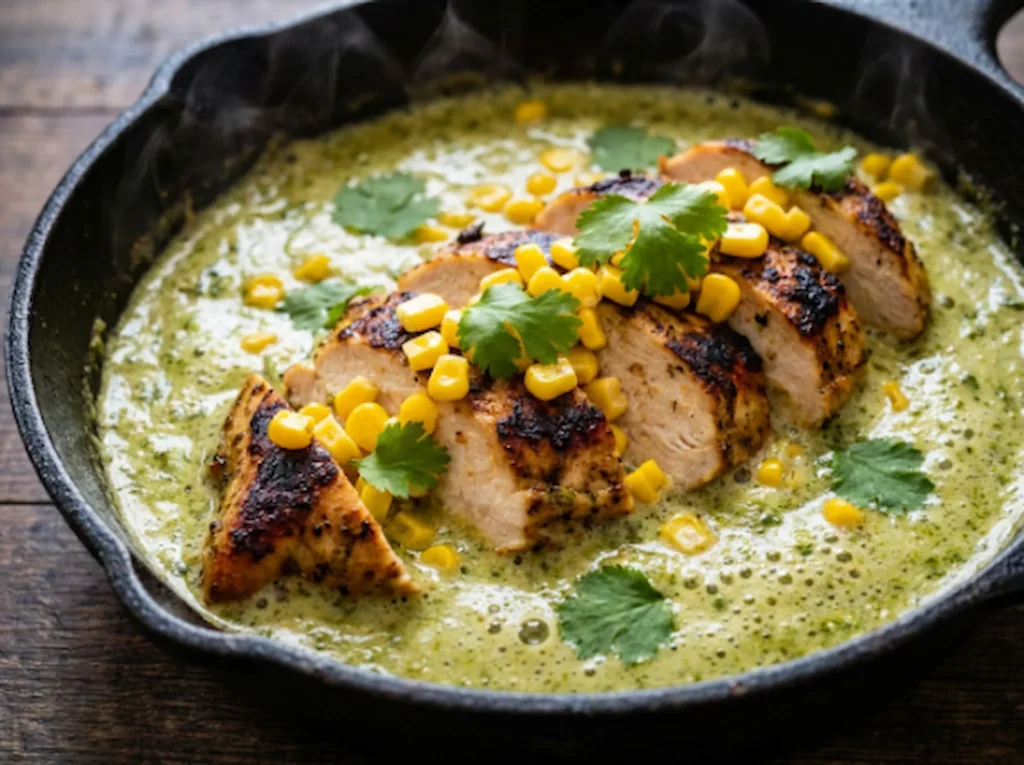
Remove the pan from the heat. The sauce will continue to thicken slightly as it cools, thanks to the starch from the corn and the natural proteins in the crema.
Plating and Garnishing
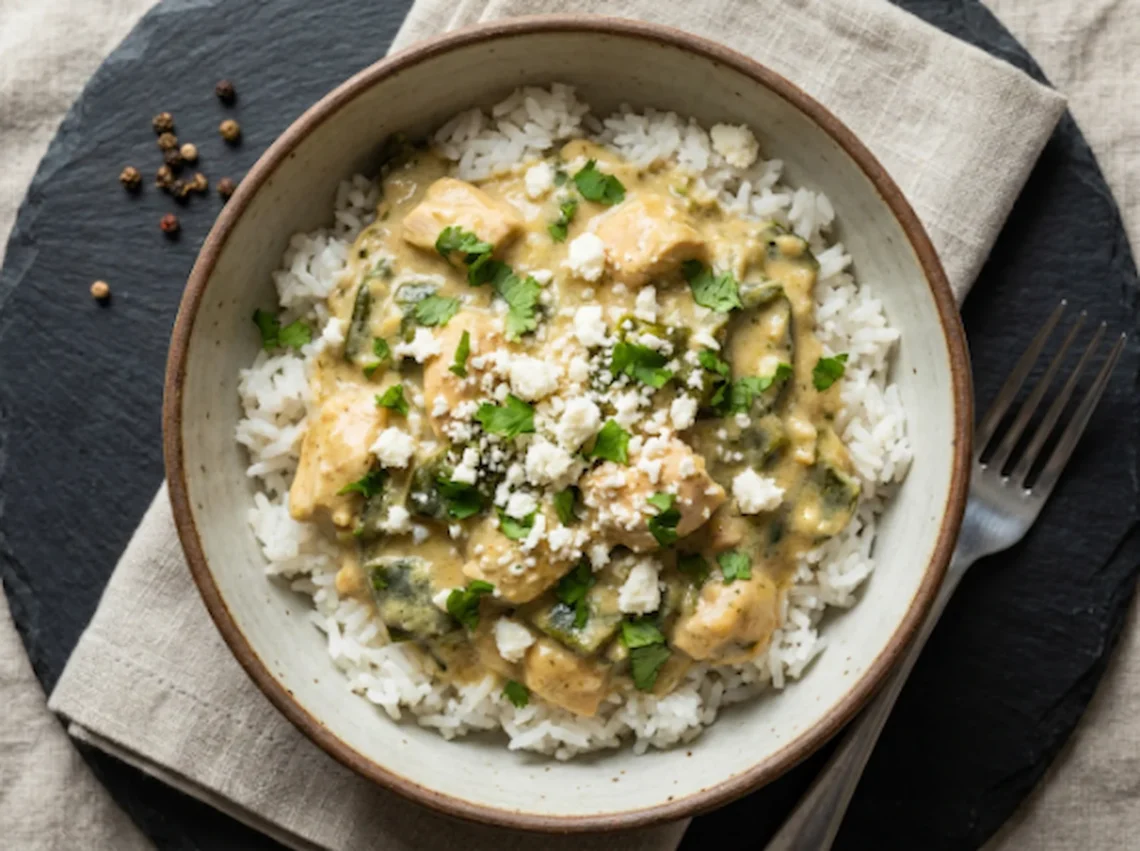
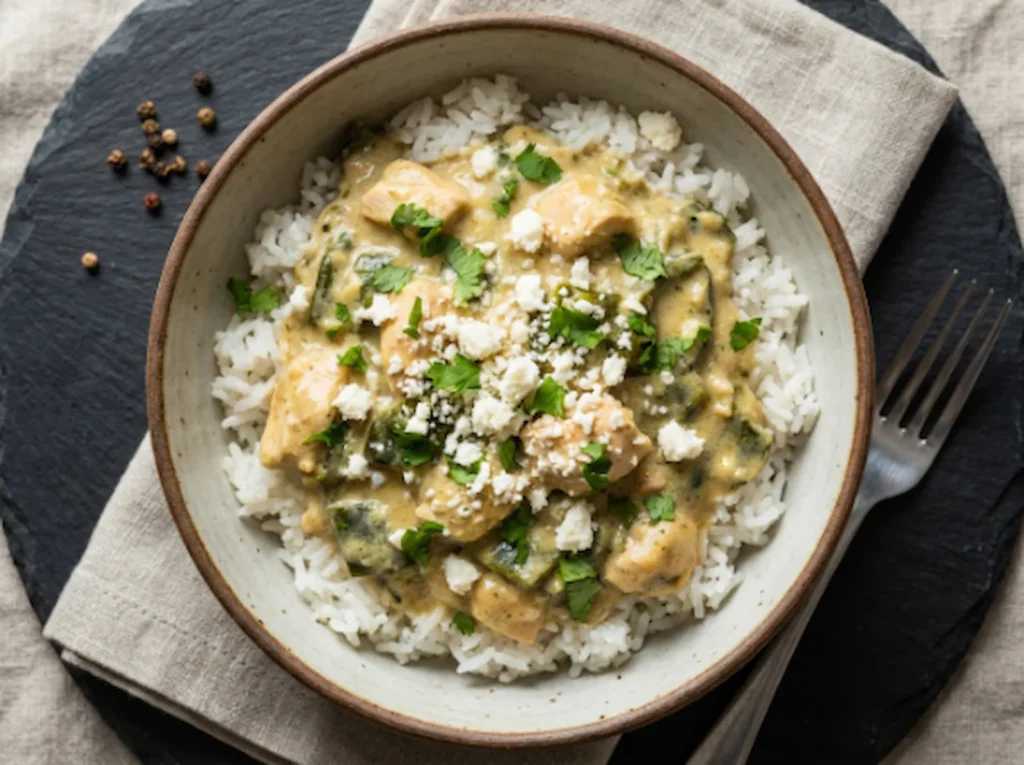
Spoon the creamy poblano chicken over a bed of warm white rice, spooning extra sauce over the top. The rice soaks up the sauce beautifully, creating bites that are rich, creamy, and satisfying. Finish each plate with a generous sprinkle of crumbled cotija cheese and a scattering of freshly chopped cilantro.
The cotija adds a salty, tangy brightness that cuts through the richness of the cream, while the cilantro brings a fresh, herbal note that ties the whole dish together. Serve with warm corn tortillas on the side for scooping, and you have a meal that feels both elegant and deeply comforting.
Chef Albert’s Insight
“There is a quiet magic in poblano peppers that reveals itself only when you slow down enough to notice. They do not shout for attention like habaneros or demand center stage like chipotles. Instead, they whisper—earthy, sweet, complex—and when you pair them with cream, something alchemy happens. The fat carries the smoke, the peppers carry the soul, and the chicken becomes the vessel for both. I have learned that the most memorable dishes are rarely the ones with the longest ingredient lists or the most complicated techniques. They are the ones where a handful of quality ingredients are treated with respect and given the time they need to transform. This dish taught me that patience is not passive—it is the most powerful tool in the kitchen. Let the peppers char fully. Let the sauce simmer gently. Let the flavors marry before you plate. The reward for that patience is a dish that tastes like home, no matter where you are.”
— Chef Albert, TastePillar
Nutrition Information (Per Serving)
| Nutrient | Amount |
|---|---|
| Calories | 410 kcal |
| Protein | 42g |
| Total Fat | 22g |
| Saturated Fat | 11g |
| Carbohydrates | 10g |
| Dietary Fiber | 2g |
| Sugars | 4g |
| Sodium | 520mg |
| Cholesterol | 135mg |
Note: Nutrition values are estimates based on standard ingredient measurements and may vary depending on specific brands and preparation methods.
Food Safety Temperature Guide
| Cooking Stage | Target Temperature |
|---|---|
| Seared Chicken (Internal) | 165°F / 74°C |
| Danger Zone (Avoid holding food in this range) | 40°F – 140°F / 4°C – 60°C |
| Sauce Simmer (Pan temperature) | 180°F – 200°F / 82°C – 93°C |
| Reheating Leftovers (Internal) | 165°F / 74°C |
Always use an instant-read thermometer to verify chicken doneness. The USDA recommends a minimum internal temperature of 165°F for all poultry to ensure harmful bacteria are eliminated. [OUTBOUND_LINK: USDA Food Safety and Inspection Service]
Storage and Reheating
| Storage Method | Duration | Best Reheating Method |
|---|---|---|
| Refrigerator (in airtight container) | 3–4 days | Reheat gently in a covered skillet over low heat, adding a splash of chicken broth to loosen the sauce |
| Freezer (sauce and chicken separated) | Up to 3 months | Thaw overnight in the fridge, then reheat slowly in a saucepan, stirring frequently to re-emulsify the cream |
| Freezer (fully assembled) | Not recommended | Cream sauces can separate and become grainy when frozen together with chicken |
If you plan to make this dish ahead, store the seared chicken and the poblano cream sauce in separate containers. Reheat the sauce first, then add the chicken and warm through. This method preserves the texture of both components.
Frequently Asked Questions
Can I use jarred roasted poblanos instead of roasting them myself?
You can, but the flavor will not be the same. Fresh-roasted poblanos have a brightness and complexity that jarred versions lack. Jarred peppers are often packed in brine or citric acid, which adds a sharp, vinegary note that competes with the cream. If convenience is essential, rinse jarred roasted poblanos thoroughly under cold water before using them to remove as much brine as possible.
What if I do not have a gas stove or broiler?
You can roast poblanos on a grill, directly over charcoal or gas flames, which actually adds even more smokiness. Alternatively, cut the peppers in half, remove the seeds, and place them skin-side up on a baking sheet under the broiler. The skin will char, though it will take a bit longer and you will need to watch them closely.
Can I substitute Greek yogurt for the crema?
Greek yogurt has a lower fat content and higher acidity than Mexican crema, which makes it much more prone to curdling when heated. If you must use it, temper it first by whisking a few tablespoons of warm chicken broth into the yogurt before adding it to the blender. Even then, keep the heat very low and do not let the sauce simmer for long.
How do I make this dish spicier?
Leave some of the seeds and ribs inside one or two of the roasted poblanos, or blend in a seeded jalapeño or serrano pepper along with the poblanos. Taste the raw blended sauce and adjust from there. Remember that heat intensifies slightly as the sauce simmers.
Can I use chicken thighs instead of breasts?
Absolutely. Boneless, skinless chicken thighs are more forgiving and stay juicier even if slightly overcooked. Sear them the same way, but increase the cooking time by two to three minutes to account for their slightly higher fat content.
Related Recipes You’ll Love
If you enjoyed the smoky, creamy depth of this poblano chicken, these TastePillar recipes will take your Mexican cooking even further:
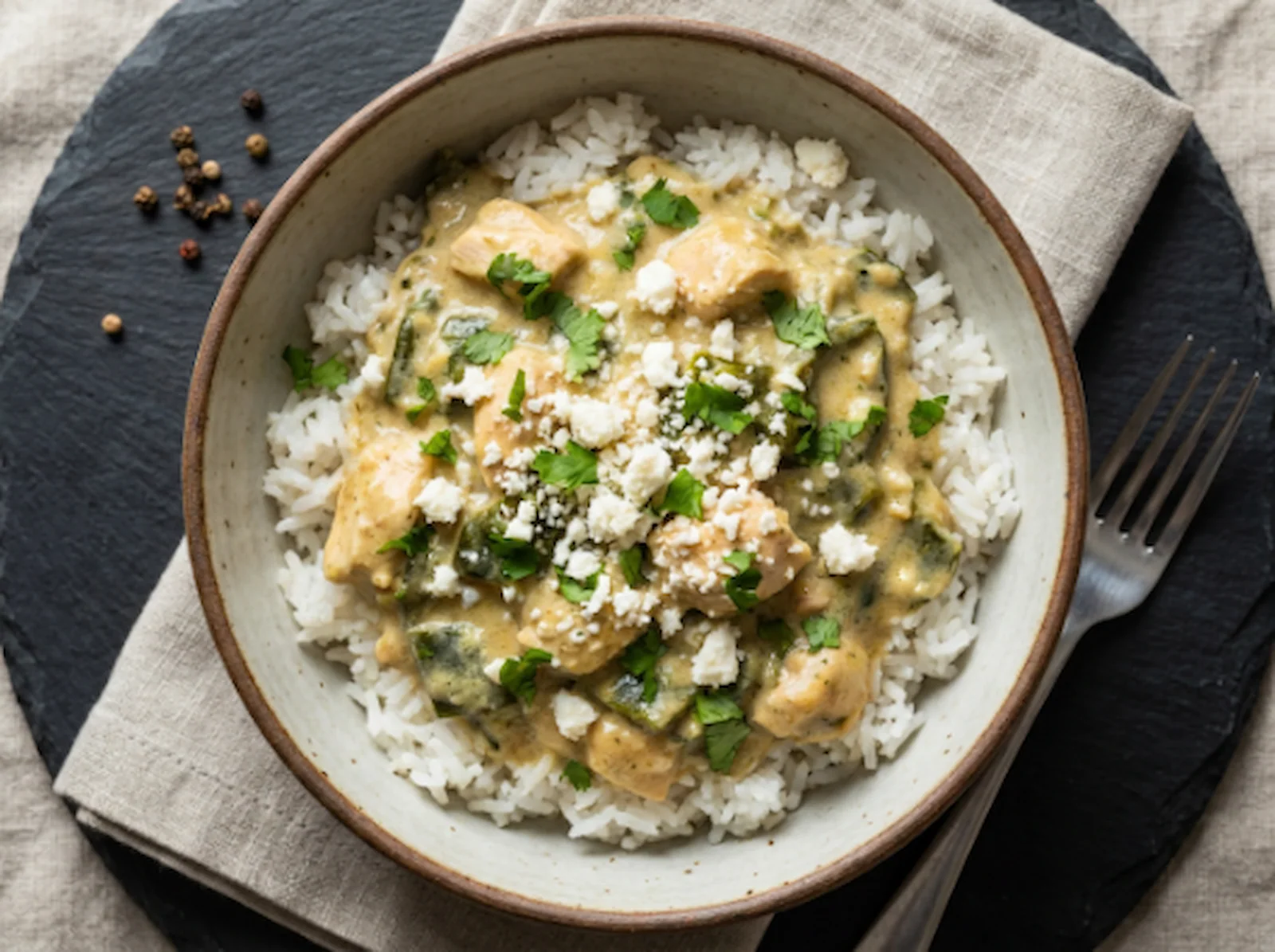
Creamy Poblano Chicken (Pollo en Crema de Poblano)
Ingredients
Equipment
Method
- Roast the Poblanos: Place poblano peppers directly over an open gas stove burner flame (or under a high oven broiler). Turn occasionally until the skins are completely charred and blistered all over (about 8–10 minutes). Transfer roasted peppers to a bowl, cover tightly with plastic wrap, and steam for 10 minutes.
- Peel and De-seed: Remove peppers from the bowl. Gently rub off the charred outer skin using your fingers or a paper towel. Cut off the stems, slice open, and scrape out all seeds and membrane ribs.
- Blend the Crema Sauce: In a blender, combine the peeled roasted poblanos, Mexican crema, chicken broth, chopped onion, garlic cloves, and salt. Puree on high speed until completely smooth and velvety green.
- Sear the Chicken: Season chicken strips with salt, pepper, and garlic powder. Heat olive oil and butter in a large cast iron skillet over medium-high heat. Add chicken in a single layer and sear for 5–7 minutes until golden brown and cooked through (internal temperature reaches 165°F / 74°C).
- Simmer and Combine: Reduce skillet heat to low. Pour the blended green poblano sauce over the seared chicken. Stir gently to combine and add the sweet corn kernels. Simmer on low heat for 3–5 minutes until the sauce is warmed through and slightly thickened. Do not boil vigorously to prevent cream separation.
- Garnish and Serve: Remove from heat. Garnish with crumbled cotija cheese and fresh chopped cilantro. Serve hot alongside Mexican white rice and warm corn tortillas.
- Notes: If using standard sour cream instead of Mexican crema, temper it first by mixing a few tablespoons of warm pan broth into the cream before pouring it into the skillet to prevent curdling.
- Nutrition (Per Serving): 410 Calories | 42g Protein | 10g Carbohydrates | 22g Fat | 4g Sugar | 520mg Sodium | 135mg Cholesterol
Notes
- Prevent Sauce Curdling: Always reduce your skillet heat to low and wait 30 seconds before adding the blended poblano cream sauce. Cold dairy hitting a screaming-hot pan will curdle instantly. Temperature control is everything.
- Roasting Without a Gas Stove: No open flame? No problem. Set your oven broiler to high, place poblanos on a baking sheet lined with foil, and position the rack 4 inches from the heating element. Rotate every 3–4 minutes until fully charred (10–12 minutes total).
- Make It Ahead: This dish is perfect for meal prep. Store the seared chicken and poblano cream sauce separately in airtight containers in the fridge for up to 4 days. Reheat the sauce gently in a pan, add the chicken, and warm through. The sauce may thicken overnight—just thin it with a splash of chicken broth.
- Adjust the Heat Level: Poblanos are naturally mild, but heat can vary from pepper to pepper. For a spicier version, leave some seeds and ribs in one poblano, or blend in half a seeded jalapeño. Taste the raw sauce before cooking and adjust accordingly.
- Cotija Cheese Substitute: Can’t find cotija? Use crumbled queso fresco for a milder, creamier alternative, or feta cheese for a tangier, saltier finish. Avoid pre-shredded cheese—the anti-caking agents prevent proper melting and texture.
- Chicken Thighs Work Beautifully: Swap boneless skinless chicken breasts for thighs if you prefer darker, juicier meat. Thighs are more forgiving and stay moist even if slightly overcooked. Increase searing time by 2–3 minutes per side.
- Thicker Sauce Preferred? For a richer, thicker consistency, reduce the chicken broth to 1/4 cup (60ml) when blending the sauce, or simmer the finished dish uncovered for an additional 3–4 minutes to evaporate excess liquid.
- Freezing Instructions: The poblano cream sauce freezes well on its own for up to 3 months. Freeze in a labeled, freezer-safe container or zip-top bag. Thaw overnight in the fridge, then reheat slowly over low heat, whisking frequently to restore the emulsion. Do not freeze the fully assembled dish—cream sauces can separate and become grainy when frozen with chicken.
- Serving Suggestions: This dish pairs beautifully with warm Mexican white rice, cilantro-lime rice, or soft corn tortillas. For a low-carb option, serve over cauliflower rice or alongside grilled vegetables. A fresh squeeze of lime juice just before serving brightens the entire dish.
- Leftover Sauce Uses: Have extra poblano cream sauce? It’s incredible tossed with pasta, drizzled over grilled fish, spooned into breakfast burritos, or used as a base for creamy enchiladas. Store it separately and use within 3–4 days.