By Chef Albert | The Science of Perfect Flavour
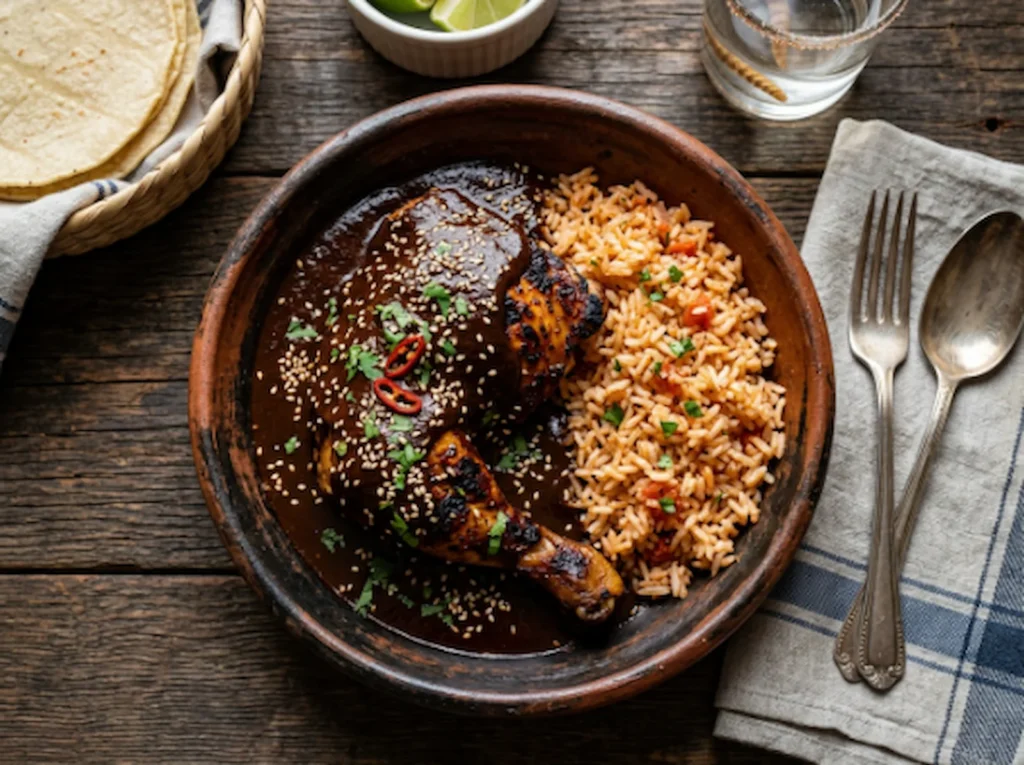
There is a reason why mole poblano is considered one of the crown jewels of Mexican cuisine. This is not a sauce you throw together in twenty minutes. It is a labor of love that requires toasting, frying, blending, straining, and simmering—each step building layers of flavor that transform simple chicken into something extraordinary. The interplay between dried chiles, warm spices, toasted nuts, sweet raisins, and dark Mexican chocolate creates a sauce so complex, so balanced, so deeply satisfying that it feels like the culmination of centuries of culinary refinement. And it is.
I have made chicken mole poblano dozens of times, adjusting the ratio of ancho to pasilla chiles to find the right balance between fruity sweetness and earthy bitterness, testing different chocolates to see how cacao percentage affects the final flavor, and learning exactly how long to fry the mole paste before adding liquid so it develops that characteristic deep mahogany color without scorching. The dish teaches you patience. It teaches you that great flavor comes from giving each ingredient its moment—toasting the chiles until they puff and release their oils, frying the nuts until they turn golden and fragrant, blending everything into a paste so smooth it feels like silk on your tongue.
The biggest mistake people make with mole is rushing the toasting and frying stages or using pre-ground spices and powders instead of whole ingredients. Mole is all about building flavor through controlled heat application. Each ingredient—chiles, seeds, nuts, spices, plantains, even stale tortillas—gets toasted or fried individually to develop its own distinct character before being blended into the sauce. Skip those steps and you end up with a flat, one-dimensional sauce that tastes like chile powder mixed with chocolate. Take the time to toast and fry properly, and you create a sauce with depth, complexity, and a finish that lingers on your palate long after the last bite.
Why Multiple Dried Chiles Create Layered Complexity
Mole poblano is traditionally made with a blend of three dried chiles: ancho, pasilla, and mulato. Each brings something different to the sauce, and the combination is what creates the characteristic flavor profile.
Ancho chiles are dried poblano peppers. They are wide, wrinkled, and deep reddish-brown. Anchos taste sweet and fruity with notes of dried plum, raisin, and a mild, pleasant heat. They form the backbone of most mole recipes because they add body and sweetness without overwhelming spice.
Pasilla chiles, also called chiles negros, are long, slender, and almost black. They have a more complex, earthy flavor with hints of cocoa, dried berries, and a slight smokiness. Pasillas add depth and a touch of bitterness that balances the sweetness of the anchos.
Mulato chiles look similar to anchos but are darker and have a more subtle, chocolatey flavor with notes of tobacco, licorice, and dried fruit. Mulatos add a smoky, almost mysterious quality to the sauce that is hard to describe but impossible to replicate with other chiles.
Together, these three chiles create a flavor matrix that is fruity, earthy, smoky, sweet, and just spicy enough to keep things interesting. The heat level is mild—mole poblano is not about fire, it is about balance.
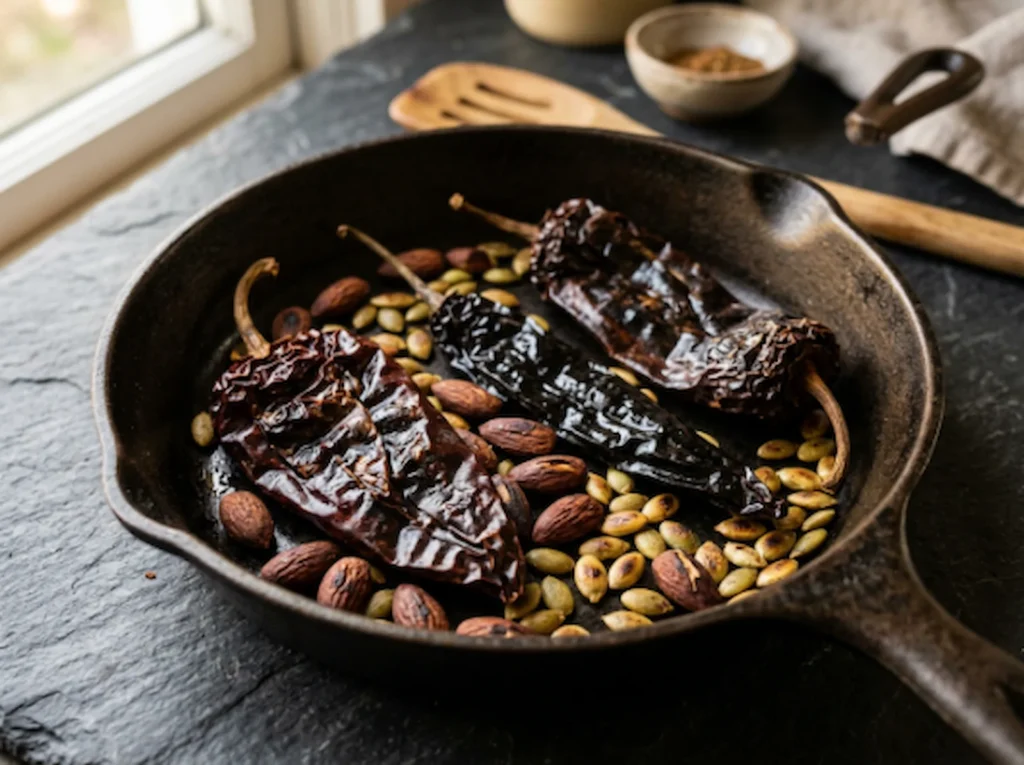
Toasting the dried chiles in a hot skillet before soaking them serves two purposes. First, it rehydrates them slightly and makes them more pliable, which makes removing the stems and seeds easier. Second, it activates the aromatic oils inside the chiles, deepening their flavor and adding a subtle smokiness. The key is to toast them just until they puff slightly and become fragrant—about 30 to 60 seconds per side. If you toast them too long, they burn and turn bitter, which will ruin the entire sauce.
After toasting, the chiles are soaked in hot water until they soften completely. The soaking liquid can taste bitter, so it is usually discarded. The softened chiles are then blended with the other toasted ingredients and chicken broth to create the mole paste.
The Role of Nuts, Seeds, and Plantains in Texture and Flavor
Mole is thickened not with flour or cornstarch, but with ground nuts, seeds, and stale tortillas. This is what gives the sauce its characteristic velvety body and rich mouthfeel.
Almonds add a subtle sweetness and a creamy texture when ground. They also contribute a mild nuttiness that complements the chocolate without competing with it. Some recipes use peanuts instead, which add a more pronounced nutty flavor, but almonds are more traditional in mole poblano.
Pumpkin seeds, or pepitas, add a slightly earthy, mineral quality and help thicken the sauce. They also contribute a faint green undertone that balances the deep brown of the chiles and chocolate.
Sesame seeds are used in two ways: some are toasted and blended into the sauce for flavor and body, and the rest are toasted and used as a garnish. Sesame seeds add a nutty richness and a slight bitterness that helps balance the sweetness of the raisins and chocolate.
Raisins add natural sweetness and a touch of acidity, which brightens the sauce and prevents it from tasting too heavy. They also contribute body when blended.
Plantains add a mild, starchy sweetness and help thicken the sauce. A ripe plantain with black spots works best—it should be soft but not mushy. The natural sugars in the plantain caramelize slightly when fried, adding another layer of complexity.
Stale corn tortillas act as a thickening agent, much like bread in a French rouille or Spanish romesco. They absorb liquid during blending and create a smooth, cohesive paste that holds the sauce together.
All of these ingredients are fried individually in lard or oil before blending. This step is critical. Frying develops the Maillard reaction—the chemical process that creates browning and new flavor compounds when proteins and sugars are heated. It also drives off moisture, which concentrates flavors and ensures the mole paste does not taste raw or watery.
The Culinary Institute of America’s Mexican Culinary Arts Framework emphasizes the importance of balancing complex chile profiles with nuts, seeds, and Mexican dark chocolate in long-simmered moles, noting that the layering of individually toasted ingredients is what separates authentic mole from simplified versions.
Why Mexican Chocolate Is Essential
Mexican chocolate is not the same as European or Swiss chocolate. It is made from cacao, sugar, cinnamon, and sometimes almonds or vanilla, and it is ground into a coarse, grainy texture rather than being conched into a smooth, glossy bar. The most common brands—Ibarra and Abuelita—come in hexagonal or octagonal tablets that you break into chunks before melting.
The cinnamon in Mexican chocolate is what makes it work so well in mole. It adds warmth and spice without needing to add ground cinnamon separately. The sugar balances the bitterness of the dark chiles and the earthiness of the nuts and seeds. And the cacao itself—usually around 50% to 60%—adds a deep, slightly bitter chocolate flavor that rounds out the sauce and gives it a glossy, velvety finish.
If you cannot find Mexican chocolate, you can substitute high-quality dark chocolate with a cacao content of 70% or higher, but you will need to add 1/2 teaspoon of ground cinnamon and 1 tablespoon of brown sugar to approximate the flavor profile of Mexican chocolate.
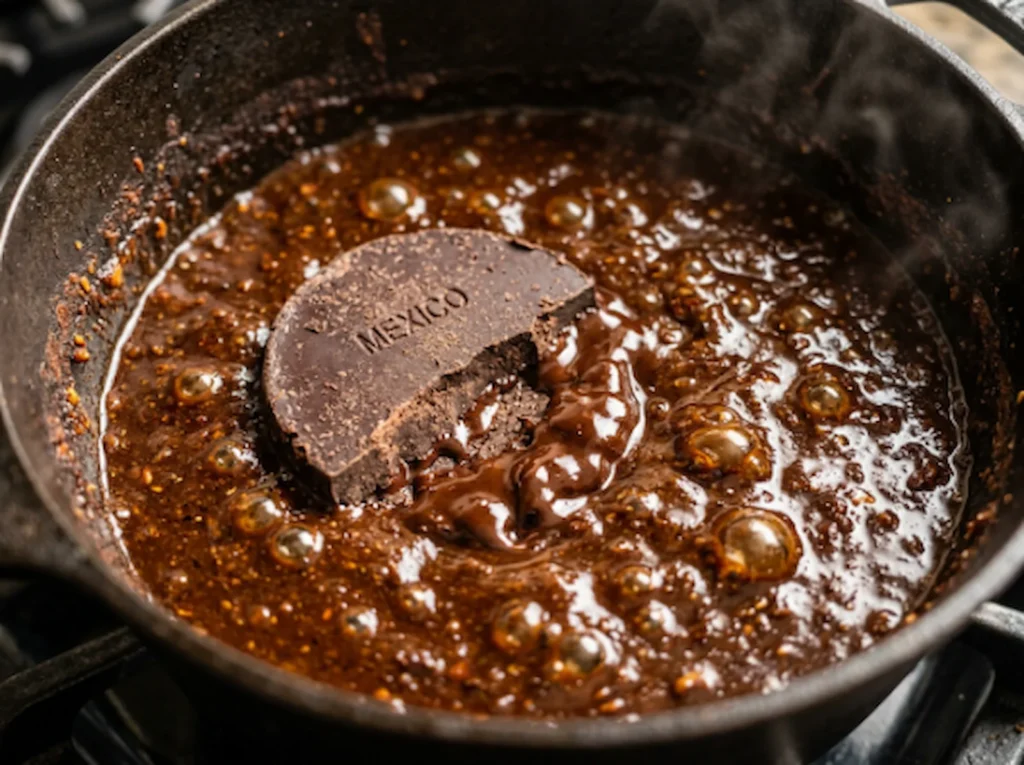
The chocolate is added at the end of the cooking process, after the mole paste has been fried and thinned with chicken broth. Adding it too early can cause the chocolate to seize or separate. Adding it at the end allows it to melt smoothly into the sauce, creating a glossy, emulsified finish that clings to the chicken.
The chocolate does not make mole taste sweet or dessert-like. Instead, it acts as a bridge between the savory, spicy, earthy flavors of the chiles and spices and the sweet, fruity notes of the raisins and plantains. It adds richness, depth, and a subtle bitterness that balances the entire sauce.
Buying the Right Ingredients
Dried ancho, pasilla, and mulato chiles are sold in the Latin foods section of most grocery stores, usually in small plastic bags. Look for chiles that are pliable, glossy, and free of white spots or mold. Avoid chiles that are brittle or faded—they are old and have lost most of their flavor.
Mexican chocolate is sold in the international foods aisle or the Latin foods section, usually near the hot chocolate mixes. Ibarra and Abuelita are the two most common brands, and both work beautifully in mole. The chocolate comes in round or hexagonal tablets that you break into chunks.
For the nuts and seeds, buy raw, unsalted almonds and raw pumpkin seeds (pepitas). Toasting them yourself ensures they are fresh and flavorful. Pre-roasted or salted nuts will throw off the flavor balance of the sauce.
Plantains are sold in the produce section, usually near the bananas. For mole, you want a ripe plantain with black spots on the skin. It should feel soft when you press it gently but not mushy.
For the chicken, bone-in, skin-on thighs and drumsticks work best. The bones add flavor to the sauce as the chicken simmers, and the skin helps protect the meat from drying out. You can remove the skin before serving if you prefer, but it adds richness during cooking.
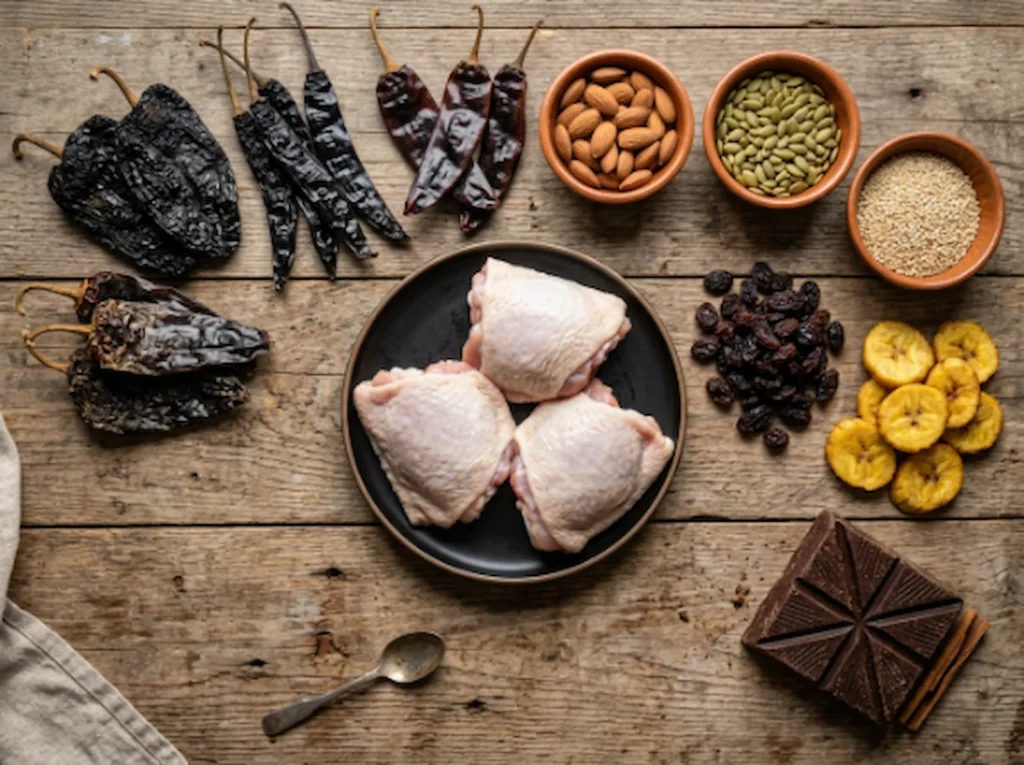
Ingredients
| For the Chile & Spice Matrix | US Customary | Metric |
|---|---|---|
| Dried Ancho Chiles (stemmed and seeded) | 4 whole | 4 whole |
| Dried Pasilla Chiles (stemmed and seeded) | 3 whole | 3 whole |
| Dried Mulato Chiles (stemmed and seeded) | 2 whole | 2 whole |
| Lard or Vegetable Oil | 3 tbsp | 45ml |
| Raw Almonds | 1/4 cup | 35g |
| Raw Pumpkin Seeds (Pepitas) | 1/4 cup | 35g |
| Sesame Seeds (divided for sauce & garnish) | 3 tbsp | 25g |
| Raisins | 1/4 cup | 40g |
| Ripe Plantain (sliced into rounds) | 1/2 medium | 1/2 medium |
| Stale Corn Tortillas (torn into pieces) | 2 tortillas | 2 tortillas |
| Yellow Onion (chopped) | 1/2 medium | 75g |
| Garlic Cloves (peeled) | 4 cloves | 16g |
| Cinnamon Stick (broken) | 1 stick | 1 stick |
| Whole Cloves | 1/4 tsp | 1g |
| For the Sauce Assembly & Chicken | US Customary | Metric |
|---|---|---|
| Dark Mexican Chocolate (Ibarra, Abuelita, or 70% Dark Chocolate) | 3.5 oz | 100g |
| Low-Sodium Chicken Broth | 4 cups | 960ml |
| Bone-In, Skin-On Chicken Thighs & Drumsticks | 3.5 lbs | 1600g |
| Kosher Salt (or to taste) | 1 tsp | 6g |
| Warm Corn Tortillas (for serving) | 8–12 tortillas | 8–12 tortillas |
| Mexican White Rice (for serving) | 3 cups cooked | 450g cooked |
Common Mistakes and How to Avoid Them
| The Mistake | What Actually Happens | The Fix |
|---|---|---|
| Burning the chiles during toasting | The sauce tastes acrid and bitter, with no way to fix it | Toast chiles quickly over medium heat for only 30–60 seconds per side until fragrant, not charred |
| Skipping the frying step for nuts and seeds | The sauce tastes flat and lacks depth, with raw, unpleasant flavors | Fry each ingredient individually in hot lard or oil until golden and fragrant before blending |
| Using pre-ground spices instead of whole | The mole lacks freshness and aromatic complexity | Toast and grind whole spices like cloves and cinnamon yourself for maximum flavor |
| Adding chocolate too early | The chocolate seizes, separates, or turns grainy instead of melting smoothly | Add chopped chocolate at the very end, after the mole paste has been fried and thinned with broth |
| Not straining the mole paste | The sauce has a gritty, unpleasant texture with visible bits of chile skin and seeds | Press the blended mole paste through a fine-mesh strainer for an ultra-smooth, velvety consistency |
| Rushing the simmer | The chicken is undercooked or the flavors do not meld properly | Simmer gently for 40–45 minutes on low heat until chicken reaches 165°F and the sauce thickens |
Step-by-Step Method
Toasting the Dried Chiles
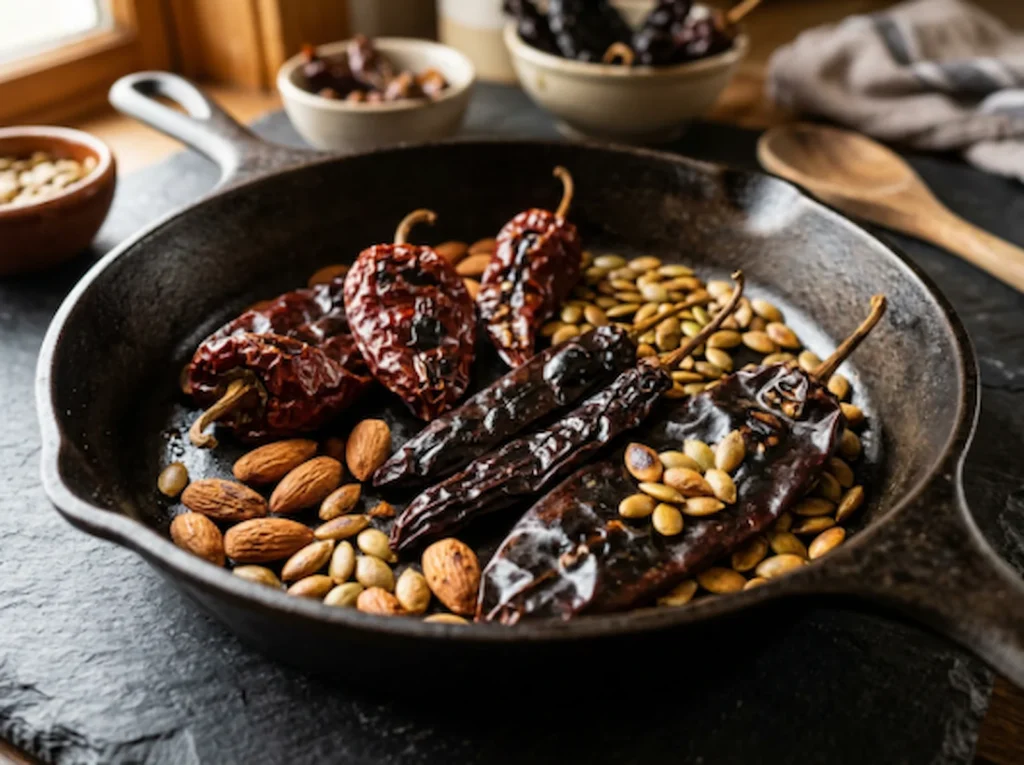
Heat a large, dry cast iron skillet over medium heat. Working in batches, place the dried ancho, pasilla, and mulato chiles in the hot pan, pressing them gently against the surface with a spatula. Toast for 30 to 60 seconds per side until the chiles puff slightly, become fragrant, and lighten in color. Do not let them burn or they will turn bitter.
Transfer the toasted chiles to a large heatproof bowl and cover them with boiling water. Let them soak for 20 minutes until they are completely soft and pliable. Drain the chiles, reserving the soaking liquid in case you need to thin the sauce later. Remove the stems and any remaining seeds.
Frying the Aromatics, Nuts, and Seeds
Heat 1 tablespoon of lard or vegetable oil in the same skillet over medium heat. Add the raw almonds and pumpkin seeds and fry for 2 to 3 minutes, stirring constantly, until they turn golden brown and fragrant. Transfer them to a large bowl.
Add another tablespoon of lard to the skillet and fry the sesame seeds for 1 to 2 minutes until they turn light golden. Transfer them to the bowl with the almonds and pepitas, reserving a tablespoon for garnish.
Add the raisins to the hot skillet and fry for 30 seconds until they puff slightly. Add them to the bowl.
Add the plantain slices to the skillet and fry for 2 to 3 minutes per side until golden and caramelized. Add them to the bowl.
Add the torn corn tortillas, chopped onion, garlic cloves, broken cinnamon stick, and whole cloves to the skillet and fry for 3 to 4 minutes, stirring frequently, until the onion is soft and the tortillas are golden. Add everything to the bowl with the other fried ingredients.
Blending the Mole Base
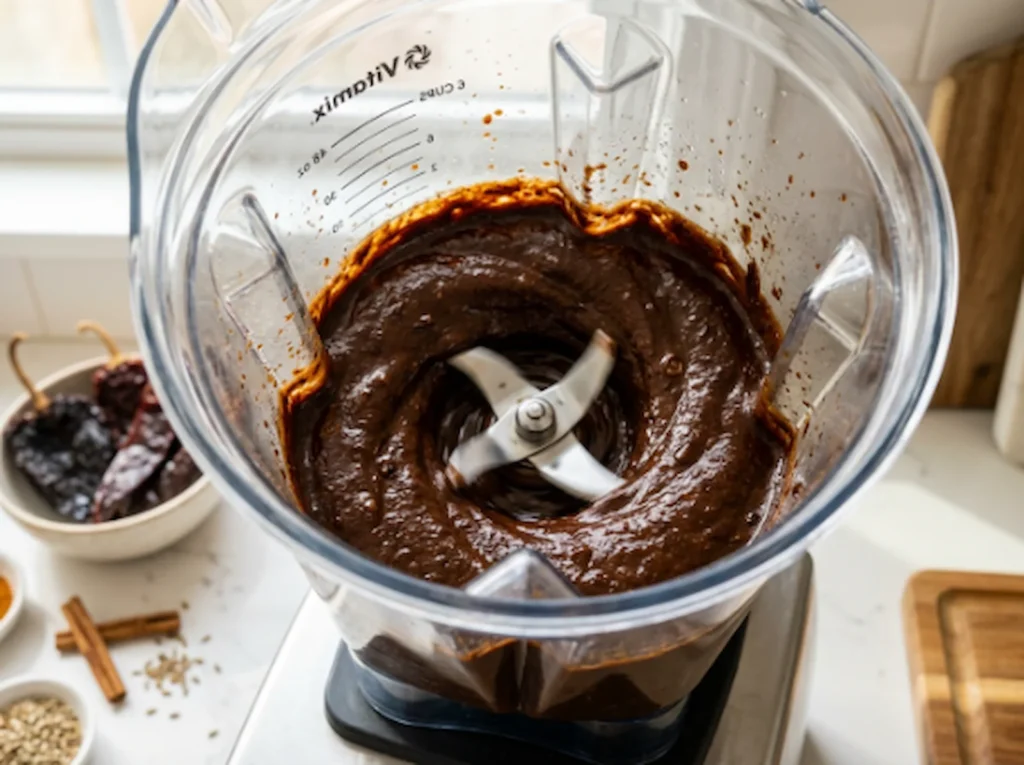
Transfer the softened drained chiles, all the fried ingredients, and 2 cups of chicken broth to a high-speed blender. Blend on high speed for 2 to 3 minutes, stopping to scrape down the sides as needed, until the mixture is completely smooth and forms a thick, dark brown paste.
For an ultra-smooth mole, press the blended paste through a fine-mesh strainer set over a clean bowl, using a spatula or the back of a spoon to push the paste through. This removes any remaining bits of chile skin, seeds, or fibrous material and creates a silky, velvety texture.
Frying the Mole Paste and Adding Chocolate
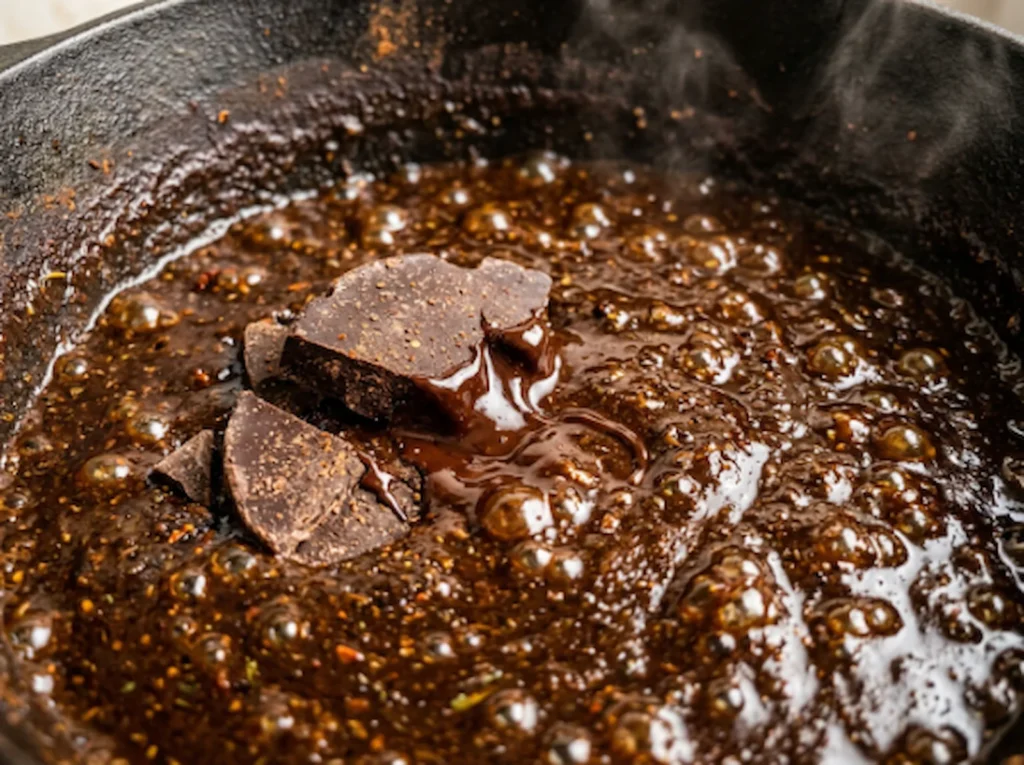
Heat the remaining 2 tablespoons of lard or oil in a heavy 5-to-7 quart Dutch oven over medium heat. Add the strained mole paste and fry, stirring constantly, for 8 to 10 minutes. The paste will darken, thicken, and become incredibly fragrant as it fries. You should see small bubbles breaking the surface and the color should deepen to a rich mahogany brown.
Pour in the remaining 2 cups of chicken broth, stirring constantly to combine. The sauce will thin out and become pourable. Bring it to a gentle simmer.
Add the chopped dark Mexican chocolate to the simmering sauce, stirring constantly until it melts completely and the sauce turns glossy and smooth. Taste and adjust the seasoning with kosher salt if needed.
Braising the Chicken
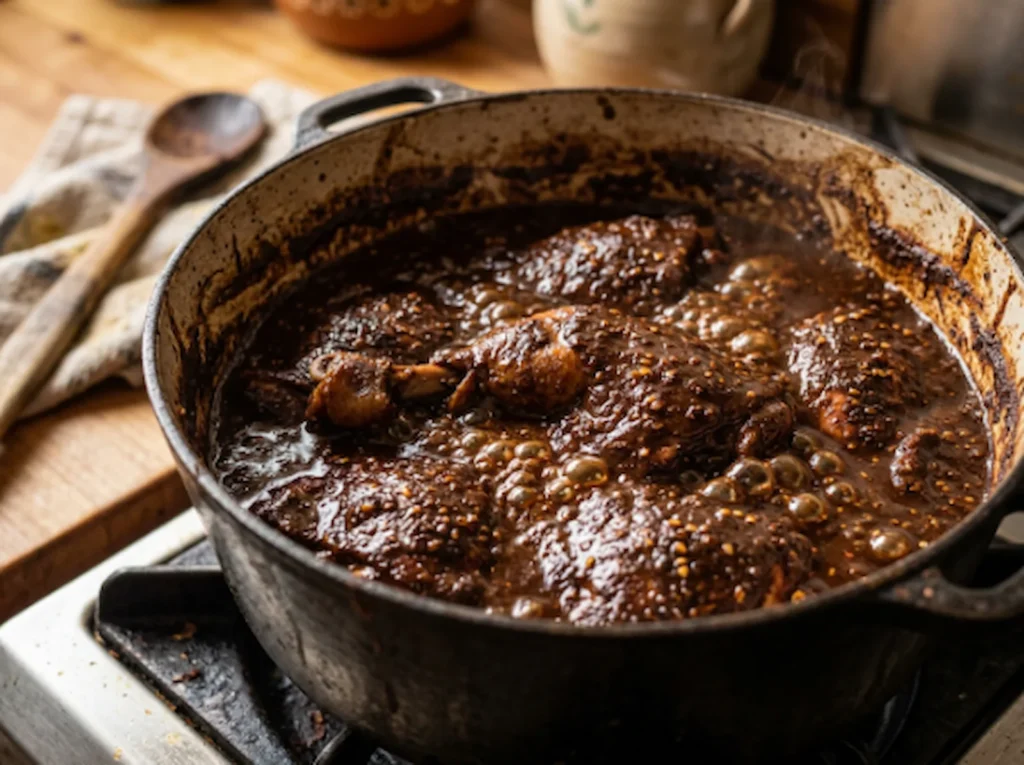
Season the bone-in chicken thighs and drumsticks generously on all sides with kosher salt and black pepper. Nestle the seasoned chicken pieces into the simmering mole sauce, making sure each piece is mostly submerged.
Reduce the heat to low, cover the Dutch oven tightly with a lid, and simmer gently for 40 to 45 minutes, turning the chicken pieces once halfway through. The chicken is done when it reaches an internal temperature of 165°F and the meat is tender enough to pull away from the bone easily.
USDA Food Safety Inspection Guidelines recommend a minimum internal temperature of 165°F for all poultry to ensure harmful bacteria are eliminated.
If the sauce becomes too thick during cooking, add a splash of chicken broth or water to loosen it. If it is too thin, uncover the pot and let it simmer for an additional 10 to 15 minutes to reduce.
Plating and Garnishing
Remove the pot from the heat and let the chicken rest in the mole for 5 minutes—this allows the flavors to settle and the sauce to thicken slightly.
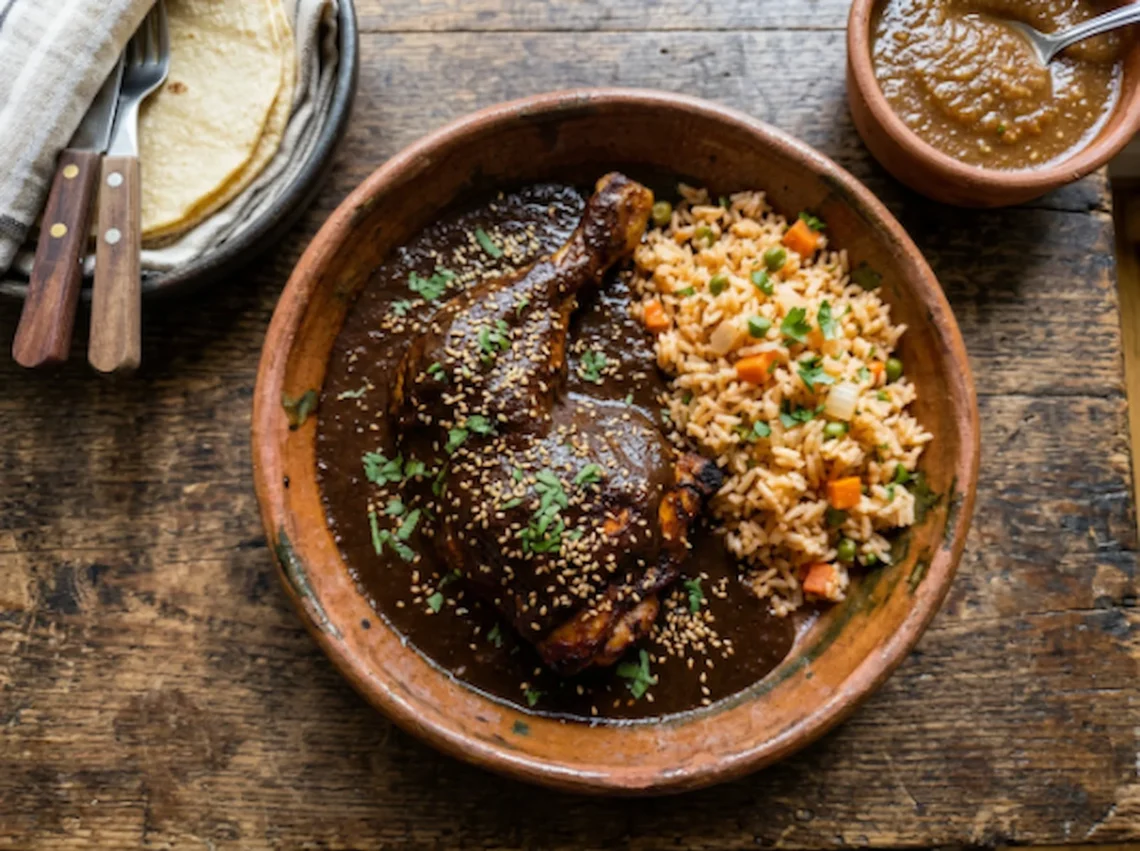
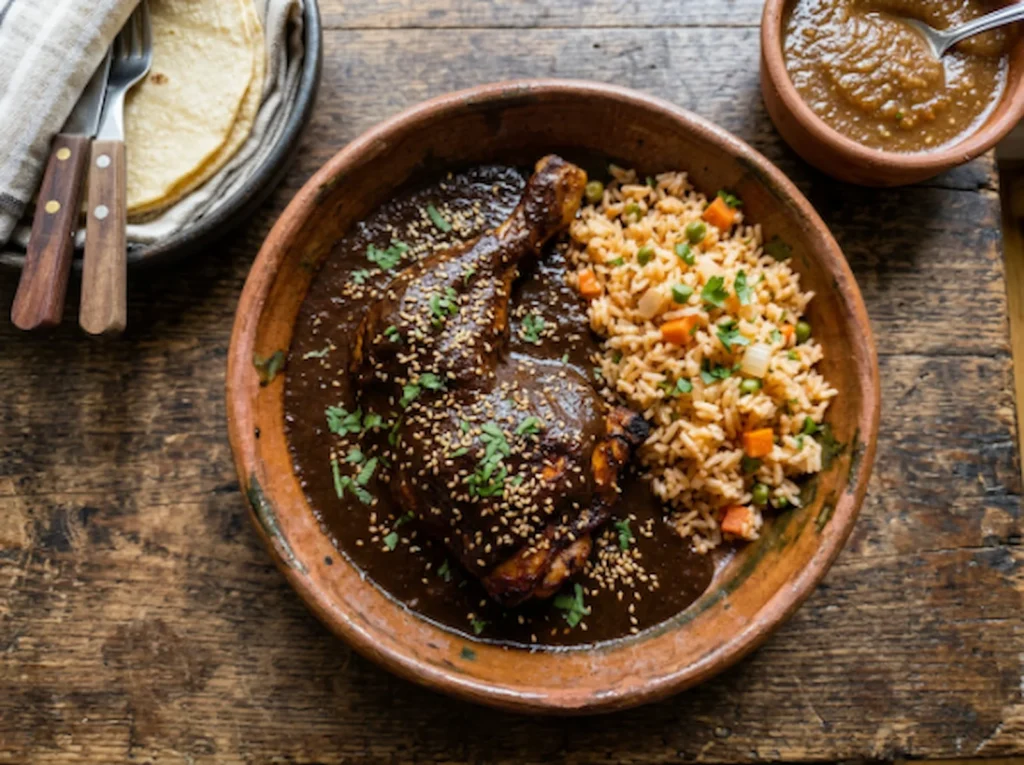
Ladle the hot chicken mole poblano onto warm plates or into shallow bowls, making sure each serving gets plenty of rich, glossy mole sauce. Sprinkle with toasted white sesame seeds for garnish.
Serve alongside warm Mexican white rice and a stack of warm corn tortillas for scooping. A squeeze of fresh lime juice over the chicken just before eating adds a bright, acidic note that cuts through the richness beautifully.
Chef Albert’s Insight
“Mole is not fast food. It is not convenience food. It is the kind of dish that demands your full attention and rewards it tenfold. Every step matters—the toasting of the chiles, the frying of the nuts and seeds, the blending and straining, the slow simmer. Each move builds on the last, creating layers of flavor so deep and complex that you taste something new with every bite. I have made mole when I was rushing, skipping steps, using shortcuts, and the result was always disappointing—flat, one-dimensional, forgettable. But when I slow down and give the dish the time and care it deserves, when I toast the chiles until they puff and release their oils, when I fry the almonds until they smell like warm butter, when I blend and strain the paste until it is silk-smooth, the result is transformative. This is cooking as meditation. This is cooking as craft. And when you serve it to someone who has never tasted real mole before, their reaction tells you everything you need to know—this is worth the effort.”
— Chef Albert, TastePillar
Nutrition Information (Per Serving)
| Nutrient | Amount |
|---|---|
| Calories | 640 kcal |
| Protein | 48g |
| Total Fat | 36g |
| Saturated Fat | 11g |
| Carbohydrates | 28g |
| Dietary Fiber | 6g |
| Sugars | 12g |
| Sodium | 580mg |
| Cholesterol | 185mg |
Note: Nutrition values are estimates based on standard ingredient measurements and may vary depending on specific brands and preparation methods.
Food Safety Temperature Guide
| Cooking Stage | Target Temperature |
|---|---|
| Toasting Chiles (Skillet Surface) | 350°F – 375°F / 177°C – 191°C |
| Frying Nuts and Seeds (Oil Temperature) | 325°F – 350°F / 163°C – 177°C |
| Simmering Mole Sauce | 180°F – 200°F / 82°C – 93°C |
| Chicken Internal Temperature (Fully Cooked) | 165°F / 74°C |
| Danger Zone (Avoid holding food in this range) | 40°F – 140°F / 4°C – 60°C |
| Reheating Leftovers (Internal) | 165°F / 74°C |
Always use an instant-read thermometer to verify chicken doneness. The USDA recommends a minimum internal temperature of 165°F for all poultry.
Storage and Reheating
| Storage Method | Duration | Best Reheating Method |
|---|---|---|
| Refrigerator (chicken and mole together) | 4–5 days | Reheat gently in a covered pot over low heat, stirring occasionally and adding a splash of broth if needed |
| Freezer (mole sauce only) | Up to 3 months | Thaw overnight in the fridge, then reheat on the stovetop and add freshly cooked chicken |
| Freezer (chicken and mole together) | Up to 2 months | Thaw overnight in the fridge, then reheat slowly in a covered pot, stirring gently to prevent sticking |
| Leftover Mole Sauce (no chicken) | 5–6 days | Reheat on the stovetop over low heat, whisking to restore smoothness |
Mole actually tastes better the next day. The flavors meld and deepen as the sauce rests, and the chocolate integrates more fully. Store in an airtight container and let it come to room temperature before reheating for the best texture.
Frequently Asked Questions
Can I make mole without a blender?
A high-speed blender is essential for achieving the smooth, velvety texture that defines good mole. A food processor can work in a pinch, but you may need to blend in batches and press the paste through a strainer to remove any gritty bits.
What if I cannot find mulato chiles?
You can substitute additional ancho chiles, though the flavor will be slightly less complex. Mulatos add a unique smoky, chocolatey note that is hard to replicate, but the mole will still be delicious with just anchos and pasillas.
Can I use chicken breasts instead of thighs?
You can, but bone-in, skin-on thighs and drumsticks are far superior. They stay moist during the long simmer and add more flavor to the sauce. Chicken breasts dry out easily and do not contribute as much richness.
How do I fix mole that tastes too bitter?
If the chiles were over-toasted or burned, the bitterness is hard to fix. You can try adding a bit more chocolate, a tablespoon of brown sugar, or a splash of apple cider vinegar to balance it out. Prevention is key—toast the chiles gently and watch them closely.
Can I make mole vegetarian?
Yes. Omit the chicken and use vegetable broth instead of chicken broth. You can simmer the mole with roasted vegetables like zucchini, bell peppers, and sweet potatoes, or serve it over grilled portobello mushrooms.
Related Recipes You’ll Love
If you enjoyed the deep, complex flavors of this rich dark chocolate chicken mole poblano, these TastePillar recipes will expand your Mexican cooking repertoire:
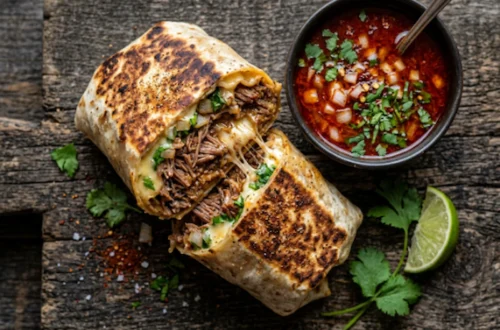
Loaded Beef Quesabirria Burrito with Melted Cheese
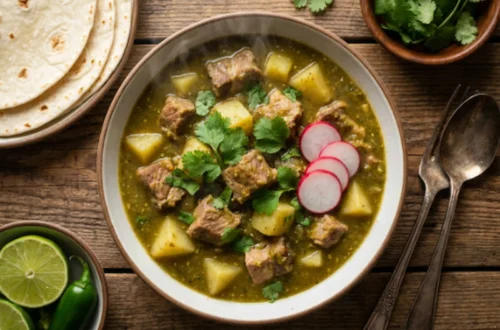
Slow-Cooked Pork Chile Verde with Tender Potatoes
Rich Dark Chocolate Chicken Mole Poblano
Ingredients
Equipment
Method
- Toast the Chiles: Heat 1 tablespoon lard or oil in a skillet over medium heat. Toast dried ancho, pasilla, and mulato chiles for 1–2 minutes until fragrant and slightly pliable (do not burn). Transfer chiles to a bowl, cover with boiling water, and soak for 20 minutes to soften.
- Fry the Aromatics and Nuts: In the same skillet, fry almonds, pumpkin seeds, sesame seeds, raisins, plantain slices, torn tortillas, onion, garlic, cinnamon stick, and cloves for 5–7 minutes until golden brown.
- Blend the Mole Base: Transfer softened drained chiles, fried seed/fruit mix, and 2 cups of chicken broth into a high-speed blender. Blend on high speed for 2 minutes until an ultra-smooth, thick brown paste forms. Press paste through a fine-mesh strainer into a clean bowl if desired.
- Cook the Mole Paste and Add Chocolate: Heat remaining 2 tablespoons lard in a heavy Dutch oven over medium heat. Add the strained mole paste and fry, stirring constantly, for 8–10 minutes until darkened and fragrant. Pour in remaining 2 cups chicken broth and stir. Add chopped dark Mexican chocolate, stirring until melted and glossy.
- Braise the Chicken: Season chicken thighs and drumsticks with salt. Nestle seasoned chicken pieces into the bubbling dark mole sauce. Reduce heat to low, cover tightly with a lid, and simmer gently for 40–45 minutes until chicken is tender and reaches an internal temperature of 165°F.
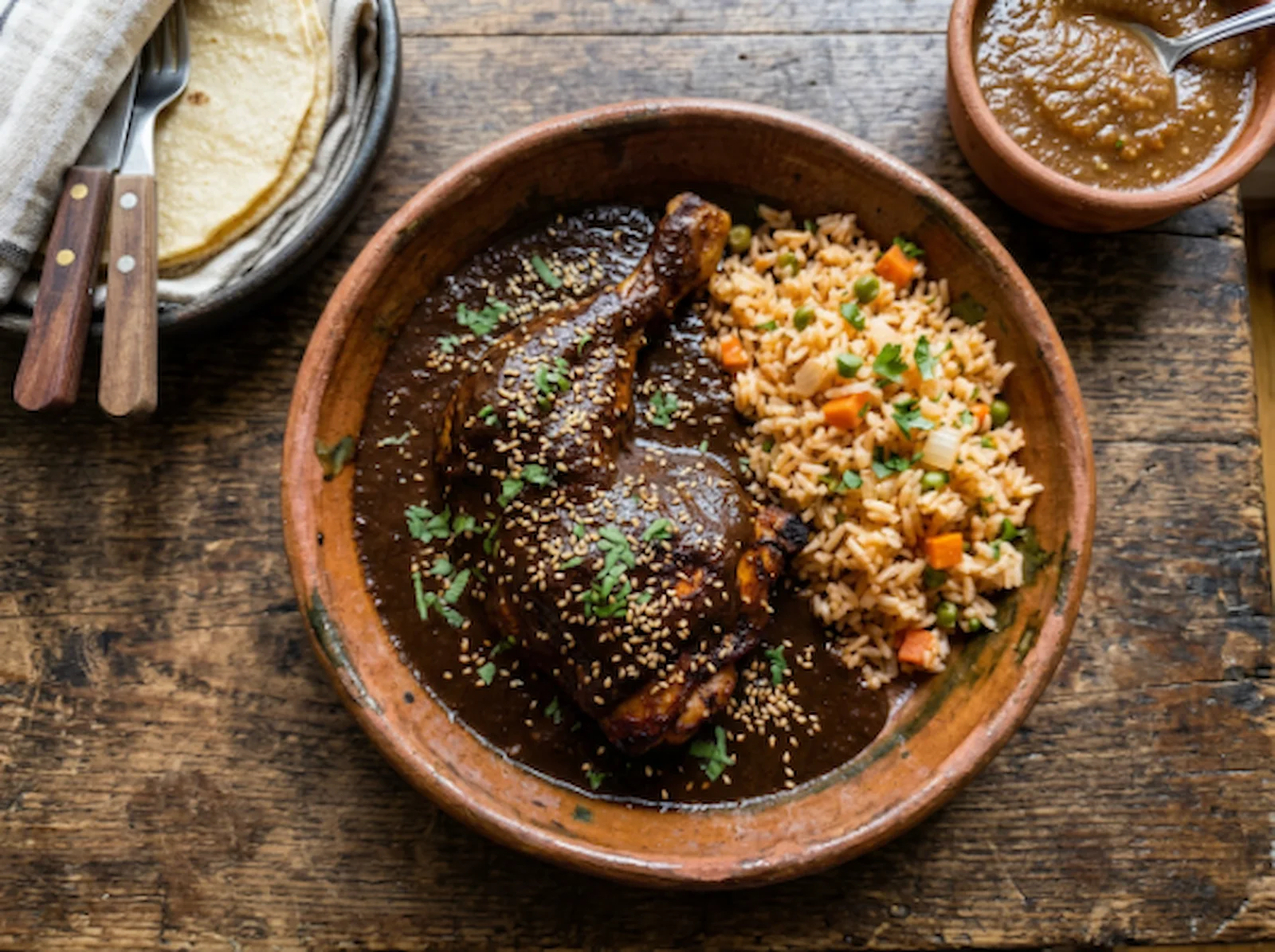
- Garnish and Serve: Ladle hot Chicken Mole Poblano onto warm plates, generously coating the chicken with rich dark chocolate mole sauce. Sprinkle with toasted white sesame seeds and serve alongside Mexican white rice and warm corn tortillas.
Notes
Choosing the Right Chocolate: Mexican chocolate contains sugar and cinnamon. If substituting with pure 70% dark cocoa, add 1/2 teaspoon ground cinnamon and 1 tablespoon brown sugar to balance the sauce acidity.

Why Toasting Each Ingredient Separately Matters: Frying almonds, seeds, plantains, and tortillas individually develops distinct flavors through the Maillard reaction. Skipping this step results in a flat, one-dimensional sauce.

Straining for Silky Texture: Pressing the blended mole paste through a fine-mesh strainer removes chile skins and fibrous bits, creating a velvety, restaurant-quality consistency.

Make-Ahead Instructions: Mole actually tastes better the next day. The flavors deepen and integrate as the sauce rests. Make the mole up to 3 days in advance and store in the fridge. Reheat gently before serving.

Freezing Protocol: Mole sauce freezes beautifully for up to 3 months. Freeze in portions and thaw overnight in the fridge. Reheat on the stovetop, whisking to restore smoothness.

Adjusting Spice Levels: Traditional mole poblano is mild. For more heat, add 1–2 dried chiles de árbol to the toasting step or serve with sliced fresh jalapeños on the side.

Rescuing Over-Toasted Chiles: If chiles taste slightly bitter, balance it out with an extra tablespoon of chopped chocolate, a teaspoon of brown sugar, or a splash of apple cider vinegar.

Best Chicken Cuts: Bone-in, skin-on thighs and drumsticks stay moist during the long simmer and add richness to the sauce. Chicken breasts dry out and contribute less flavor.

Serving Suggestions: Serve mole with warm corn tortillas, Mexican rice, refried beans, and a squeeze of fresh lime juice. Garnish with extra sesame seeds and fresh cilantro.

Leftover Mole Uses: Use leftover mole as a sauce for enchiladas, spoon it over grilled vegetables, or toss it with roasted potatoes for a unique side dish.