Choosing the Right Chocolate: Mexican chocolate contains sugar and cinnamon. If substituting with pure 70% dark cocoa, add 1/2 teaspoon ground cinnamon and 1 tablespoon brown sugar to balance the sauce acidity.

Why Toasting Each Ingredient Separately Matters: Frying almonds, seeds, plantains, and tortillas individually develops distinct flavors through the Maillard reaction. Skipping this step results in a flat, one-dimensional sauce.

Straining for Silky Texture: Pressing the blended mole paste through a fine-mesh strainer removes chile skins and fibrous bits, creating a velvety, restaurant-quality consistency.

Make-Ahead Instructions: Mole actually tastes better the next day. The flavors deepen and integrate as the sauce rests. Make the mole up to 3 days in advance and store in the fridge. Reheat gently before serving.

Freezing Protocol: Mole sauce freezes beautifully for up to 3 months. Freeze in portions and thaw overnight in the fridge. Reheat on the stovetop, whisking to restore smoothness.

Adjusting Spice Levels: Traditional mole poblano is mild. For more heat, add 1–2 dried chiles de árbol to the toasting step or serve with sliced fresh jalapeños on the side.

Rescuing Over-Toasted Chiles: If chiles taste slightly bitter, balance it out with an extra tablespoon of chopped chocolate, a teaspoon of brown sugar, or a splash of apple cider vinegar.

Best Chicken Cuts: Bone-in, skin-on thighs and drumsticks stay moist during the long simmer and add richness to the sauce. Chicken breasts dry out and contribute less flavor.

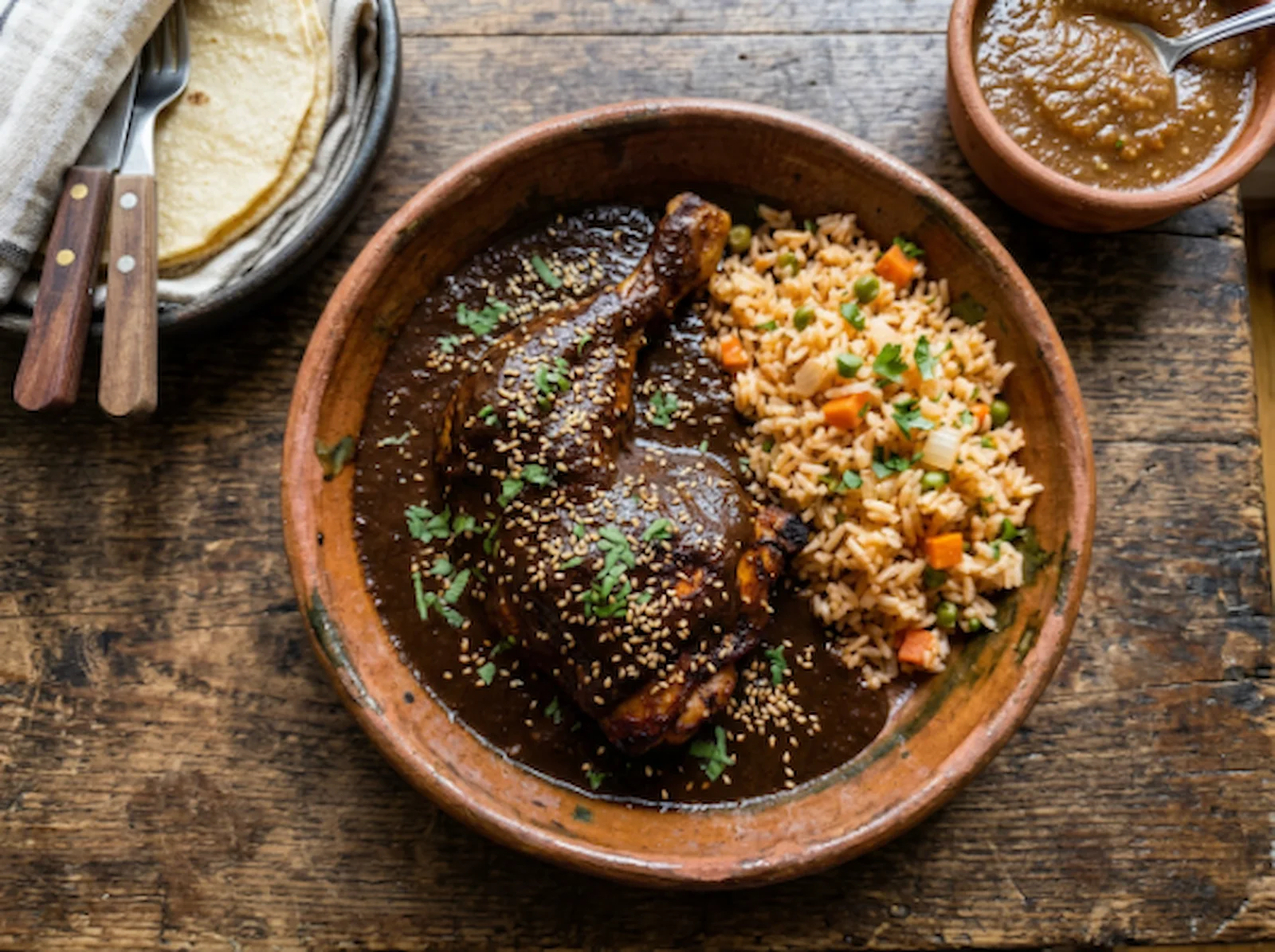
Serving Suggestions: Serve mole with warm corn tortillas, Mexican rice, refried beans, and a squeeze of fresh lime juice. Garnish with extra sesame seeds and fresh cilantro.

Leftover Mole Uses: Use leftover mole as a sauce for enchiladas, spoon it over grilled vegetables, or toss it with roasted potatoes for a unique side dish.