By Chef Albert | The Science of Perfect Flavour
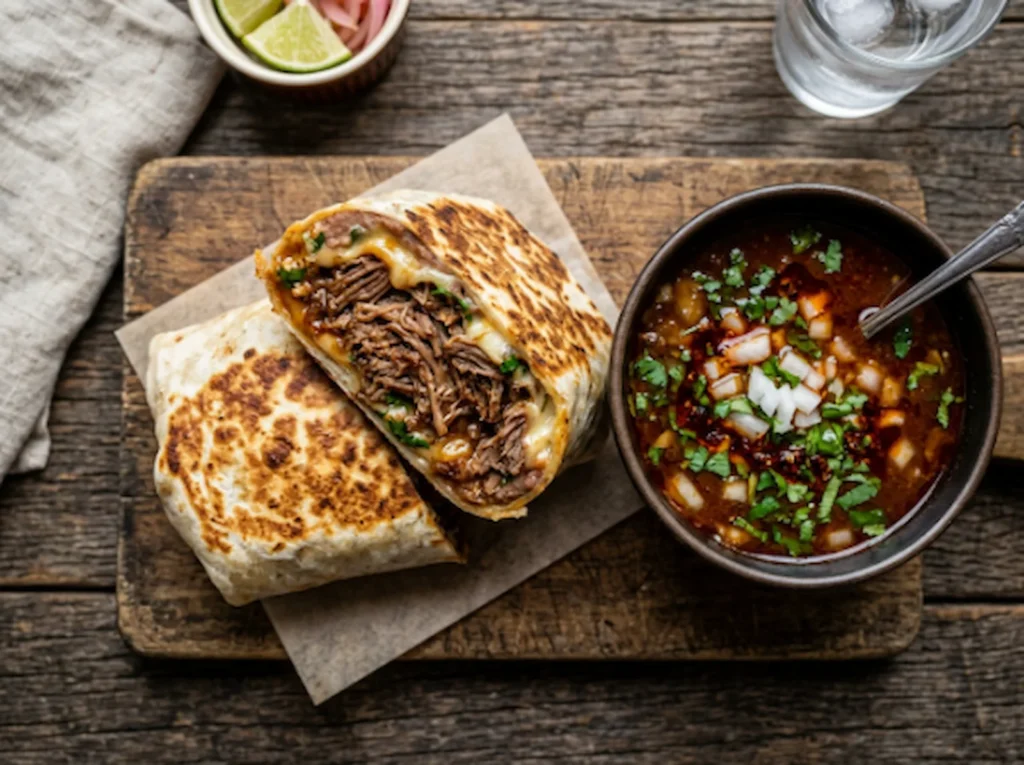
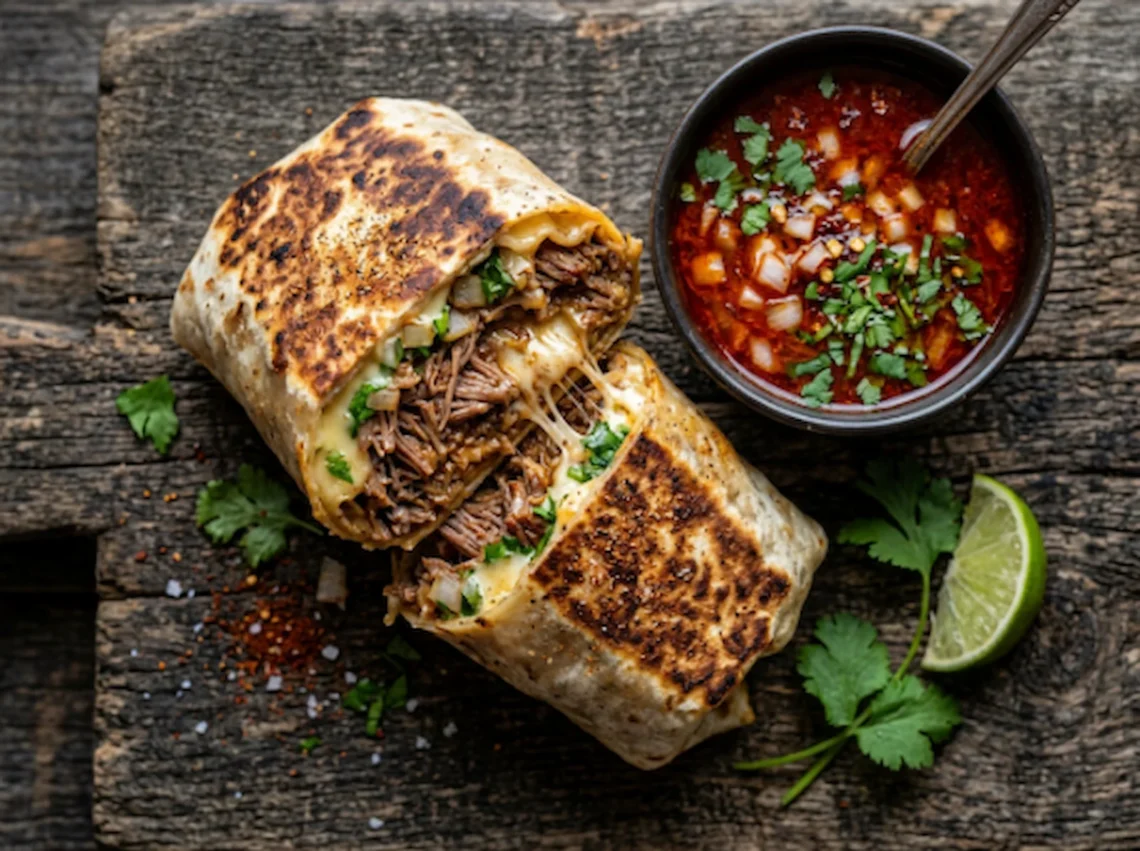
There is a reason why quesabirria has taken over food trucks, Instagram feeds, and kitchen tables across the country. The combination of slow-braised beef simmered in a deep red chile broth, shredded until it falls apart, then wrapped with melted cheese and dipped in its own rich consomé before hitting a hot griddle creates something that is equal parts crispy, juicy, savory, and addictive. When you take that same birria and load it into a massive flour tortilla with Mexican rice, beans, fresh cilantro, and cheese, then griddle the whole thing until the outside turns golden and crispy, you have created something that transcends street food—you have made a meal that people will talk about for days.
I have made beef quesabirria burritos more times than I can count, adjusting the chile blend to find the right balance between smoky depth and gentle heat, testing different beef cuts to achieve the ideal ratio of tender meat to rich fat, and learning exactly how to fold a heavily loaded burrito so it does not split open on the griddle. The key to a perfect beef quesabirria burrito is not just the birria itself—though that is critical—it is understanding how the consomé dip transforms the tortilla, how the griddle creates texture, and how to layer the ingredients so every bite delivers cheese, beef, rice, and beans in perfect proportion.
The biggest mistake people make with this dish is rushing the braise or skipping the consomé dip entirely. Birria is not quick-cooked beef. It is chuck roast that has been simmered for hours in a blend of rehydrated dried chiles, tomatoes, aromatics, and spices until the collagen breaks down and the meat becomes so tender you can shred it with a fork. The braising liquid, enriched with rendered beef fat and infused with chile flavor, becomes the consomé—a rich, savory dipping broth that doubles as the coating for the tortilla before it hits the griddle. Skip that step and you are just making a regular burrito. Dip the tortilla in the red birria oil and griddle it properly, and you create a crispy, flavor-packed shell that holds everything together while adding another layer of richness.
Why Chuck Roast Is the Only Cut That Works
Beef chuck roast comes from the shoulder area of the cow, a heavily worked muscle group loaded with connective tissue and intramuscular fat. When cooked quickly, chuck roast is tough and chewy. But when braised low and slow in liquid, the collagen melts into gelatin, the fat renders out, and the meat becomes fall-apart tender while contributing deep, beefy flavor to the braising liquid.
This transformation happens because collagen—a structural protein made of tightly wound amino acid chains—begins to break down at temperatures above 160°F. As the beef simmers gently in the chile broth for two to three hours, the collagen unwinds and dissolves into gelatin, which then disperses into the liquid, giving the consomé body, richness, and a silky mouthfeel. At the same time, the intramuscular fat melts, basting the meat from the inside and creating pockets of juicy tenderness.
Leaner cuts like sirloin, round, or tenderloin do not have enough connective tissue or fat to withstand a long braise. They dry out, turn stringy, and contribute nothing to the consomé. Short ribs can be added to the chuck roast for even more richness—the bone marrow and extra fat create an even deeper, more luxurious broth—but chuck roast alone is sufficient and more affordable.
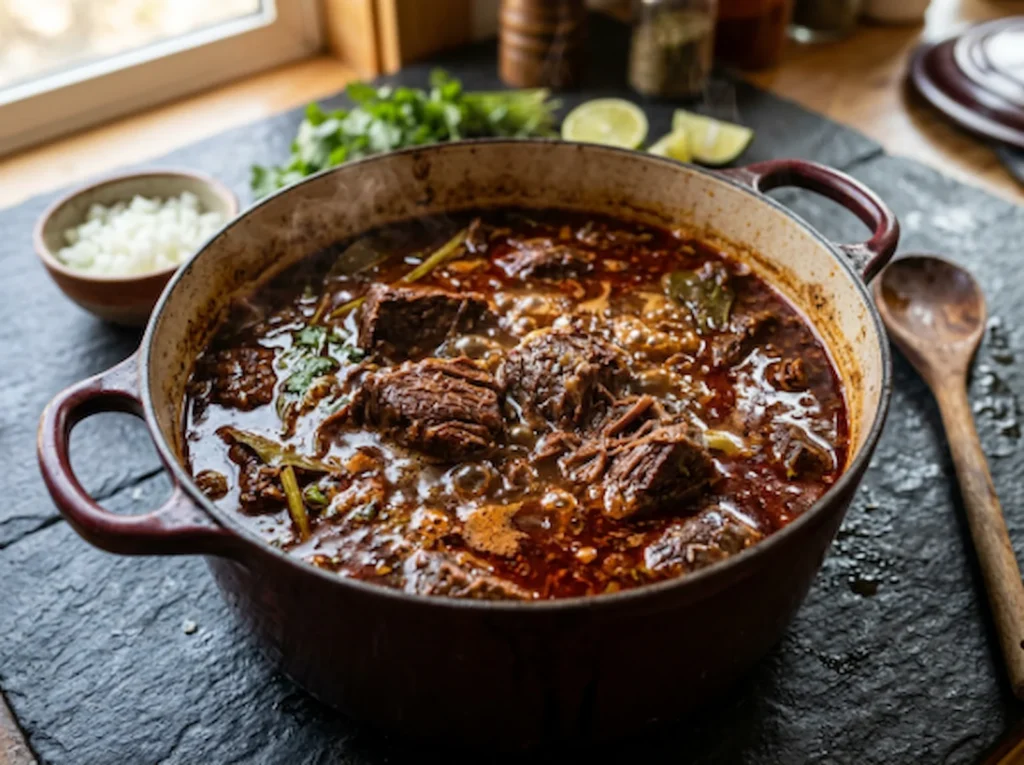
The braising liquid itself is what sets birria apart from other braised beef dishes. The combination of rehydrated dried chiles—guajillo, ancho, and optionally chile de árbol for heat—creates a complex, layered sauce that is fruity, smoky, earthy, and just spicy enough to wake up your palate without overwhelming it. The tomatoes add acidity and sweetness, the onion and garlic add savory depth, and the spices—cumin, Mexican oregano, cinnamon—add warmth and aromatic complexity.
The Culinary Institute of America’s Mexican Culinary Arts Framework emphasizes the importance of proper dried chile rehydration and fat skimming techniques in traditional birria preparation, noting that the rendered fat layer serves both as a flavor concentrate and a functional coating for tortillas.
The Science Behind the Consomé Dip and Griddle Technique
When you braise beef chuck roast in a chile-infused broth, the rendered fat from the meat rises to the surface and mixes with the oil-soluble compounds from the dried chiles—primarily capsaicin and carotenoids. This creates a bright red layer of flavored fat that floats on top of the consomé. This is not waste. This is liquid gold.
Skimming off a portion of this red fat and using it to coat the tortilla before griddling serves several purposes. First, it adds an extra layer of chile flavor directly to the tortilla. Second, the fat creates a barrier between the tortilla and the griddle, allowing the tortilla to crisp up without burning. Third, the fat caramelizes slightly on the hot surface, creating a golden-red crust that is visually striking and texturally satisfying.
The Maillard reaction—the chemical process that creates browning and new flavor compounds when proteins and sugars are heated—happens more effectively in the presence of fat. When you griddle a consomé-dipped tortilla, you are essentially shallow-frying the surface in a thin layer of chile-infused beef fat, which accelerates browning and creates a crispy, flavorful shell.
The key to a successful griddle is temperature control. If the heat is too low, the tortilla absorbs the fat and turns greasy without crisping. If the heat is too high, the exterior burns before the cheese inside melts and the ingredients heat through. Medium heat, around 325°F to 350°F, is the sweet spot—hot enough to crisp the tortilla in 2 to 3 minutes per side, but controlled enough to allow the interior to warm through without the exterior charring.
Why Flour Tortillas Work Better Than Corn for Loaded Burritos
Corn tortillas are traditional for quesabirria tacos, but for a loaded burrito, flour tortillas are the only practical choice. Corn tortillas are more fragile and less elastic than flour tortillas because they are made from masa (nixtamalized corn dough) rather than wheat flour. Masa has no gluten, the protein network that gives wheat dough its stretch and strength.
Flour tortillas are made from wheat flour, water, fat (usually lard or vegetable shortening), and a small amount of baking powder or baking soda. When the dough is mixed and kneaded, the gluten proteins—glutenin and gliadin—align and form an elastic network that allows the tortilla to stretch without tearing. This elasticity is critical when you are wrapping a heavy load of beef, cheese, rice, and beans.
For quesabirria burritos, you want extra-large, high-gluten burrito-style flour tortillas, usually labeled as 12-inch tortillas. These have the strength and flexibility to hold a substantial filling, and they can be dipped in consomé and griddled without falling apart.
Warming the tortilla slightly before dipping and filling also helps. A warm tortilla is more pliable and less likely to crack when you fold it. You can warm tortillas directly on a dry griddle for 15 to 20 seconds per side, or wrap them in a damp towel and microwave them for 20 to 30 seconds.
Buying the Right Ingredients
Beef chuck roast is sold at nearly every grocery store, usually in the meat section as boneless chuck roast, chuck steak, or shoulder roast. Look for a piece with visible marbling—white streaks of fat running through the meat. This fat is what keeps the beef moist and flavorful during the long braise. Avoid lean cuts labeled “shoulder clod” or “arm roast,” which have less fat and can turn dry.
Dried guajillo and ancho chiles are sold in the Latin foods section of most supermarkets, usually in small plastic bags. Guajillos are long, smooth, and dark red. Anchos are wider, wrinkled, and almost black—they are dried poblano peppers. Both should be pliable, not brittle. If the chiles snap when you bend them, they are old and have lost most of their flavor.
Chile de árbol is optional but recommended if you want more heat. These are small, thin, bright red chiles that pack serious spice. One or two is enough to add a noticeable kick without overwhelming the dish.
Oaxaca cheese is the traditional choice for quesabirria because it melts beautifully and has a mild, creamy flavor that complements the rich beef and bold chile sauce. It is sold in most grocery stores in the specialty cheese section, often in a round ball or braided rope. If you cannot find Oaxaca cheese, whole-milk mozzarella or Monterey Jack are good substitutes.
For the flour tortillas, look for burrito-style tortillas labeled as 12-inch or extra-large. Brands like Mission, Guerrero, and TortillaLand make high-quality flour tortillas that are soft, pliable, and strong enough to hold a heavy filling. Avoid thin, delicate tortillas meant for fajitas—they will tear when you try to wrap them.
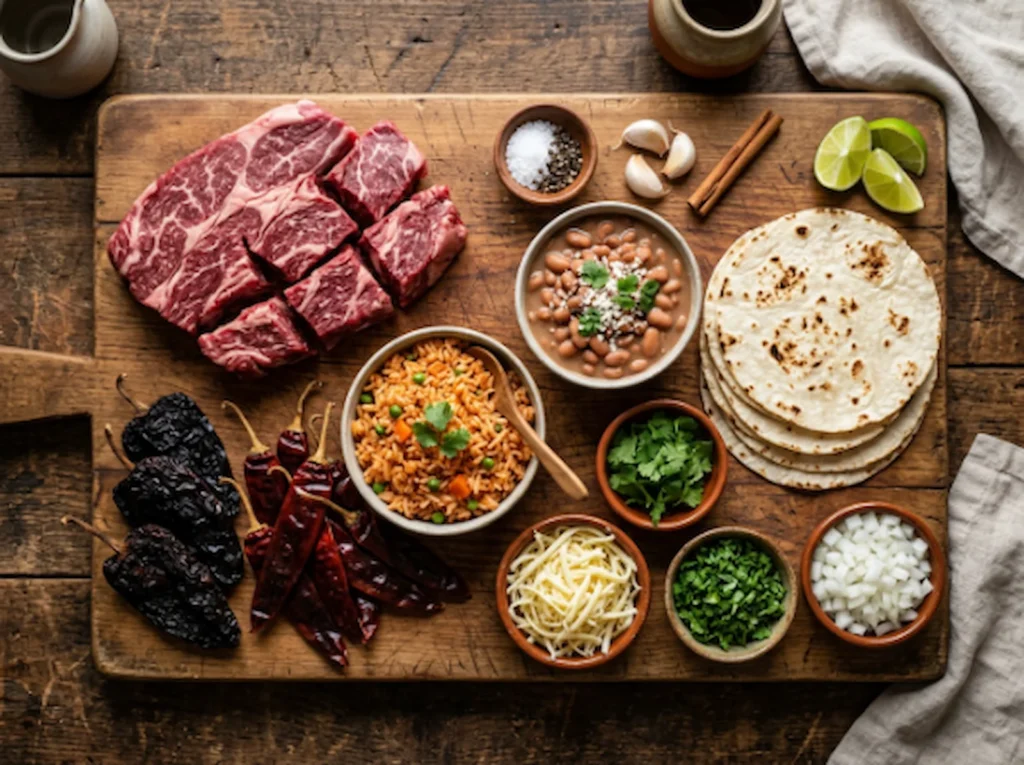
Ingredients
| For the Beef Birria & Consomé | US Customary | Metric |
|---|---|---|
| Beef Chuck Roast (cut into large 3-inch chunks) | 3 lbs | 1360g |
| Dried Guajillo Chiles (stemmed and seeded) | 4 whole | 4 whole |
| Dried Ancho Chiles (stemmed and seeded) | 2 whole | 2 whole |
| Dried Chiles de Árbol (optional for extra heat) | 1–2 whole | 1–2 whole |
| Yellow Onion (cut in half) | 1 large | 200g |
| Garlic Cloves (peeled) | 5 cloves | 20g |
| Diced Tomatoes (canned with juice) | 1 can (14.5 oz) | 400g |
| Low-Sodium Beef Broth | 4 cups | 960ml |
| Dried Mexican Oregano | 1 tbsp | 5g |
| Ground Cumin | 1 tsp | 3g |
| Cinnamon Stick | 1 stick | 1 stick |
| Kosher Salt | 1.5 tsp | 9g |
| Black Pepper | 1/2 tsp | 2g |
| For Burrito Assembly | US Customary | Metric |
|---|---|---|
| Extra-Large Flour Tortillas (12-inch burrito style) | 4 tortillas | 4 tortillas |
| Oaxaca Cheese or Monterey Jack (shredded) | 2.5 cups | 280g |
| Cooked Mexican White or Cilantro Rice | 1.5 cups | 250g |
| Warm Pinto or Black Beans | 1 cup | 200g |
| Fresh White Onion (finely diced) | 1/2 cup | 75g |
| Fresh Cilantro (chopped) | 1/2 cup | 25g |
| Lime Wedges (for serving) | 4–6 wedges | 4–6 wedges |
Common Mistakes and How to Avoid Them
| The Mistake | What Actually Happens | The Fix |
|---|---|---|
| Using lean beef cuts like sirloin or round | The meat dries out and turns stringy during the long braise, with no richness in the consomé | Use well-marbled chuck roast or add beef short ribs for extra fat and collagen |
| Skipping the chile toasting step | The dried chiles taste flat and one-dimensional without the deeper, toasted aromatics | Toast the chiles in a dry skillet for 1–2 minutes before soaking to activate their oils |
| Not skimming the red fat layer from the consomé | You miss the crucial step of coating the tortilla in flavorful birria oil before griddling | Let the consomé settle for a few minutes, then skim the bright red fat layer off the top into a shallow dish |
| Overfilling the burrito | The tortilla splits open when you try to fold it, and ingredients spill out during griddling | Use restraint—layer ingredients down the center, leaving 2 inches of space on each side for folding |
| Griddling at too high heat | The tortilla exterior burns before the cheese melts and the interior heats through | Griddle over medium heat (325°F–350°F) for 2–3 minutes per side, pressing gently with a spatula |
| Using thin fajita-style tortillas | The tortillas tear when dipped in consomé and cannot support the weight of the filling | Use thick, 12-inch burrito-style flour tortillas with high gluten content |
Step-by-Step Method
Toasting and Rehydrating the Dried Chiles
Heat a large, dry skillet over medium heat. Add the dried guajillo chiles, ancho chiles, and chile de árbol (if using) to the hot pan. Press them gently against the surface with a spatula and toast for 1 to 2 minutes, flipping once, until they become fragrant and slightly puffed. Do not let them burn or they will turn bitter.
Transfer the toasted chiles to a large heatproof bowl and cover them with boiling water. Let them soak for 15 minutes until they are soft and pliable. Drain the soaking water and set the chiles aside.
Making the Birria Marinade
Cut one half of the yellow onion into quarters (save the other half for later). Add the softened chiles, quartered onion, garlic cloves, canned diced tomatoes with their juice, 1 cup of beef broth, dried Mexican oregano, ground cumin, kosher salt, and black pepper to a high-speed blender.
Blend on high speed for 60 to 90 seconds until the mixture is completely smooth and deep red. If the sauce is too thick to blend easily, add a splash more broth. The marinade should be pourable but not watery.
For an even smoother sauce, strain it through a fine mesh strainer to remove any remaining bits of chile skin. This step is optional but results in a silkier consomé.
Braising the Beef Until Fall-Apart Tender
Season the beef chuck roast chunks generously on all sides with additional kosher salt and black pepper. Arrange the seasoned beef in a heavy 5-to-7 quart Dutch oven.
Pour the blended chile marinade over the beef, then add the remaining 3 cups of beef broth. Drop in the cinnamon stick and the remaining onion half. The liquid should almost cover the beef—if it does not, add a bit more broth or water.
Bring the mixture to a boil over medium-high heat, then immediately reduce the heat to low. Cover the Dutch oven tightly with a lid and let it simmer gently for 2.5 to 3 hours. The beef is ready when you can shred it easily with a fork and it falls apart with almost no resistance.
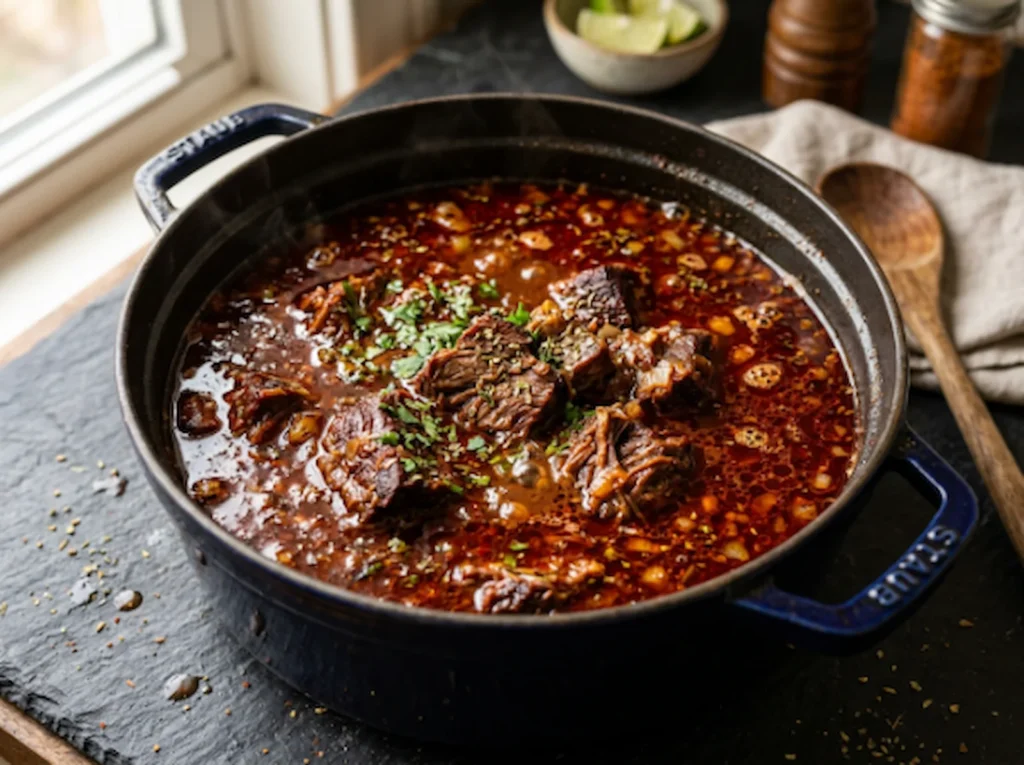
Check the pot occasionally to make sure the liquid is simmering gently, not boiling hard. If the liquid is bubbling too vigorously, reduce the heat further.USDA Food Safety Inspection Guidelines recommend cooking beef to a minimum internal temperature of 145°F, but braised beef for birria is cooked far beyond that—to around 190°F to 205°F—to ensure the collagen fully breaks down.
Shredding the Beef and Skimming the Consomé
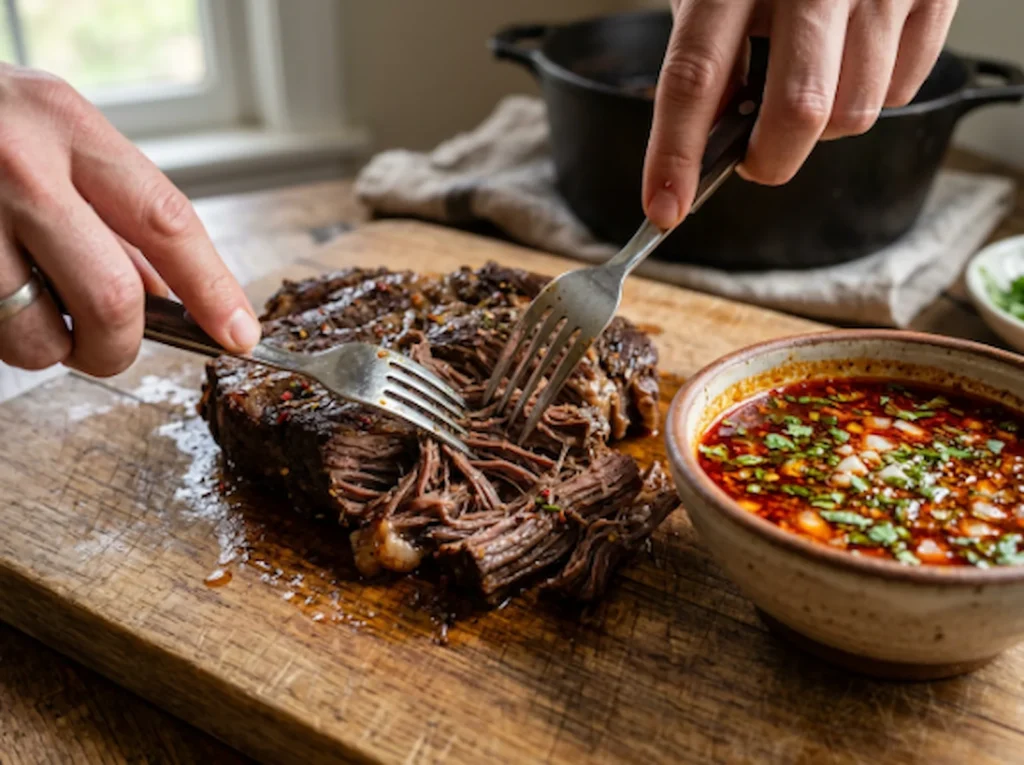
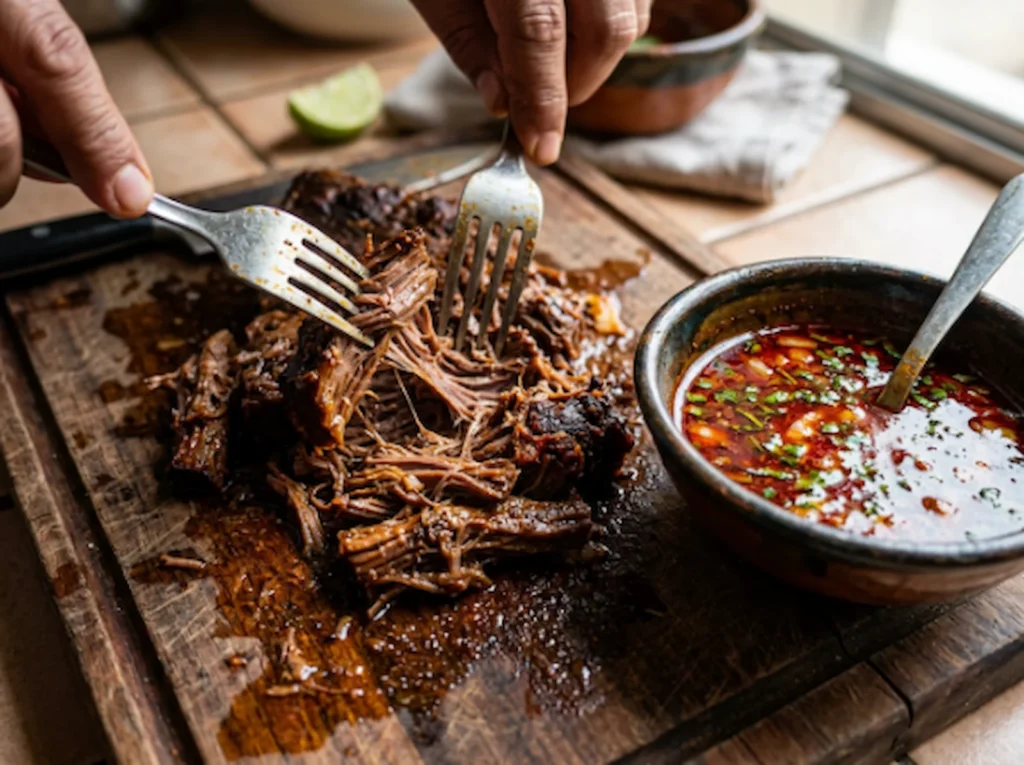
Remove the beef chunks from the Dutch oven using tongs or a slotted spoon and transfer them to a large cutting board. Use two forks to shred the beef into bite-sized pieces, discarding any large pieces of fat or gristle.
Strain the remaining braising liquid through a fine mesh strainer into a large bowl to create the consomé. Discard the onion half and cinnamon stick. Let the consomé settle for 3 to 5 minutes—the bright red layer of rendered beef fat and chile oil will rise to the top.
Use a ladle or large spoon to skim off about 1/2 cup of this red fat layer and transfer it to a shallow dish. This is what you will use to dip the tortillas before griddling. The remaining consomé is your dipping sauce—keep it warm on the stove over low heat.
Layering and Folding the Loaded Burrito
Heat a large cast iron skillet or flat-top griddle over medium heat. Lightly dip one side of a large flour tortilla into the reserved red birria oil, coating it evenly but not dripping. Lay the tortilla on the hot griddle, oil-side down.
Immediately begin layering the filling down the center of the tortilla while it heats. Start with a generous handful of shredded Oaxaca cheese—this will melt and act as the glue that holds everything together. Add a scoop of warm Mexican rice, a spoonful of pinto beans, a large portion of shredded beef birria, a sprinkle of diced white onion, and a handful of fresh chopped cilantro.
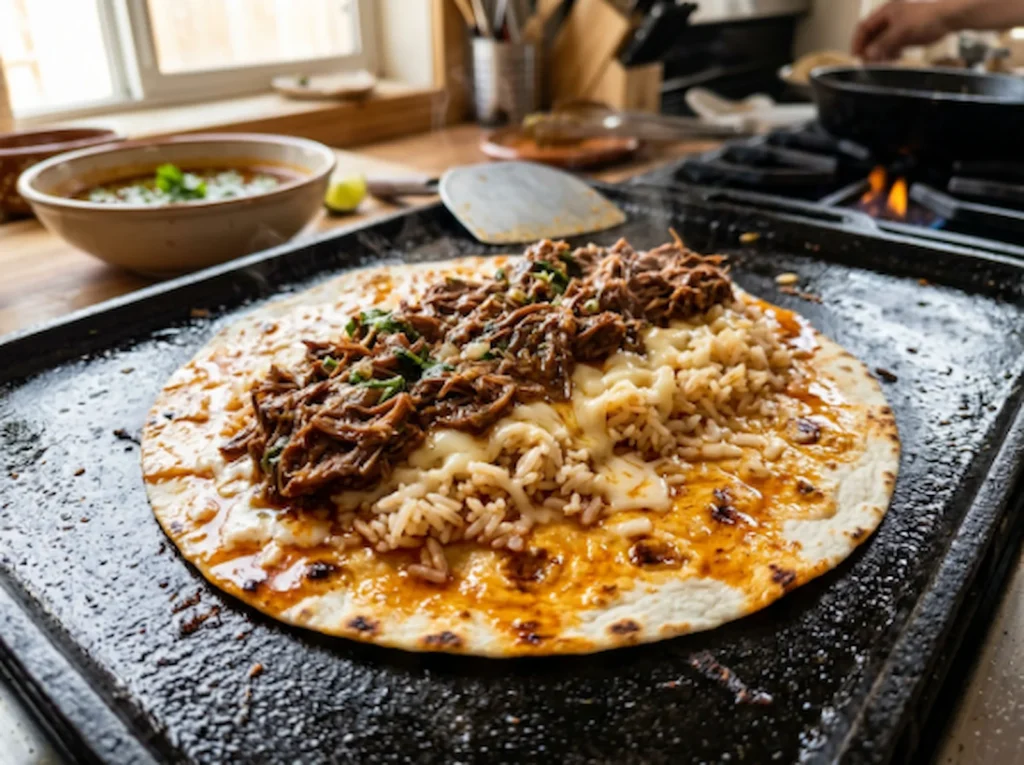
Work quickly—the tortilla is heating up, and you want to fold it while it is still pliable. Fold the two short ends of the tortilla inward toward the center, then fold one long side over the filling and roll tightly into a burrito, pressing down gently to seal.
Griddling to Golden Perfection
Once the burrito is folded, use a spatula to press it down gently against the griddle. Let it cook undisturbed for 2 to 3 minutes until the bottom turns deep golden-red and crispy. You should hear a gentle sizzle—if you hear nothing, increase the heat slightly. If you hear aggressive popping or see smoke, reduce the heat.
Flip the burrito carefully and griddle the other side for another 2 to 3 minutes, pressing gently again. The goal is a crispy, caramelized exterior with fully melted cheese and warmed-through filling inside.
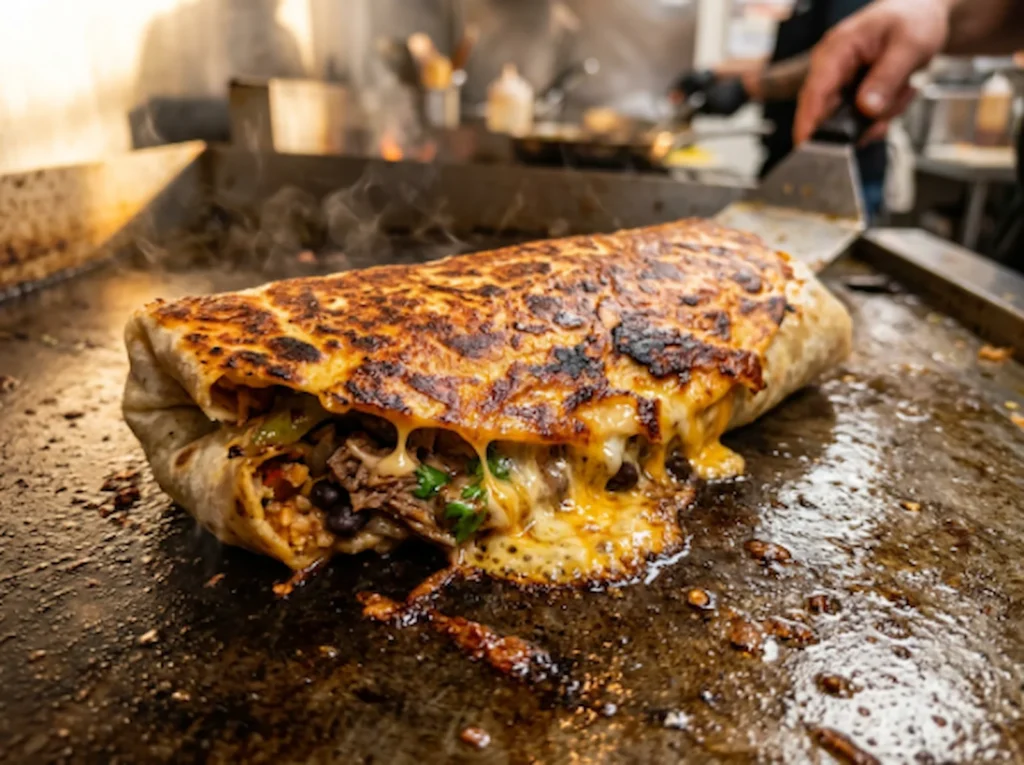
If the cheese is not melted by the time the exterior is crispy, cover the skillet with a lid for the last 30 seconds to trap steam and encourage melting.
Serving with Warm Consomé for Dipping
Remove the griddled quesabirria burrito from the heat and let it rest for 1 minute—this allows the interior to settle and makes slicing easier. Cut the burrito in half on a slight diagonal to show off the layers of cheese, beef, rice, and beans.
Plate the burrito halves alongside a small bowl of warm birria consomé. Garnish the consomé with a sprinkle of diced white onion and fresh cilantro. Add lime wedges on the side for squeezing over the burrito and into the consomé.
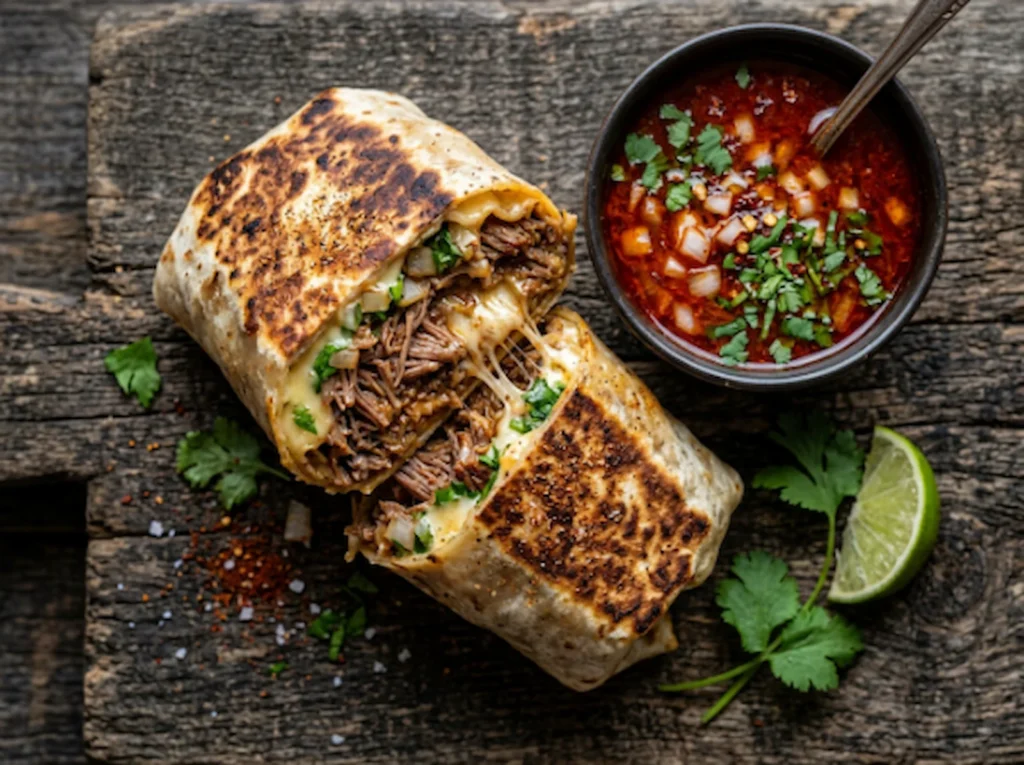
The proper way to eat this is to take a bite of the crispy burrito, then dip the bitten edge into the warm consomé before the next bite. The consomé adds moisture, flavor, and richness, turning each bite into something even more satisfying.
Chef Albert’s Insight
“Quesabirria is not just a dish—it is a technique, a philosophy, and a celebration of what happens when you give tough ingredients the time and care they need to transform. The beef starts as a tough, sinewy chuck roast and becomes so tender it falls apart at the touch of a fork. The dried chiles start as leathery, almost bitter pods and become the soul of a rich, aromatic broth. The tortilla starts as a simple flour round and becomes a crispy, flavor-packed shell that holds everything together. Every step in this recipe is an opportunity to build flavor, texture, and richness. The overnight braise. The careful skimming of the consomé. The consomé dip before griddling. The gentle press on the griddle to crisp the exterior without burning it. None of these moves are complicated, but each one matters. This is the kind of cooking that teaches you patience, rewards attention to detail, and reminds you that the best food is almost always the result of quiet, deliberate work.”
— Chef Albert, TastePillar
Nutrition Information (Per Serving)
| Nutrient | Amount |
|---|---|
| Calories | 780 kcal |
| Protein | 52g |
| Total Fat | 38g |
| Saturated Fat | 15g |
| Carbohydrates | 58g |
| Dietary Fiber | 7g |
| Sugars | 5g |
| Sodium | 890mg |
| Cholesterol | 145mg |
Note: Nutrition values are estimates based on standard ingredient measurements and may vary depending on specific brands and preparation methods.
Food Safety Temperature Guide
| Cooking Stage | Target Temperature |
|---|---|
| Braising Liquid (Simmer) | 180°F – 200°F / 82°C – 93°C |
| Braised Beef (Internal after cooking) | 190°F – 205°F / 88°C – 96°C |
| Griddle Surface Temperature | 325°F – 350°F / 163°C – 177°C |
| Danger Zone (Avoid holding food in this range) | 40°F – 140°F / 4°C – 60°C |
| Reheating Leftovers (Internal) | 165°F / 74°C |
The USDA recommends beef be cooked to a minimum internal temperature of 145°F for safety, but braised beef for birria is cooked far beyond this to ensure the collagen breaks down completely and the meat becomes tender.
Storage and Reheating
| Storage Method | Duration | Best Reheating Method |
|---|---|---|
| Refrigerator (beef and consomé stored separately) | 4–5 days | Reheat consomé and beef together in a pot over low heat, then assemble fresh burritos and griddle |
| Freezer (beef and consomé together) | Up to 3 months | Thaw overnight in the fridge, then reheat gently on the stovetop before assembling burritos |
| Assembled Burritos (not recommended) | Not ideal | Assembled burritos lose crispness and become soggy when stored |
| Leftover Griddled Burritos | 2–3 days | Reheat in a dry skillet over medium-low heat to re-crisp the exterior |
For best results, store the shredded beef and consomé separately from the assembled burritos. Make fresh burritos as needed to maintain the crispy exterior and gooey interior.
Frequently Asked Questions
Can I make the birria in a slow cooker?
Yes. After blending the chile marinade, combine it with the beef chunks and beef broth in a slow cooker. Cook on low for 7 to 8 hours or on high for 4 to 5 hours until the beef is fall-apart tender. Proceed with shredding and skimming the consomé as directed.
What if I cannot find dried guajillo or ancho chiles?
You can substitute with a high-quality Mexican chile powder blend, though the flavor will not be as complex. Use about 1/4 cup of chile powder in place of the dried chiles. Alternatively, dried California or New Mexico chiles work as substitutes.
Can I use corn tortillas instead of flour?
Corn tortillas are traditional for quesabirria tacos, but they are too fragile for a loaded burrito. They tear easily when dipped in consomé and cannot support the weight of the filling. Stick with large flour tortillas for this recipe.
How do I prevent the burrito from falling apart on the griddle?
Make sure to fold the ends inward first, then roll tightly from one long side. Do not overfill the burrito—leave about 2 inches of space on each side of the filling. Press down gently while griddling to help seal the edges.
Can I make this spicier?
Yes. Add more chiles de árbol to the marinade, or blend in a fresh jalapeño or serrano pepper with the chiles. You can also serve with hot sauce or sliced pickled jalapeños on the side.
Related Recipes You’ll Love
If you enjoyed the rich, slow-braised flavors of this loaded beef quesabirria burrito, these TastePillar recipes will take your Mexican cooking even further:
Sheet Pan Steak Fajitas: A Gourmet Mexican Dinner with Zero Cleanup
Cheesy Baked Chicken Quesadillas: The Crispy Trick You’ve Been Missing
The Ultimate White Queso Dip: Just Like Your Favorite Mexican Restaurant!
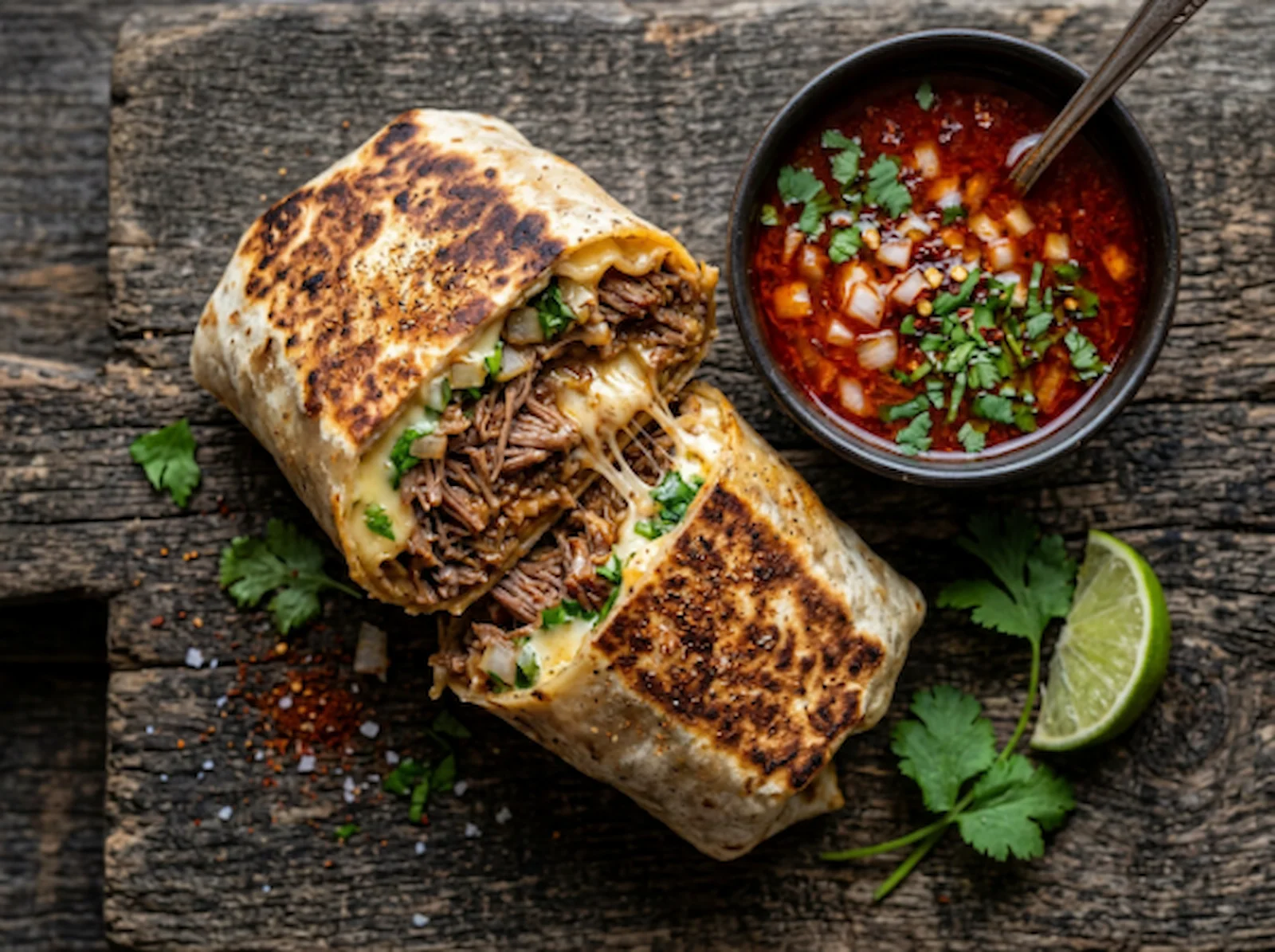
Loaded Beef Quesabirria Burrito with Melted Cheese
Ingredients
Equipment
Method
- Toast and Rehydrate Chiles: Heat a dry skillet over medium heat and toast guajillo, ancho, and árbol chiles for 1–2 minutes until fragrant. Transfer to a bowl of boiling water and soak for 15 minutes to soften.
- Make the Birria Marinade: In a blender, combine softened chiles, canned tomatoes, onion half, garlic, Mexican oregano, ground cumin, 1 cup of beef broth, salt, and pepper. Blend on high speed until completely smooth. Strain through a fine mesh strainer if needed.
- Braise the Beef: Season chuck roast chunks with salt and pepper. Place in a heavy Dutch oven, pour the blended chile sauce over the top, add the remaining 3 cups of beef broth, and drop in the cinnamon stick. Bring to a boil, cover tightly with a lid, and simmer on low heat for 2.5 to 3 hours until the beef is melt-in-your-mouth tender.
- Shred and Separate Consomé: Remove beef chunks and shred using two forks. Strain the remaining liquid into a large bowl to create the consomé. Let it settle for 3 minutes; skim 1/2 cup of the bright red layer of rendered fat off the top into a shallow dish.
- Layer the Loaded Burrito: Lightly dip one side of a large flour tortilla into the reserved red birria oil. Lay the tortilla (oil-side down) on a warm flat-top griddle or skillet over medium heat. Sprinkle a generous layer of shredded Oaxaca cheese, warm rice, beans, a heap of shredded beef birria, diced onions, and fresh cilantro down the center.
- Fold, Sear, and Serve: Fold the ends inward and roll the tortilla tightly into a burrito. Griddle for 2–3 minutes per side, pressing gently until the exterior is deep golden-red, crispy, and the cheese inside is completely melted. Serve hot alongside a bowl of warm birria consomé for dipping and fresh lime wedges.
Notes
Best Beef Cuts for Birria: Chuck roast is the gold standard, but adding 1 pound of beef short ribs to the braise increases richness and creates an even more luxurious consomé thanks to the bone marrow and extra fat.

Why You Must Skim the Fat:The bright red layer of fat that rises to the top of the consomé is infused with chile flavor and is essential for creating the crispy, golden exterior on the burrito. Do not skip this step.

Tortilla Strength Matters: Use thick, 12-inch burrito-style flour tortillas. Thin fajita tortillas will tear when dipped in consomé and cannot support the weight of the filling.

Folding Technique: Leave 2 inches of space on each side of the filling, fold the short ends inward first, then roll tightly from one long side. Press down gently to seal as you fold.

Griddle Temperature Control: Medium heat (325°F–350°F) is critical. Too hot and the exterior burns before the cheese melts. Too low and the tortilla turns greasy instead of crispy.

Make-Ahead Instructions: The beef birria and consomé can be made up to 3 days in advance and stored separately in the fridge. Reheat before assembling fresh burritos.

Freezing Protocol: Freeze the shredded beef and consomé together in freezer-safe containers for up to 3 months. Thaw overnight in the fridge and reheat gently on the stovetop.

Slow Cooker Adaptation: Combine all birria ingredients in a slow cooker and cook on low for 7–8 hours or high for 4–5 hours until the beef is fall-apart tender.

Serving Suggestions: Serve with pickled jalapeños, Mexican crema, sliced radishes, or a side of guacamole. The consomé can also be sipped as a rich soup on its own.

- Reheating Leftover Burritos: Reheat griddled burritos in a dry skillet over medium-low heat to re-crisp the exterior without drying out the interior.