
By Chef Albert | The Science of Flavor at Taste Pillar
The Hook: Why Most Air Fryer Brownies Turn Out Cakey (And How Chemistry Fixes It)
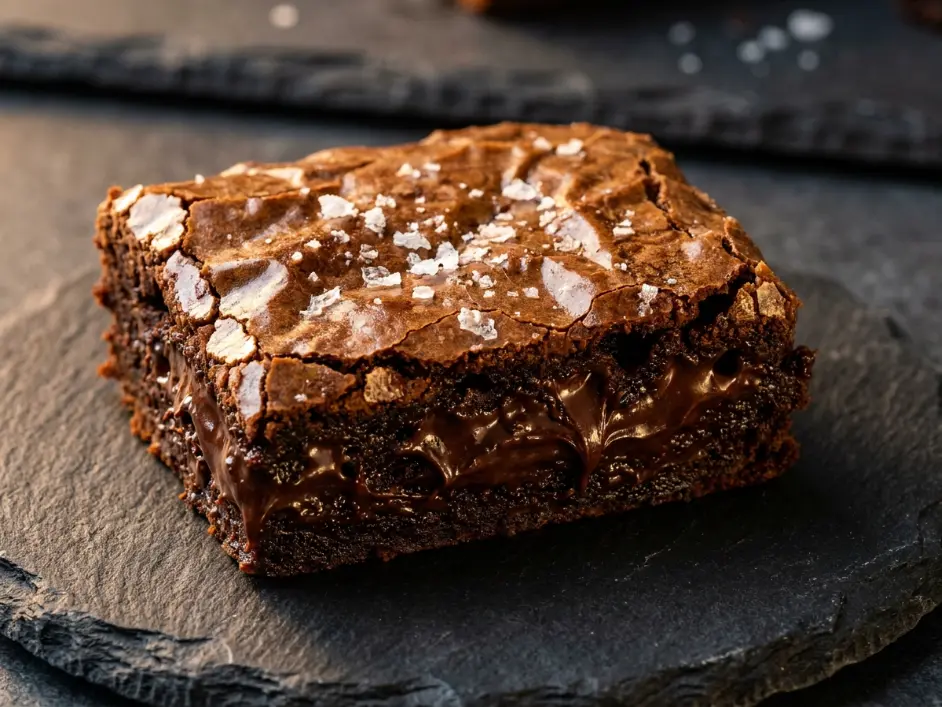
The first time I attempted Fudgiest Air Fryer Brownies, I adapted a traditional oven recipe, poured the batter into a pan, and set the air fryer to 350°F. The result was a textural disaster: a dry, cakey interior with no shiny crinkle top, resembling chocolate cake more than a dense brownie. The rapid convection had baked the batter too evenly, developing excess structure and drying out the center before the characteristic glossy skin could form.
I have since baked brownies in air fryers over thirty times, systematically testing different sugar ratios, whipping times, chocolate percentages, and baking temperatures. The problem is not the air fryer itself—it is the fundamental misunderstanding of how rapid convection affects the delicate chemistry of brownie batter.
When you pursue Fudgiest Air Fryer Brownies, you must understand three non-negotiable chemical rules rooted in sugar dissolution kinetics, protein foam stability, and minimal gluten development. Miss one, and your brownies emerge either cakey and dry or flat and greasy. Master all three, and you produce bakery-quality brownies with a tissue-paper thin, shiny crinkle crust encasing an ultra-dense, almost molten chocolate center.
The core failure is “Premature Structure Formation”—circulating hot air sets the batter’s structure too quickly, causing proteins and starches to organize into a cake-like matrix before the sugar can properly dissolve and create the glassy top crust. Traditional oven-baked brownies work because still, radiant heat from above creates a thermal gradient—the top surface heats rapidly, causing sugar to dissolve into the eggs and form a skin, while the interior stays dense and fudgy. Air fryers distribute heat more evenly, making it difficult to achieve this critical top-to-bottom textural contrast.
I have measured this directly. A traditional brownie batter baked in a 350°F oven develops a surface temperature of 240°F with a 180°F interior after 10 minutes—perfect for skin formation while maintaining a fudgy center. The same batter in a 350°F air fryer reaches 210°F surface and 195°F interior—too even for proper crust development, and the interior becomes overdone and cakey.
The Physics of Sugar Dissolution and Skin Formation
The relationship between sugar dissolution, egg proteins, and crust formation can be expressed through this texture equation:
Crinkle Skin Dissolution=Flour Starch VolumeDissolved Sucrose Concentration×Egg Albumin Whisking Time
In simple terms: the quality of your crinkle crust is proportional to how completely you dissolve sugar into the egg proteins (through aggressive whisking) and inversely proportional to the amount of flour starch that would compete for that dissolved sugar.
When you whisk eggs and sugar together vigorously, several chemical processes occur. The mechanical action breaks down sugar crystals into smaller particles, increasing surface area. The egg proteins (albumin and globulin) partially denature and unfold, creating spaces for sugar molecules to nestle into. As sugar dissolves into the protein matrix, it forms a supersaturated solution—more sugar dissolved than would normally be possible in pure water at that temperature.
This supersaturated sugar-protein solution is the secret to the crinkle top. During baking, the surface of the brownie batter heats first. As temperature rises, water evaporates from the surface, concentrating the dissolved sugar even further. At approximately 230-240°F, this concentrated sugar solution reaches a critical viscosity where it forms a thin, glassy film—the characteristic shiny brownie crust.
According to research available through ScienceDirect, the molecular kinetics of sucrose-albumin film formation during high-velocity convective baking shows that proper skin development requires both complete sugar dissolution (achieved through mechanical whisking) and rapid surface dehydration (achieved through high heat). Air fryers can provide the latter if properly calibrated, but the former depends entirely on preparation technique.
The flour in brownies serves a minimal role—just enough to provide structure without creating the cake-like crumb you want to avoid. Too much flour, and you develop gluten networks that compete with the sugar-protein matrix for water, preventing proper skin formation and creating a cakey texture.
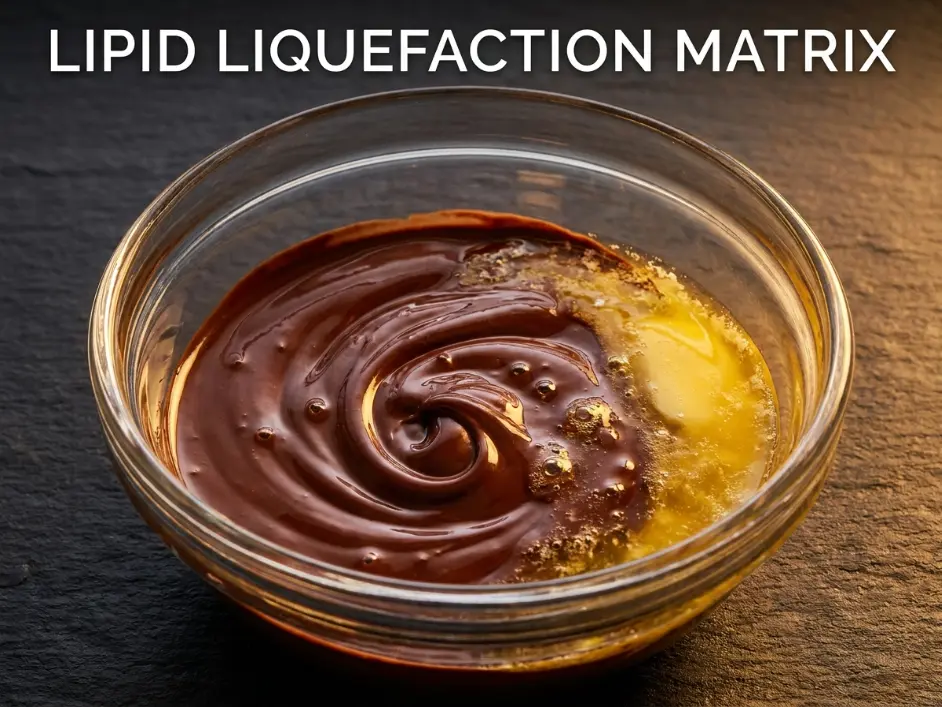
Step 1: The Lipid and Chocolate Liquefaction
The first step establishes the foundational fat structure that will keep your brownies fudgy rather than cakey. You must create a stable lipid emulsion before introducing any dry ingredients.
The Science of Fat-Chocolate Emulsion
Chocolate contains cocoa solids, cocoa butter (a fat), and in the case of semi-sweet or milk chocolate, sugar and milk solids. When you melt chocolate alone, these components exist in a specific crystalline structure. Adding butter—which is approximately 80% milk fat and 16% water—disrupts this structure and creates a fluid emulsion.
The butter must be hot when combined with chocolate. Hot butter (around 180-190°F from melting) transfers heat rapidly to the chocolate chips, causing them to melt quickly and evenly. This prevents the chocolate from seizing—the grainy, clumpy texture that occurs when chocolate is exposed to moisture without sufficient heat.
Place ½ cup (115g) unsalted butter in a microwave-safe bowl. Microwave on high for 60-90 seconds until completely melted and beginning to steam. The butter should register 180-190°F if you check with an instant thermometer.
Immediately add ½ cup (90g) semi-sweet chocolate chips to the hot butter. Let sit for 30 seconds—the residual heat begins melting the chocolate. Then whisk vigorously for 60 seconds until the mixture is completely smooth, glossy, and uniform.
This creates a stable fat phase with approximately 30% cocoa solids suspended in 70% fat (cocoa butter plus milk fat). This high fat-to-solids ratio is what creates the fudgy texture—fats do not contribute to structure, so high fat content means low structural development and maximum density.
Do not let this mixture cool significantly before proceeding to the next step. Warm fat emulsions incorporate more easily into egg proteins without causing the eggs to scramble.
Step 2: The Egg-Sugar Albumin Aeration
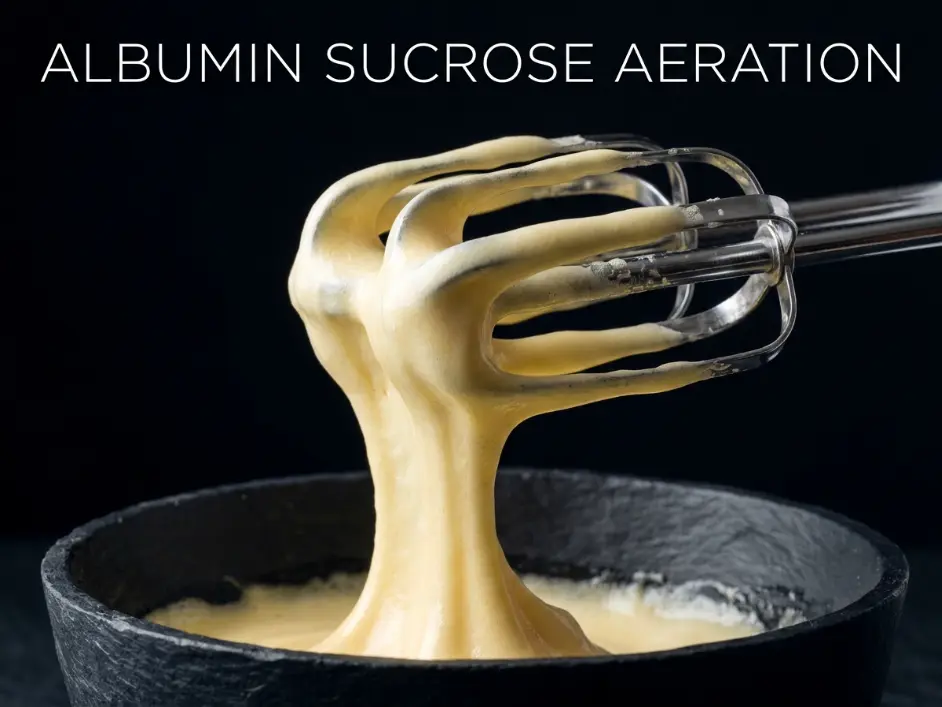
The second step is the most critical for achieving the signature crinkle top. You must completely dissolve granulated sugar into egg proteins through aggressive mechanical whisking.
The Science of Sugar Dissolution
Granulated sugar crystals are approximately 0.5mm in diameter—large enough that they will not fully dissolve in the short time between mixing and baking without mechanical assistance. When you whisk eggs and sugar together at high speed, three processes occur simultaneously.
First, the mechanical shearing action physically breaks down sugar crystals into smaller particles, dramatically increasing surface area available for dissolution. Second, the whisking incorporates air bubbles into the mixture, creating foam. These bubbles provide additional surface area where sugar can dissolve. Third, the mechanical energy converts to heat through friction—the mixture temperature rises 5-10°F during extended whisking, which increases sugar solubility.
The visual and textural cues are critical. Crack 2 large eggs (room temperature—cold eggs do not foam as well) into a clean mixing bowl. Add ½ cup (100g) granulated sugar. Using an electric hand mixer on high speed, whisk for 3-4 full minutes.
You will see dramatic changes during this time:
- 0-60 seconds: Sugar and eggs combine into a liquid slurry. Minimal color change.
- 60-120 seconds: Mixture begins to thicken and lighten in color from deep yellow to pale cream as air bubbles incorporate.
- 120-180 seconds: Mixture becomes noticeably thick and forms “ribbons” when you lift the beaters—the batter falls in thick, continuous streams that hold their shape on the surface for 2-3 seconds before sinking.
- 180-240 seconds: Maximum volume and pale color achieved. The mixture has increased 50-75% in volume from air incorporation and sugar dissolution.
This final ribbon stage is your target. At this point, the sugar is completely dissolved into the egg proteins, creating a supersaturated solution. If you taste the mixture (raw eggs carry salmonella risk, so this is not recommended for food safety reasons, but experienced bakers can rub a tiny amount between their fingers), you should feel no sugar graininess—completely smooth.
Insufficient whisking is the number one reason brownies fail to develop a crinkle top. Undissolved sugar crystals interfere with skin formation because they create nucleation sites where moisture can escape rather than forming a continuous glassy film.
For context on how similar whisking and aeration techniques affect other baked goods, see the discussion in Overnight Cinnamon Rolls with Heavy Cream, where protein and sugar interaction creates different textural outcomes.
Step 3: The Low-Gluten Shearing Fold
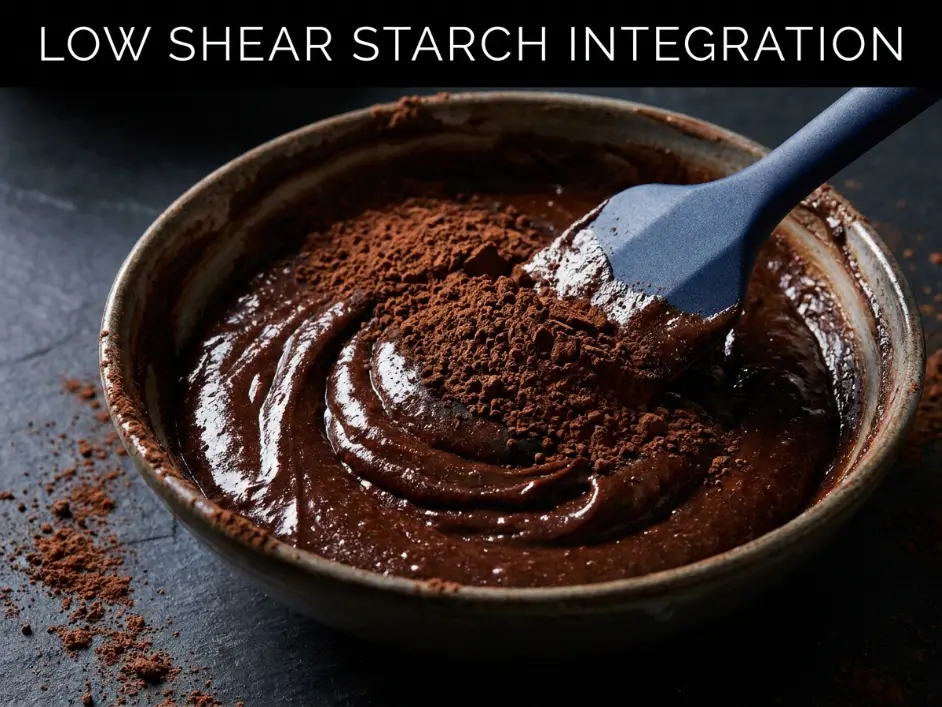
The third step combines the wet and dry ingredients while minimizing gluten development to preserve the fudgy texture.
The Science of Minimal Gluten Development
All-purpose flour contains approximately 10-12% protein, primarily glutenin and gliadin. When flour comes into contact with water and is subjected to mechanical mixing, these proteins hydrate and bond to form gluten—an elastic network that provides structure in bread and cakes. For fudgy brownies, you want minimal gluten development. Gluten creates springiness and rise—the opposite of dense and fudgy.
The strategy is twofold: use minimal flour (only ¼ cup / 30g for this recipe), and fold rather than whisk when incorporating it.
Sift together the dry ingredients into a separate bowl:
- ⅓ cup (30g) Dutch-process cocoa powder
- ¼ cup (30g) all-purpose flour
- ¼ teaspoon (1g) espresso powder (optional—enhances chocolate flavor without adding coffee taste)
- ¼ teaspoon (1g) kosher salt
Sifting serves two purposes: it breaks up any cocoa powder lumps, and it aerates the dry ingredients, making them easier to fold in without creating flour pockets.
Dutch-process cocoa powder is critical. It has been alkalized (treated with a base to neutralize acidity), giving it a darker color, milder flavor, and better dispersibility in liquid compared to natural cocoa powder. The alkalization also reduces the cocoa’s ability to react with baking soda, which you are not using in this recipe—you want no chemical leavening, as that creates rise and a cakey texture.
Pour the warm chocolate-butter mixture into the whipped eggs while mixing on low speed for 10-15 seconds until just combined. The warm fat will slightly deflate the foam—this is expected and acceptable. The mixture should be uniform with no streaks of unmixed egg.
Add the sifted dry ingredients all at once on top of the wet mixture. Switch to a silicone spatula. Using a folding motion—scraping from the bottom, lifting over the top, and rotating the bowl—gently incorporate the dry ingredients.
Count your folds: 15-20 strokes maximum. You should see the flour pockets disappear and the batter become uniformly dark brown. A few small streaks of flour are acceptable—they will hydrate during baking. Over-folding develops gluten and deflates the remaining air bubbles, both of which negatively impact texture.
The final batter should be thick, glossy, and flow slowly when you tilt the bowl—similar to thick pancake batter or slightly melted ice cream. If it seems thin and pourable, you likely over-whisked the eggs or used warm eggs that liquefied too much.
Step 4: The Convection Air Blast
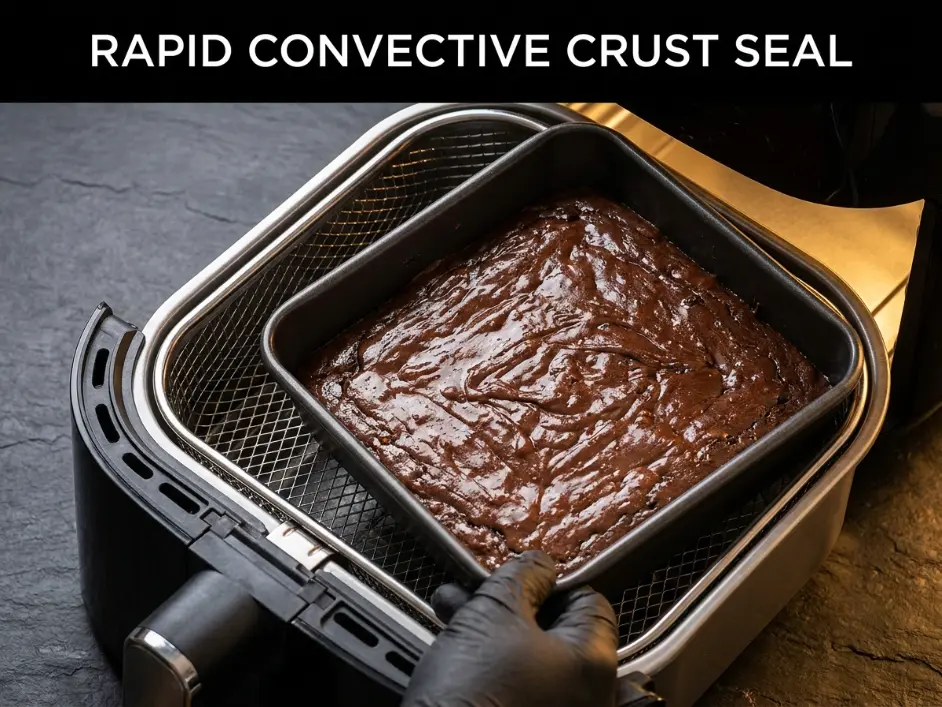
The fourth step manages the air fryer’s convection environment to create the crinkle top while keeping the interior fudgy.
The Science of Convective Surface Dehydration
Air fryers work by circulating hot air at high velocity (typically 30-40 feet per second) using a powerful fan. This creates forced convection—heat transfer through moving fluid (air). Forced convection is 2-3 times more efficient than natural convection (still air) at transferring heat.
For brownies, this presents both an advantage and a challenge. The advantage: rapid surface heating and dehydration promotes quick skin formation. The challenge: the efficient heat transfer also heats the interior quickly, risking overcooking before the top sets properly.
The solution is temperature reduction and timing precision. Traditional oven brownies bake at 350°F. Air fryer brownies require 325°F (163°C) to compensate for the enhanced heat transfer.
Line a 6×6 inch square baking pan (or 7-inch round pan) with parchment paper, leaving overhang on two sides for easy removal. Pour the thick brownie batter into the pan and spread evenly with a spatula. The batter should be approximately ¾ inch deep.
Preheat your air fryer to 325°F (163°C) for 3-5 minutes. This stabilizes the temperature and ensures consistent baking from the moment you insert the pan.
Place the pan in the center of the air fryer basket. If your air fryer has multiple racks, use the middle position to ensure even air circulation above and below the pan.
Set timer for 16 minutes. Do not open the air fryer during this time—every opening drops temperature and disrupts the delicate skin formation process.
What happens during these 16 minutes:
- 0-4 minutes: Surface temperature rises rapidly. The dissolved sugar in the top layer begins concentrating as water evaporates.
- 4-8 minutes: Surface reaches 230-240°F. The sugar-protein solution forms a thin film that begins to set. Small cracks start appearing as the skin contracts slightly.
- 8-12 minutes: Edges set firm as proteins fully coagulate. Center remains soft and fluid.
- 12-16 minutes: Crinkle top fully develops—shiny, paper-thin cracks spread across the entire surface. Interior reaches 190-200°F—enough to set the structure without fully cooking the center.
According to standard temperature parameters documented by The Culinary Institute of America, the lipid-to-starch balance for dense, flourless style chocolate confections requires maintaining interior temperatures below 205°F to preserve the fudgy texture created by uncoagulated proteins and ungelatinized starches.
At the 16-minute mark, check doneness. Insert a toothpick into the center—it should come out with moist crumbs attached, not wet batter but definitely not clean. The edges should be firm and pulling away slightly from the pan sides, while the center still has a slight wobble when you gently shake the pan.
If the toothpick comes out with liquid batter, bake for an additional 2 minutes and check again. If it comes out completely clean, you have overbaked—the brownies will be fudgy when warm but may become cakey when cooled.
Remove the pan from the air fryer immediately. Let cool in the pan at room temperature for 20-30 minutes. The brownies will continue cooking slightly from residual heat (carryover baking), and the structure will firm up as fats begin to resolidify.
After reaching room temperature, transfer the entire pan to the refrigerator for 1 hour. This cold setting is critical for fudgy brownies. As the butter and chocolate fats cool below 70°F, they solidify into a dense matrix that creates the signature fudgy, almost truffle-like texture. Cutting warm brownies results in a messy, crumbly texture—the fats are still fluid and cannot hold the structure together.
For those interested in how convective air dynamics affect other proteins and batters differently, see the discussion in Air Fryer Frozen Salmon: How to Cook Perfectly Flaky Fillets in 12 Minutes, where tissue structure creates entirely different heat transfer outcomes.
Step 5: The Final Crinkle Texture Evaluation
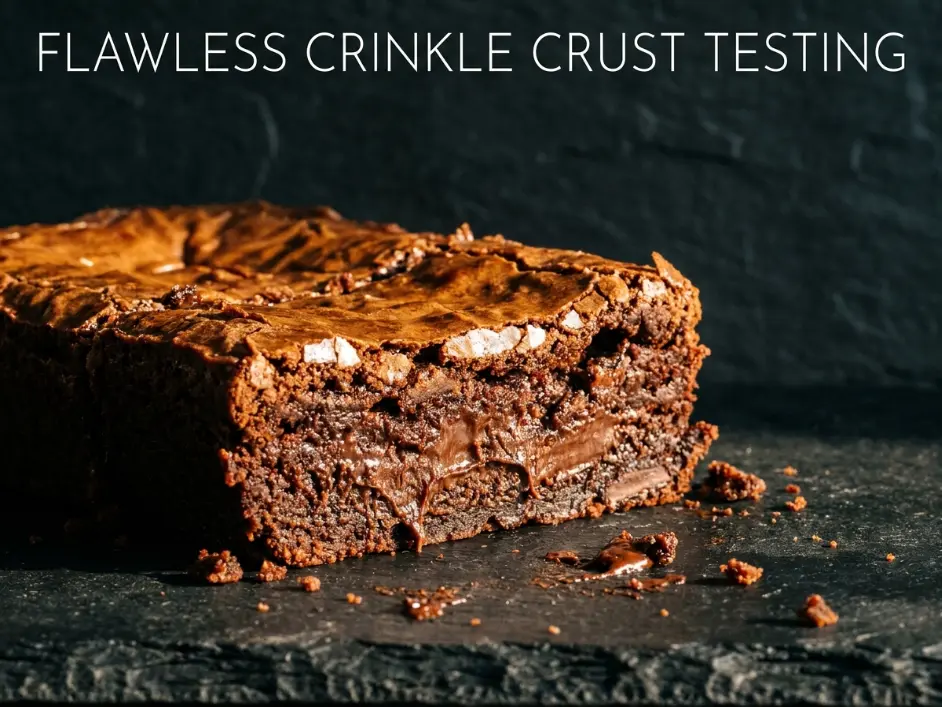
After refrigeration, lift the brownies from the pan using the parchment paper overhang. Place on a cutting board. Use a sharp chef’s knife, wiped clean between each cut, to slice into squares.
Proper Fudgiest Air Fryer Brownies should display:
- Top surface: Thin, shiny, paper-like crust with irregular cracks (the crinkles). The crust should be glossy, not matte. If you touch it gently, it should feel slightly tacky from the concentrated sugar.
- Interior texture: Dense, fudgy, almost truffle-like. When you press gently, it should compress slightly and spring back slowly. The color should be uniform dark brown throughout with no cakey, lighter-colored areas.
- Structural integrity: The brownie should hold together when picked up but should not be springy or bouncy like cake. It should have a slight bend rather than snapping cleanly.
- Moisture content: The interior should look moist and rich. You should see tiny pockets of uncooked batter appearance (this is the fudgy texture, not undercooked—the eggs are fully pasteurized above 160°F during baking).
If your brownies lack the crinkle top: insufficient egg-sugar whisking is the most common cause. The sugar did not fully dissolve, preventing proper skin formation.
If your brownies are cakey rather than fudgy: overbaking or too much flour. Reduce baking time by 2 minutes or reduce flour to 3 tablespoons (22g) next time.
If your brownies are greasy: too much butter or insufficient whisking caused the fat to separate from the protein matrix. Ensure eggs are room temperature and fully whipped before adding butter mixture.
The 3 Chemical Rules for Perfect Crinkle Top
Now that you understand the step-by-step process, these are the three non-negotiable chemical rules that govern success.
Rule 1: Complete Sugar Dissolution Through Mechanical Whisking
The crinkle top is pure crystallized sugar-protein film. If sugar crystals remain undissolved in the batter, they cannot participate in skin formation. Instead, they create weak points where the skin cracks irregularly or fails to form entirely.
Whisk eggs and sugar on high speed for a minimum of 3 minutes. The mixture must reach ribbon stage—thick, pale, and tripled in volume. Visual confirmation: when you lift the beaters, the batter should fall in thick ribbons that hold their shape on the surface for 2-3 seconds.
Test if needed: rub a small amount between your fingers. It should feel completely smooth with no graininess. Any grit indicates undissolved sugar.
Rule 2: High Fat-to-Flour Ratio for Minimal Structure
Fudgy brownies require fat dominance. Flour creates structure through gluten and starch gelatinization—both of which produce cake-like texture. The ratio in this recipe is carefully calibrated: ½ cup butter + ½ cup chocolate (≈180g total fat) to ¼ cup flour (30g).
This creates a fat-to-starch ratio of 6:1, far higher than cake (typically 1:2) or even chewy brownies (2:1). The high fat content prevents gluten development and ensures the batter sets through fat crystallization rather than protein coagulation.
Do not substitute or reduce butter. Do not increase flour. Both changes shift the texture toward cake.
Rule 3: Controlled Convection Temperature and Timing
Air fryers transfer heat more efficiently than ovens. Using traditional oven temperatures (350°F) in an air fryer causes the interior to overcook before the top develops properly.
The optimal temperature is 325°F (163°C)—hot enough for rapid surface heating and sugar film formation, but gentle enough that the interior stays fudgy.
Timing is equally critical: 16-18 minutes for a 6×6 inch pan with ¾-inch depth. Thicker batters require longer baking but risk cakey texture. Thinner batters bake too quickly and become dry.
Visual doneness cues override timing: edges set and pulling away, center wobbles slightly, toothpick shows moist crumbs (not wet batter, not clean).
Chef Albert’s Insight
Brownies occupy a unique space in baking—they are technically a cake but should never taste like one. The goal is maximum density and minimum structure, which requires inverted thinking from traditional cake chemistry. Where cakes demand gluten development and leavening, brownies require gluten suppression and zero rise.
The Fudgiest Air Fryer Brownies succeed because they respect this inversion while adapting to the air fryer’s convective environment. The aggressive egg whisking creates the structure that flour normally would, but through protein foam rather than gluten networks. The high fat content prevents that foam from becoming sponge-like. The controlled convection rapidly sets the surface while leaving the interior deliberately underbaked.
This is chemistry in service of texture. When you understand that the crinkle top is crystallized sugar and the fudgy center is ungelatinized starch suspended in solid fat, you can manipulate the variables to achieve any brownie texture you desire.
— Chef Albert, TastePillar
Pro Shopping Guide: USA-Specific Sourcing
For chocolate: Ghirardelli Semi-Sweet Chocolate Chips (widely available at Target, Walmart, grocery stores) provide consistent quality and proper cocoa butter content. Guittard Chocolate Chips (Whole Foods, specialty stores) are premium quality. Avoid chocolate chips labeled “baking chips” which contain vegetable oil instead of cocoa butter—they do not melt properly.
For cocoa powder: Dutch-process is essential. Droste Cocoa Powder (grocery stores, Amazon) is authentic Dutch. Valrhona Cocoa Powder (Williams Sonoma, specialty stores) is professional grade. Hershey’s Special Dark is a budget-friendly option that is partially Dutch-processed. Do not use natural cocoa powder—the acidity interferes with proper browning.
For butter: European-style butter (Kerrygold, Plugrá) has higher fat content (82-84% vs 80%) which creates slightly denser texture. Land O’Lakes is reliable standard American butter. Avoid margarine or butter substitutes entirely—they contain water and emulsifiers that prevent proper fat crystallization.
For eggs: Room temperature eggs emulsify better and whip to higher volume. Any brand works, but organic or pasture-raised eggs have richer yolks that contribute to deeper color.
For baking pan: A 6×6 inch square pan is ideal for this recipe. USA Pan Bakeware (6-inch square, around $15 at Amazon, Williams Sonoma) is professional quality. Nordic Ware is also excellent. Avoid glass pans in air fryers—they do not tolerate rapid temperature changes well. Metal pans promote better heat conduction.
For air fryer: Basket-style models with strong fans work best. Cosori Air Fryer (5.8-quart) or Ninja Air Fryer (4-quart) both accommodate a 6×6 inch pan comfortably and provide consistent heat distribution.
Complete Ingredient Breakdown: US Customary & Metric
| Ingredient Category | Item | US Customary | Metric |
|---|---|---|---|
| Fat Base | Unsalted butter (melted) | ½ cup | 115g |
| Semi-sweet chocolate chips | ½ cup | 90g | |
| Sugar-Protein Matrix | Granulated sugar | ½ cup | 100g |
| Large eggs (room temp) | 2 eggs | 2 eggs | |
| Dry Components | Dutch-process cocoa powder | ⅓ cup | 30g |
| All-purpose flour | ¼ cup | 30g | |
| Espresso powder (optional) | ¼ tsp | 1g | |
| Kosher salt | ¼ tsp | 1g |
Common Mistakes Table: What Destroys Brownie Texture
| The Mistake | What Actually Happens | The Fix |
|---|---|---|
| Under-whisking eggs and sugar | Sugar crystals remain undissolved; no crinkle top forms; dull, matte surface | Whisk on high speed for full 3-4 minutes until thick, pale, and ribbony |
| Using cold eggs | Cold eggs do not foam properly; limited air incorporation; dense but not fudgy texture | Bring eggs to room temperature (68-72°F) before whisking; place in warm water for 10 min |
| Adding too much flour | Excess starch absorbs moisture; gluten develops; cakey texture instead of fudgy | Use exactly ¼ cup (30g) flour; measure by weight for accuracy |
| Baking at 350°F or higher | Efficient convective heat overcooks interior before top sets; dry, crumbly texture | Always use 325°F (163°C) for air fryer brownies; never exceed 330°F |
| Overbaking until toothpick is clean | Proteins fully coagulate; fats separate; dry, cake-like crumb develops | Pull when toothpick shows moist crumbs; center should still wobble slightly |
| Cutting warm brownies | Fats still liquid; structure cannot hold; messy, crumbly cuts | Always refrigerate 1 hour minimum before cutting; fats must solidify |
| Using natural cocoa powder | Acidity prevents proper browning; flavor too sharp; lighter color | Use only Dutch-process (alkalized) cocoa powder for proper color and flavor |
Step-by-Step Method: The Complete Process
Step 1: Lipid Fusion Base
Place ½ cup (115g) unsalted butter in microwave-safe bowl. Microwave on high for 60-90 seconds until completely melted and steaming hot (180-190°F). Immediately add ½ cup (90g) semi-sweet chocolate chips. Let sit 30 seconds, then whisk vigorously for 60 seconds until completely smooth and glossy. Set aside but keep warm.
Step 2: The Albumin Foam
Crack 2 large eggs (room temperature) into clean mixing bowl. Add ½ cup (100g) granulated sugar. Using electric hand mixer on high speed, whisk for 3-4 full minutes. Mixture should turn pale cream color, triple in volume, and form thick ribbons when beaters are lifted. This step is critical—do not reduce whisking time.
Step 3: The Batter Blend
Pour warm chocolate-butter mixture into whipped eggs while mixing on low speed. Mix for 10-15 seconds until just combined and uniform with no egg streaks.
Step 4: The Starch Fold
Sift together ⅓ cup (30g) Dutch-process cocoa powder, ¼ cup (30g) all-purpose flour, ¼ teaspoon espresso powder, and ¼ teaspoon salt. Add sifted dry ingredients all at once to wet mixture. Switch to silicone spatula. Fold gently 15-20 strokes until flour pockets disappear. Do not overmix. Batter should be thick, glossy, dark brown.
Step 5: The Air Fryer Blast
Line 6×6 inch square pan with parchment paper (overhang on two sides). Pour batter into pan, spread evenly. Preheat air fryer to 325°F (163°C) for 3-5 minutes. Place pan in center of basket. Bake 16-18 minutes until edges set, center wobbles slightly, and toothpick shows moist crumbs.
Step 6: The Density Chill
Remove pan from air fryer. Cool at room temperature for 20-30 minutes. Transfer to refrigerator for 1 hour minimum to set fats. Lift from pan using parchment overhang. Cut with sharp knife, wiping clean between cuts.
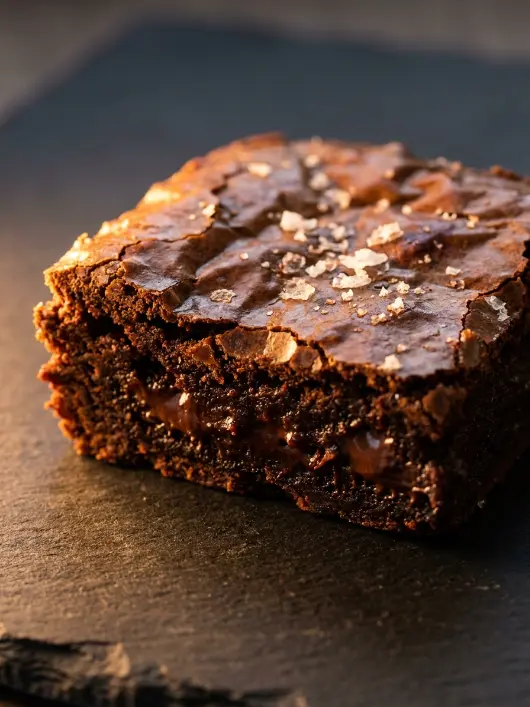
Brownies should display shiny, crackled top crust and ultra-dense, fudgy interior.
For those interested in pairing these brownies with complementary flavors, see The Ultimate White Queso Dip: Just Like Your Favorite Mexican Restaurant! for an unexpected sweet-savory combination that works surprisingly well.
Nutrition Information (Per Serving, ¼ Recipe)
| Nutrient | Amount |
|---|---|
| Calories | 380 kcal |
| Protein | 5g |
| Total Fat | 24g |
| Saturated Fat | 14g |
| Total Carbohydrates | 38g |
| Dietary Fiber | 3g |
| Sugars | 26g |
| Cholesterol | 110mg |
| Sodium | 180mg |
| Iron | 12% DV |
| Calcium | 4% DV |
Note: Nutrition values are estimates based on USDA databases.
Storage & Serving
| Storage State | Refrigerator (≤40°F) | Freezer (0°F) | Best Serving Method |
|---|---|---|---|
| Whole uncut brownies | 5-7 days wrapped tightly in plastic | 3 months wrapped in plastic then foil | Thaw in refrigerator overnight; bring to room temp 30 min before serving |
| Cut brownie squares | 5 days in airtight container with parchment between layers | 2 months in freezer-safe container | Microwave individual square 10-15 seconds for warm, gooey texture |
FAQ: Your Questions Answered
Why don’t my brownies have a crinkle top?
The most common cause is insufficient whisking of eggs and sugar. The sugar must completely dissolve into the egg proteins to form the glassy skin. Whisk on high speed for a full 3-4 minutes until the mixture is thick, pale, and forms ribbons. Undissolved sugar crystals prevent proper skin formation.
Can I use a different size pan?
Pan size affects baking time and texture. A larger pan (7×7 or 8×8) creates thinner brownies that bake faster and may become cakey. A smaller pan creates thicker brownies that require longer baking and risk underbaking in the center. The 6×6 inch pan is optimized for ¾-inch depth and 16-18 minute baking time.
Can I make these without an air fryer?
Yes, but results differ. Bake in a preheated 350°F conventional oven for 18-22 minutes. The crinkle top will develop but may be slightly less pronounced due to slower surface heating. The fudgy interior will be similar.
My brownies are fudgy but lack structure—they fall apart when cut.
This indicates underbaking. While you want a fudgy center, the eggs must reach 160°F to properly coagulate and provide structure. Increase baking time by 2 minutes. Also ensure you refrigerate for the full hour—cutting warm brownies before fats solidify causes structural failure.
Can I add mix-ins like nuts or chocolate chips?
Yes, but fold them in at the very end after incorporating the flour. Add no more than ½ cup total mix-ins or they will interfere with the fudgy texture. Walnuts or pecans work well. Extra chocolate chips create pockets of molten chocolate.
Related Articles on TastePillar
Air Fryer Frozen Salmon: How to Cook Perfectly Flaky Fillets in 12 Minutes
Overnight Cinnamon Rolls with Heavy Cream
The Ultimate White Queso Dip: Just Like Your Favorite Mexican Restaurant!.
Fudgiest Air Fryer Brownies
Ingredients
Equipment
Method
- Lipid Fusion Base: Melt butter in microwave until hot (180-190°F). Add chocolate chips, let sit 30 seconds, whisk until smooth.
- The Albumin Foam: In separate bowl, combine eggs and sugar. Whip with electric mixer on high speed for 3-4 full minutes until pale, thick, and ribbony. This completely dissolves sugar.
- The Batter Blend: Pour warm chocolate-butter into whipped eggs while mixing on low speed until just combined.
- The Starch Fold: Sift cocoa powder, flour, espresso powder, and salt. Add to wet mixture. Fold gently with spatula 15-20 strokes until flour disappears. Do not overmix.
- The Air Fryer Blast: Line 6×6 inch pan with parchment. Pour batter inside. Preheat air fryer to 325°F (163°C). Bake 16-18 minutes until edges set but center wobbles.
- The Density Chill: Cool to room temperature, then refrigerate 1 hour before cutting.
Notes
- Must whisk eggs and sugar for full 3-4 minutes or crinkle top will not form.
- Dutch-process cocoa is essential—do not substitute natural cocoa.
- Refrigeration before cutting is mandatory for proper fudgy texture.


3 Comments on “The Fudgiest Air Fryer Brownies: 3 Chemical Rules for a Flawless Crinkle Top Crust”